


At a glance
Summary
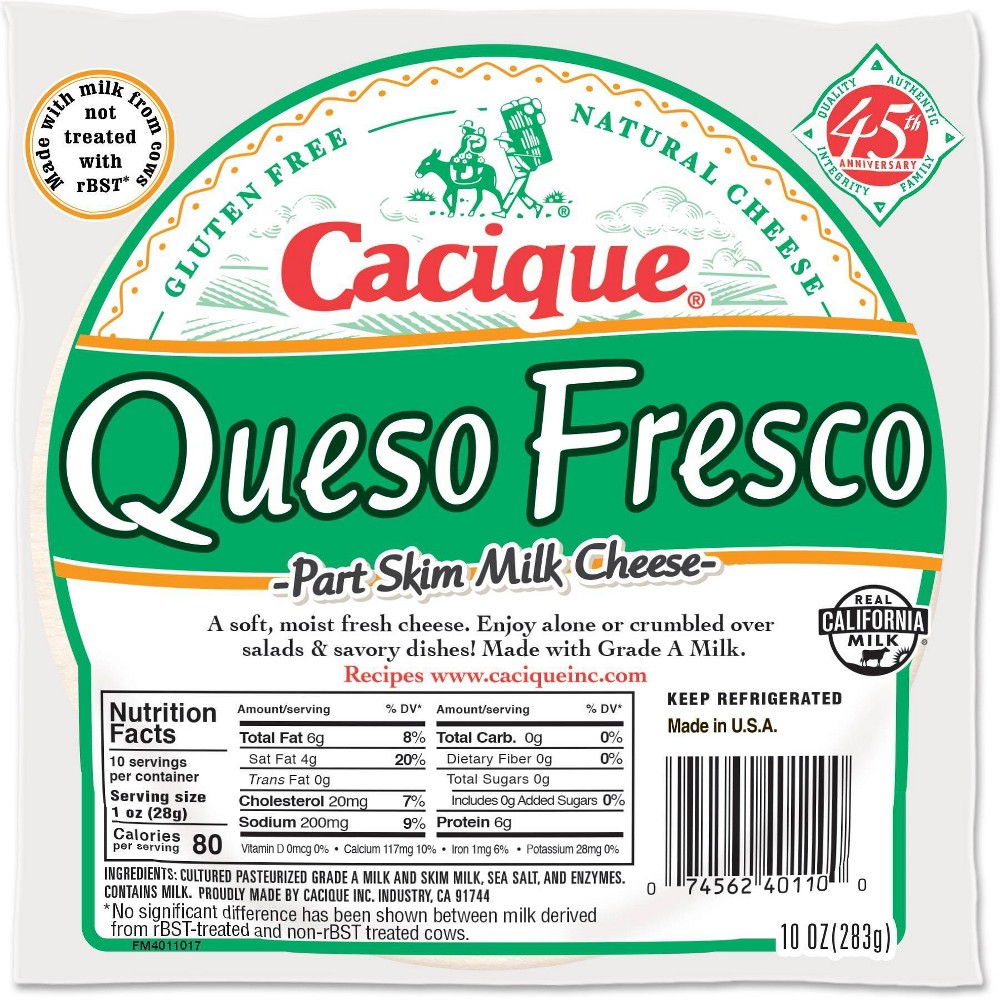
This queso fresco is made with a simple ingredient list, primarily consisting of pasteurized milk, salt, enzymes, and cheese cultures, which are typical for traditional cheese-making. However, the inclusion of soy protein in the lactic starter introduces a lower-quality protein compared to animal-based sources, which slightly impacts its nutritional profile. Despite being processed, the product maintains a relatively clean label with minimal additives, contributing to its favorable score.
Key ingredients 5
Pasteurized milkGood
Pasteurized milk is a primary source of calcium and protein, essential for bone health and muscle maintenance. The pasteurization process ensures safety by eliminating harmful bacteria. It provides a balanced nutrient profile compared to plant-based alternatives.
Risks
Some individuals may be lactose intolerant and experience digestive discomfort.
Benefits
Rich in calcium and protein, supporting bone health and muscle function. Provides essential vitamins and minerals like vitamin D and B12.
SaltNeutral
Salt is used for flavor enhancement and preservation in cheese. It is a common ingredient in processed foods and provides sodium, an essential electrolyte. However, excessive consumption can lead to health issues.
Risks
High sodium intake can contribute to hypertension and cardiovascular diseases.
Benefits
Provides sodium, which is essential for maintaining fluid balance and nerve function.
EnzymesNeutral
Enzymes are used in cheese production to aid in coagulation and flavor development. They are typically derived from microbial or animal sources. Enzymes are crucial for the cheese-making process but do not provide direct nutritional benefits.
Benefits
Facilitates the cheese-making process by aiding in milk coagulation and flavor development.
Cheese culturesNeutral
Cheese cultures are beneficial bacteria used to develop flavor and texture in cheese. They play a crucial role in fermentation and preservation. While they contribute to the cheese's characteristics, they do not provide direct health benefits.
Benefits
Contributes to the development of flavor and texture in cheese through fermentation.
Lactic starter (soy protein)Bad
Soy protein in lactic starters is used to enhance fermentation but is considered a lower-quality protein compared to animal-based sources. It may contain anti-nutrients that affect mineral absorption. Soy protein is less beneficial than animal-based proteins due to its amino acid profile.
Risks
May contain anti-nutrients that interfere with mineral absorption and could cause allergic reactions in sensitive individuals.
Benefits
Provides a plant-based protein source, though it is less complete than animal-based proteins.
Processing
Processed Foods
Get the full breakdown in the Scout appTake Scout shopping
Scan any product to see lab results, healthy alternatives, and your personalized analysis.
Download on theApp Store GET IT ONGoogle Play