
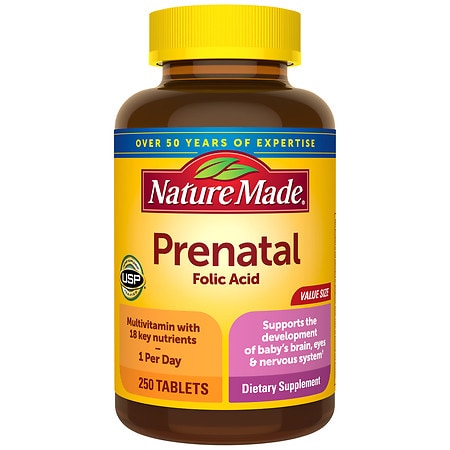



Nature Made Prenatal Multivitamin with Folic Acid, Prenatal Vitamin & Mineral Supplement Tablet, USP Verified - 250ct
Analysis updated July 2026 · How Scout scores
At a glance
Summary
This prenatal multivitamin contains essential nutrients but includes maltodextrin and magnesium stearate, which are used for texture and manufacturing purposes rather than nutritional benefits. The presence of multiple additives and fillers indicates a higher level of processing, which slightly detracts from the overall quality of the formulation. Despite these concerns, the product still provides important vitamins and minerals necessary for prenatal health.
Key ingredients 10
Cellulose GelNeutral
Cellulose gel is a common filler and binder used in supplements. It is derived from plant fibers and is generally considered safe for consumption. It does not provide nutritional benefits but helps in the formation of tablets.
See more about Cellulose Gel →Dibasic Calcium PhosphateNeutral
Dibasic calcium phosphate is used as a source of calcium and phosphorus in supplements. It is a common excipient that aids in tablet formation. While it provides minerals, its primary role in supplements is as a filler.
Benefits
Provides calcium and phosphorus, which are essential minerals for bone health.
Croscarmellose SodiumNeutral
Croscarmellose sodium is a disintegrant used to help tablets dissolve and release their active ingredients. It is derived from cellulose and is generally recognized as safe. It does not provide nutritional benefits.
See more about Croscarmellose Sodium →HypromelloseNeutral
Hypromellose is a cellulose derivative used as a coating agent and to control the release of active ingredients. It is widely used in pharmaceuticals and supplements for its stability and safety. It does not contribute nutritional value.
See more about Hypromellose →Silicon DioxideNeutral
Silicon dioxide is used as an anti-caking agent to prevent clumping in powdered supplements. It is naturally occurring and considered safe for consumption. It does not provide nutritional benefits.
See more about Silicon Dioxide →Magnesium StearateNeutral
Standard formulation ingredient — neither beneficial nor harmful at typical use.
Risks
May inhibit nutrient absorption if consumed in large quantities.
GelatinNeutral
Gelatin is used as a gelling agent and is derived from animal collagen. It is commonly used in capsules and tablets for its binding properties. While it provides some protein, its primary role in supplements is structural.
Benefits
Provides a source of collagen, which may support joint health.
Polyethylene GlycolNeutral
Polyethylene glycol is used as a solvent and plasticizer in supplements. It is a synthetic polymer that helps in the controlled release of active ingredients. It does not contribute nutritional value.
See more about Polyethylene Glycol →Modified Food StarchBad
Chemically modified starch additive.
See more about Modified Food Starch →MaltodextrinBad
Maltodextrin is a highly processed carbohydrate used as a filler and stabilizer. It has a high glycemic index, which can cause spikes in blood sugar levels. Its use in supplements is primarily for texture and bulk, not nutritional value.
Risks
High glycemic index may lead to blood sugar spikes and is a concern for individuals with insulin sensitivity.
Processing
Ultra-Processed Foods
Get the full breakdown in the Scout appTake Scout shopping
Scan any product to see lab results, healthy alternatives, and your personalized analysis.
Download on theApp Store GET IT ONGoogle PlayAmazon pricing & content
Amazon price as of . Product prices and availability are accurate as of the date/time indicated and are subject to change. Any price and availability information displayed on Amazon.com at the time of purchase will apply to the purchase of this product.
CERTAIN CONTENT THAT APPEARS ON THIS SITE COMES FROM AMAZON. THIS CONTENT IS PROVIDED “AS IS” AND IS SUBJECT TO CHANGE OR REMOVAL AT ANY TIME.