
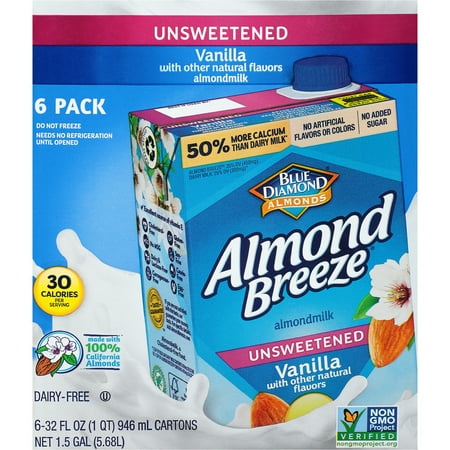


Almond Breeze Unsweetened Vanilla Shelf-Stable Almondmilk 32 oz (Pack of 6)
Analysis updated August 2026 · How Scout scores
At a glance
Summary
This almond milk is a processed product with a few additives, including natural flavors and sunflower lecithin, which are used to enhance taste and texture but are processed ingredients. While it contains beneficial components like almondmilk and sea salt, the presence of these additives and its processing level limit its score. The product is a reasonable choice for those seeking a non-dairy milk alternative, but it does not reach the highest health standards due to its processing and additive content.
Key ingredients 10
AlmondmilkGood
Almondmilk is a plant-based milk alternative that is low in calories and free from cholesterol. It is minimally processed compared to other non-dairy milks. It provides a good source of vitamin E and is suitable for those with lactose intolerance.
Risks
Potential allergen for individuals with nut allergies.
Benefits
Rich in vitamin E, which acts as an antioxidant and supports skin health. Low in calories and free from saturated fats, making it a heart-healthy choice.
Sea SaltGood
Sea salt is a minimally processed source of sodium and trace minerals. It is often preferred over refined table salt due to its natural mineral content. It enhances flavor without the need for excessive processing.
Risks
Excessive sodium intake can lead to hypertension and cardiovascular issues.
Benefits
Provides essential sodium and trace minerals that support electrolyte balance and nerve function.
Calcium CarbonateNeutral
Calcium carbonate is used to fortify non-dairy milks with calcium, essential for bone health. It is a common additive in many fortified foods. While it helps meet dietary calcium needs, it does not provide the same bioavailability as calcium from dairy sources.
Risks
Excessive intake may lead to kidney stones or interfere with the absorption of other minerals.
Benefits
Helps in meeting daily calcium requirements, supporting bone and dental health.
Potassium CitrateNeutral
Potassium citrate is used as a buffering agent and to regulate acidity in foods. It is generally recognized as safe and helps maintain pH balance. It can also contribute to dietary potassium intake, though in small amounts.
Risks
High doses may cause gastrointestinal discomfort or hyperkalemia in susceptible individuals.
Benefits
Supports electrolyte balance and may help prevent kidney stones by alkalizing urine.
Gellan GumNeutral
Gellan gum is a gelling agent used to stabilize and thicken products. It is derived from bacterial fermentation and is considered safe for consumption. It provides texture without significant nutritional impact.
Risks
Excessive consumption may cause digestive discomfort in sensitive individuals.
Vitamin A PalmitateNeutral
Vitamin A palmitate is a synthetic form of vitamin A used to fortify foods. It helps meet dietary vitamin A needs, supporting vision and immune function. However, synthetic forms may not be as bioavailable as natural sources.
Risks
Excessive intake can lead to hypervitaminosis A, causing toxicity.
Benefits
Supports vision, immune function, and skin health by providing essential vitamin A.
Vitamin D2Neutral
Vitamin D2 is a plant-derived form of vitamin D used to fortify foods. It aids in calcium absorption and bone health. However, it is less effective than vitamin D3 in raising blood levels of vitamin D.
Risks
Excessive intake can lead to hypercalcemia and associated health issues.
Benefits
Supports bone health and immune function by aiding in calcium absorption.
D-Alpha-TocopherolNeutral
D-alpha-tocopherol is a natural form of vitamin E used as an antioxidant in foods. It helps protect cells from oxidative damage. While beneficial, it is often present in small amounts that may not significantly impact health.
Risks
High doses can interfere with blood clotting and increase bleeding risk.
Benefits
Acts as an antioxidant, protecting cells from oxidative stress and supporting skin health.
Natural FlavorsBad
Natural flavors are often used to enhance taste but lack transparency in their composition. They can contain a variety of chemical compounds derived from natural sources. The lack of disclosure can be concerning for those with allergies or sensitivities.
Risks
May contain allergens or compounds that some individuals are sensitive to.
Sunflower LecithinBad
Sunflower lecithin is used as an emulsifier to improve texture and consistency. It is a processed ingredient derived from sunflower seeds. While it is less concerning than seed oils, it still represents a processed additive.
Risks
May cause allergic reactions in sensitive individuals.
Processing
Processed Foods
Get the full breakdown in the Scout appTake Scout shopping
Scan any product to see lab results, healthy alternatives, and your personalized analysis.
Download on theApp Store GET IT ONGoogle PlayAmazon pricing & content
Amazon price as of . Product prices and availability are accurate as of the date/time indicated and are subject to change. Any price and availability information displayed on Amazon.com at the time of purchase will apply to the purchase of this product.
CERTAIN CONTENT THAT APPEARS ON THIS SITE COMES FROM AMAZON. THIS CONTENT IS PROVIDED “AS IS” AND IS SUBJECT TO CHANGE OR REMOVAL AT ANY TIME.