
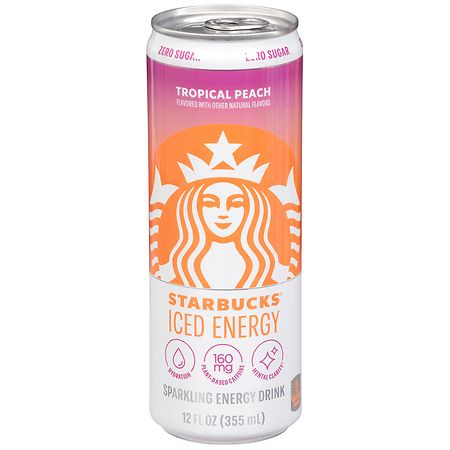





Starbucks Iced Energy Zero Sugar Sparkling Energy Drink Tropical Peach - 12.0 fl oz
Analysis updated August 2026 · How Scout scores
At a glance
Summary
This energy drink contains zero added sugar, which is a positive aspect, but it includes artificial sweeteners like sucralose and acesulfame potassium, which can raise concerns about long-term health effects. The presence of preservatives such as sodium benzoate and potassium sorbate, along with natural flavors, indicates a higher level of processing. However, the inclusion of beneficial ingredients like green coffee bean extract and panax ginseng extract provides some nutritional value.
Key ingredients 17
Green Coffee Bean ExtractGood
Green coffee bean extract is rich in chlorogenic acids, which are believed to have antioxidant properties. It is often used for its potential weight loss benefits and to boost metabolism. The extract is less processed than roasted coffee, retaining more beneficial compounds.
Risks
May cause jitteriness or digestive issues in sensitive individuals.
Benefits
Contains antioxidants and may support weight management.
Panax Ginseng ExtractGood
Panax ginseng extract is derived from the ginseng root and is known for its potential to enhance energy and cognitive function. It is a traditional herbal remedy with adaptogenic properties. The extract is valued for its potential health benefits and minimal processing.
Risks
May interact with certain medications and cause side effects like insomnia.
Benefits
May enhance energy levels and cognitive function.
NiacinamideGood
Niacinamide, also known as vitamin B3, is essential for energy metabolism and skin health. It is a water-soluble vitamin that supports various bodily functions. Its inclusion in beverages can help meet daily nutritional needs.
Risks
Excessive intake may cause flushing or liver issues.
Benefits
Supports energy metabolism and skin health.
Ascorbic AcidGood
Ascorbic acid, also known as vitamin C, is an antioxidant that supports immune function and skin health. It is a water-soluble vitamin that helps protect cells from oxidative damage. Its inclusion in beverages can enhance nutritional value.
Risks
High doses may cause gastrointestinal discomfort.
Benefits
Supports immune function and acts as an antioxidant.
Beta CaroteneGood
Beta carotene is a precursor to vitamin A and acts as an antioxidant. It is used as a natural colorant and provides health benefits by supporting vision and immune function. Its natural origin and health benefits make it a positive addition.
Risks
Excessive intake can lead to carotenemia, a harmless condition causing skin discoloration.
Benefits
Supports vision and immune function as a precursor to vitamin A.
D-Calcium PantothenateGood
D-Calcium pantothenate is a form of vitamin B5, essential for energy production and synthesis of coenzyme A. It is water-soluble and supports various metabolic functions. Its inclusion helps meet daily vitamin requirements.
Benefits
Supports energy production and metabolic functions.
Pyridoxine HydrochlorideGood
Pyridoxine hydrochloride is a form of vitamin B6, important for protein metabolism and cognitive development. It is water-soluble and supports various bodily functions. Its inclusion in beverages can help meet daily nutritional needs.
Risks
Excessive intake may cause nerve damage.
Benefits
Supports protein metabolism and cognitive development.
Carbonated WaterNeutral
Carbonated water is simply water infused with carbon dioxide gas under pressure. It is a common base for many beverages and does not provide any significant nutritional value. It is generally considered safe for consumption.
See more about Carbonated Water →Citric AcidNeutral
Citric acid is a natural acid found in citrus fruits and is used as a preservative and flavor enhancer. It is generally recognized as safe but can cause tooth enamel erosion if consumed in excess. It is widely used in the food industry for its preservative properties.
Risks
Excessive consumption may lead to tooth enamel erosion.
Benefits
Acts as a preservative and can enhance flavor.
Malic AcidNeutral
Malic acid is a naturally occurring acid found in fruits and is used to enhance flavor and tartness. It is generally recognized as safe and is commonly used in food products. It can improve the taste profile of beverages without adding calories.
Benefits
Enhances flavor and tartness in food products.
Potassium ChlorideNeutral
Potassium chloride is used as a salt substitute and to provide potassium, an essential mineral. It helps maintain electrolyte balance but can be harmful in excessive amounts. It is often used to enhance the nutritional profile of low-sodium products.
Risks
Excessive intake can lead to hyperkalemia, a condition with elevated potassium levels.
Benefits
Provides potassium, which is essential for maintaining electrolyte balance.
SaltNeutral
Salt is used to enhance flavor and preserve food. While essential in small amounts, excessive intake can lead to health issues like hypertension. It is a common ingredient in many processed foods.
Risks
Excessive intake can lead to hypertension and cardiovascular issues.
Benefits
Enhances flavor and acts as a preservative.
Natural FlavorsBad
Natural flavors are a catch-all term for flavoring agents derived from natural sources but can be highly processed. The lack of transparency in their composition can be concerning for consumers seeking clean labels. They may contain additives or solvents used in processing.
Risks
Potential allergens or additives may be present without clear labeling.
SucraloseBad
Sucralose is an artificial sweetener that is much sweeter than sugar and used to provide sweetness without calories. Concerns exist about its potential effects on gut health and insulin response. It is a synthetic compound not found naturally in foods.
Risks
May affect gut microbiota and insulin sensitivity.
Benefits
Provides sweetness without adding calories.
Sodium BenzoateBad
Sodium benzoate is a preservative used to prevent microbial growth in acidic foods and beverages. It can form benzene, a carcinogen, when combined with vitamin C under certain conditions. Its use is regulated due to potential health concerns.
Risks
Potential formation of benzene, a carcinogen, when combined with vitamin C.
Benefits
Extends shelf life by preventing microbial growth.
Potassium SorbateBad
Potassium sorbate is a preservative used to inhibit mold and yeast growth in foods. While generally recognized as safe, it can cause allergic reactions in sensitive individuals. It is a synthetic compound used to extend the shelf life of products.
Risks
May cause allergic reactions in sensitive individuals.
Benefits
Prevents spoilage by inhibiting mold and yeast growth.
Acesulfame PotassiumBad
Acesulfame potassium is an artificial sweetener used to provide sweetness without calories. There are concerns about its long-term safety and potential effects on metabolism. It is often used in combination with other sweeteners to enhance sweetness.
Risks
Potential metabolic effects and long-term safety concerns.
Benefits
Provides sweetness without adding calories.
Processing
Ultra-Processed Foods
Get the full breakdown in the Scout appTake Scout shopping
Scan any product to see lab results, healthy alternatives, and your personalized analysis.
Download on theApp Store GET IT ONGoogle PlayAmazon pricing & content
Amazon price as of . Product prices and availability are accurate as of the date/time indicated and are subject to change. Any price and availability information displayed on Amazon.com at the time of purchase will apply to the purchase of this product.
CERTAIN CONTENT THAT APPEARS ON THIS SITE COMES FROM AMAZON. THIS CONTENT IS PROVIDED “AS IS” AND IS SUBJECT TO CHANGE OR REMOVAL AT ANY TIME.