
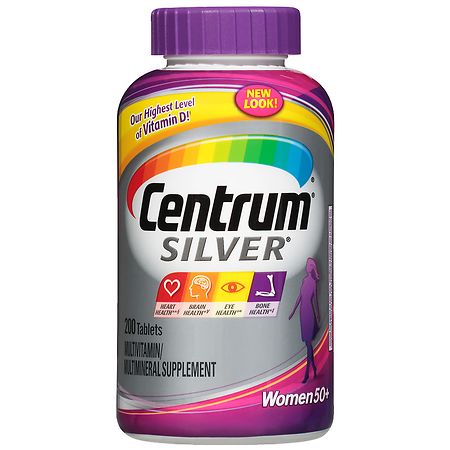

Centrum Silver Multivitamins for Women Over 50 Multimineral Supplement 200 Ct
Analysis updated August 2026 · How Scout scores
At a glance
Summary
This multivitamin contains beneficial ingredients like calcium carbonate, ascorbic acid, and cholecalciferol, which support bone health and immune function. However, the presence of artificial dyes such as Blue 2 Lake and Red 40 Lake, along with BHT, a controversial preservative, negatively impacts its overall health profile. The formulation includes a moderate level of processing and several additives, which further influence the score.
Key ingredients 40
CholecalciferolVery Good
Cholecalciferol, or Vitamin D3, is crucial for calcium absorption and bone health. It is the preferred form of Vitamin D due to its superior bioavailability. It also supports immune function and mood regulation.
Risks
Excessive intake can lead to hypercalcemia, causing nausea and kidney damage.
Benefits
Enhances calcium absorption and supports bone and immune health.
Ascorbic AcidGood
Ascorbic acid, or Vitamin C, is a powerful antioxidant that supports immune function and skin health. It is water-soluble and must be consumed regularly. It enhances iron absorption from plant-based foods.
Risks
High doses may cause gastrointestinal upset or kidney stones.
Benefits
Boosts immune function and acts as an antioxidant to protect cells from damage.
DL-Alpha Tocopheryl AcetateGood
DL-Alpha tocopheryl acetate is a synthetic form of Vitamin E, an antioxidant that protects cells from oxidative damage. It is commonly used in supplements for its stability and effectiveness. It supports immune function and skin health.
Risks
High doses may interfere with blood clotting and increase bleeding risk.
Benefits
Acts as an antioxidant and supports immune and skin health.
Beta-CaroteneGood
Beta-carotene is a precursor to Vitamin A and acts as an antioxidant. It is found in many fruits and vegetables and is used in supplements to support vision and immune health. It is converted to Vitamin A in the body as needed.
Risks
Excessive intake can lead to carotenemia, a harmless condition causing yellowing of the skin.
Benefits
Supports vision and immune health, and acts as an antioxidant.
BiotinGood
Biotin, also known as Vitamin B7, supports metabolism and is important for healthy hair, skin, and nails. It is water-soluble and must be consumed regularly. It plays a role in energy production and fatty acid synthesis.
Benefits
Supports metabolism and promotes healthy hair, skin, and nails.
Calcium PantothenateGood
Calcium pantothenate is a form of Vitamin B5 used in supplements to support energy metabolism. It is essential for the synthesis of coenzyme A, which is involved in fatty acid metabolism. It helps convert food into energy.
Benefits
Supports energy metabolism and is essential for fatty acid synthesis.
Chromium PicolinateGood
Chromium picolinate is a form of chromium used to improve insulin sensitivity and support glucose metabolism. It is often used in supplements for its potential benefits in managing blood sugar levels. It may aid in weight management.
Risks
High doses may cause kidney or liver damage.
Benefits
Supports glucose metabolism and may improve insulin sensitivity.
CyanocobalaminGood
Cyanocobalamin is a synthetic form of Vitamin B12 used in supplements to support nerve function and red blood cell formation. It is essential for DNA synthesis and energy production. It is commonly used due to its stability and effectiveness.
Benefits
Supports nerve function and red blood cell formation.
Ferrous FumarateGood
Ferrous fumarate is a form of iron used in supplements to prevent or treat iron deficiency anemia. It is well-absorbed and provides a high amount of elemental iron. It is important for oxygen transport and energy production.
Risks
May cause gastrointestinal discomfort or constipation in some individuals.
Benefits
Prevents iron deficiency anemia and supports oxygen transport.
LuteinGood
Lutein is a carotenoid used in supplements to support eye health and protect against age-related macular degeneration. It is found in high concentrations in the retina and acts as an antioxidant. It is beneficial for maintaining healthy vision.
Benefits
Supports eye health and protects against macular degeneration.
Medium-Chain TriglyceridesGood
Medium-chain triglycerides (MCTs) are fats that are rapidly absorbed and used for energy. They are often used in supplements for their potential benefits in weight management and energy production. MCTs are derived from coconut or palm kernel oil.
Benefits
Supports energy production and may aid in weight management.
NiacinamideGood
Niacinamide, or Vitamin B3, supports energy metabolism and skin health. It is a water-soluble vitamin that plays a role in DNA repair and cell signaling. It is often used in supplements for its broad health benefits.
Risks
High doses may cause flushing or liver damage.
Benefits
Supports energy metabolism and promotes healthy skin.
PhytonadioneGood
Phytonadione, or Vitamin K1, is essential for blood clotting and bone health. It is the primary form of Vitamin K found in leafy greens and is used in supplements to support cardiovascular and bone health. It helps prevent excessive bleeding.
Benefits
Supports blood clotting and bone health.
Potassium IodideGood
Potassium iodide is used as a source of iodine, essential for thyroid function. It is commonly used in supplements to prevent iodine deficiency. It supports metabolic rate and energy production.
Risks
Excessive intake can lead to thyroid dysfunction.
Benefits
Supports thyroid function and prevents iodine deficiency.
Pyridoxine HydrochlorideGood
Pyridoxine hydrochloride, or Vitamin B6, supports amino acid metabolism and neurotransmitter synthesis. It is water-soluble and must be consumed regularly. It is important for brain health and mood regulation.
Risks
High doses may cause nerve damage.
Benefits
Supports amino acid metabolism and brain health.
RiboflavinGood
Riboflavin, or Vitamin B2, supports energy production and cellular function. It is water-soluble and must be consumed regularly. It is important for maintaining healthy skin and eyes.
Benefits
Supports energy production and maintains healthy skin and eyes.
Sodium AscorbateGood
Sodium ascorbate is a form of Vitamin C used in supplements to support immune function and skin health. It is less acidic than ascorbic acid, making it gentler on the stomach. It acts as an antioxidant to protect cells from damage.
Risks
High doses may cause gastrointestinal upset or kidney stones.
Benefits
Boosts immune function and acts as an antioxidant.
Sodium SelenateGood
Sodium selenate is a form of selenium used in supplements to support antioxidant activity and thyroid function. It is an essential trace mineral that helps protect cells from oxidative damage. It is important for immune health.
Risks
Excessive intake can lead to selenium toxicity, causing hair loss and gastrointestinal issues.
Benefits
Supports antioxidant activity and thyroid function.
Calcium CarbonateNeutral
Standard formulation ingredient — neither beneficial nor harmful at typical use.
Risks
Excessive intake can lead to kidney stones or impaired absorption of other minerals.
Benefits
Provides essential calcium for bone density and prevention of osteoporosis.
Magnesium OxideNeutral
Magnesium oxide is a form of magnesium used in supplements, though it has lower bioavailability compared to other forms. It is often used due to its high magnesium content per weight. It supports muscle and nerve function.
Risks
May cause gastrointestinal discomfort or diarrhea in high doses.
Benefits
Supports muscle and nerve function, and helps maintain normal blood pressure.
Potassium ChlorideNeutral
Potassium chloride is used to provide potassium, an essential mineral for heart and muscle function. It is commonly used in supplements to help maintain electrolyte balance. It is important for maintaining normal blood pressure.
Risks
Excessive intake can lead to hyperkalemia, which can affect heart function.
Benefits
Helps maintain electrolyte balance and supports cardiovascular health.
Dibasic Calcium PhosphateNeutral
Dibasic calcium phosphate is used as a source of calcium and phosphorus in supplements. It is often used as a binder or filler in tablets. It supports bone and dental health.
Risks
Excessive intake can lead to imbalances in calcium and phosphorus levels.
Benefits
Provides calcium and phosphorus, essential for bone and dental health.
Microcrystalline CelluloseNeutral
Microcrystalline cellulose is a common filler and binder in supplements, providing no nutritional value. It is derived from plant fibers and is used to improve tablet consistency. It is generally considered safe and inert.
See more about Microcrystalline Cellulose →Modified Corn StarchNeutral
Modified corn starch is used as a stabilizer or thickener in supplements. It is derived from corn and modified to improve its functional properties. It is generally considered safe for consumption.
See more about Modified Corn Starch →Corn StarchNeutral
Corn starch is used as a filler or thickener in supplements. It is derived from corn and is commonly used to improve texture and stability. It is generally considered safe for consumption.
See more about Corn Starch →CrospovidoneNeutral
Crospovidone is a disintegrant used in tablets to help them dissolve quickly. It is an inert substance and does not provide nutritional value. It is commonly used to improve the bioavailability of active ingredients.
See more about Crospovidone →Folic AcidNeutral
Standard formulation ingredient — neither beneficial nor harmful at typical use.
Risks
Excessive intake may mask Vitamin B12 deficiency symptoms.
Benefits
Supports cell division and prevents neural tube defects during pregnancy.
GelatinNeutral
Gelatin is used as a gelling agent in supplements, often derived from animal collagen. It is used to encapsulate active ingredients and improve texture. It is generally considered safe for consumption.
See more about Gelatin →HypromelloseNeutral
Hypromellose is a cellulose derivative used as a coating agent in supplements. It is used to control the release of active ingredients and improve tablet stability. It is generally considered safe and inert.
See more about Hypromellose →Magnesium StearateNeutral
Magnesium stearate is a common lubricant used in supplement manufacturing to prevent ingredients from sticking to equipment. It is derived from stearic acid and magnesium and is generally considered safe. It does not provide nutritional value.
See more about Magnesium Stearate →Manganese SulfateNeutral
Manganese sulfate is used as a source of manganese, an essential trace mineral. It supports bone formation and metabolism. It is used in small amounts in supplements.
Risks
Excessive intake can lead to neurological issues.
Benefits
Supports bone formation and metabolism.
PolydextroseNeutral
Polydextrose is a synthetic polymer of glucose used as a low-calorie bulking agent in supplements. It is used to improve texture and add fiber-like properties. It is generally considered safe for consumption.
Risks
May cause gastrointestinal discomfort in some individuals.
Silicon DioxideNeutral
Silicon dioxide is used as an anti-caking agent in supplements to prevent clumping. It is an inert substance and does not provide nutritional value. It is generally considered safe for consumption.
See more about Silicon Dioxide →Sodium MolybdateNeutral
Sodium molybdate is used as a source of molybdenum, an essential trace mineral. It supports enzyme function and metabolism. It is used in small amounts in supplements.
Risks
Excessive intake can lead to gout-like symptoms.
Benefits
Supports enzyme function and metabolism.
TalcNeutral
Talc is used as a lubricant and anti-caking agent in supplements. It is an inert mineral and does not provide nutritional value. It is generally considered safe for consumption in small amounts.
See more about Talc →MaltodextrinBad
Processed additive flagged under Scout's ingredient doctrine.
Risks
May affect blood sugar levels due to its high glycemic index.
BHTBad
BHT (Butylated Hydroxytoluene) is a synthetic antioxidant used to preserve fats and oils in supplements. It is controversial due to potential health concerns. Some studies suggest it may have carcinogenic effects in high doses.
Risks
Potential carcinogenic effects and may cause liver damage in high doses.
Blue 2 LakeBad
Blue 2 Lake is an artificial dye used for coloring supplements. It is derived from petroleum and has been associated with hyperactivity in children. Its use is controversial due to potential health concerns.
Risks
May cause hyperactivity in children and potential allergic reactions.
Copper SulfateBad
Processed additive flagged under Scout's ingredient doctrine.
Risks
Excessive intake can lead to copper toxicity, causing liver damage.
Benefits
Supports iron metabolism and red blood cell formation.
Red 40 LakeBad
Red 40 Lake is an artificial dye used for coloring supplements. It is derived from petroleum and has been associated with hyperactivity in children. Its use is controversial due to potential health concerns.
Risks
May cause hyperactivity in children and potential allergic reactions.
Processing
Processed Foods
Get the full breakdown in the Scout appTake Scout shopping
Scan any product to see lab results, healthy alternatives, and your personalized analysis.
Download on theApp Store GET IT ONGoogle PlayAmazon pricing & content
Amazon price as of . Product prices and availability are accurate as of the date/time indicated and are subject to change. Any price and availability information displayed on Amazon.com at the time of purchase will apply to the purchase of this product.
CERTAIN CONTENT THAT APPEARS ON THIS SITE COMES FROM AMAZON. THIS CONTENT IS PROVIDED “AS IS” AND IS SUBJECT TO CHANGE OR REMOVAL AT ANY TIME.