
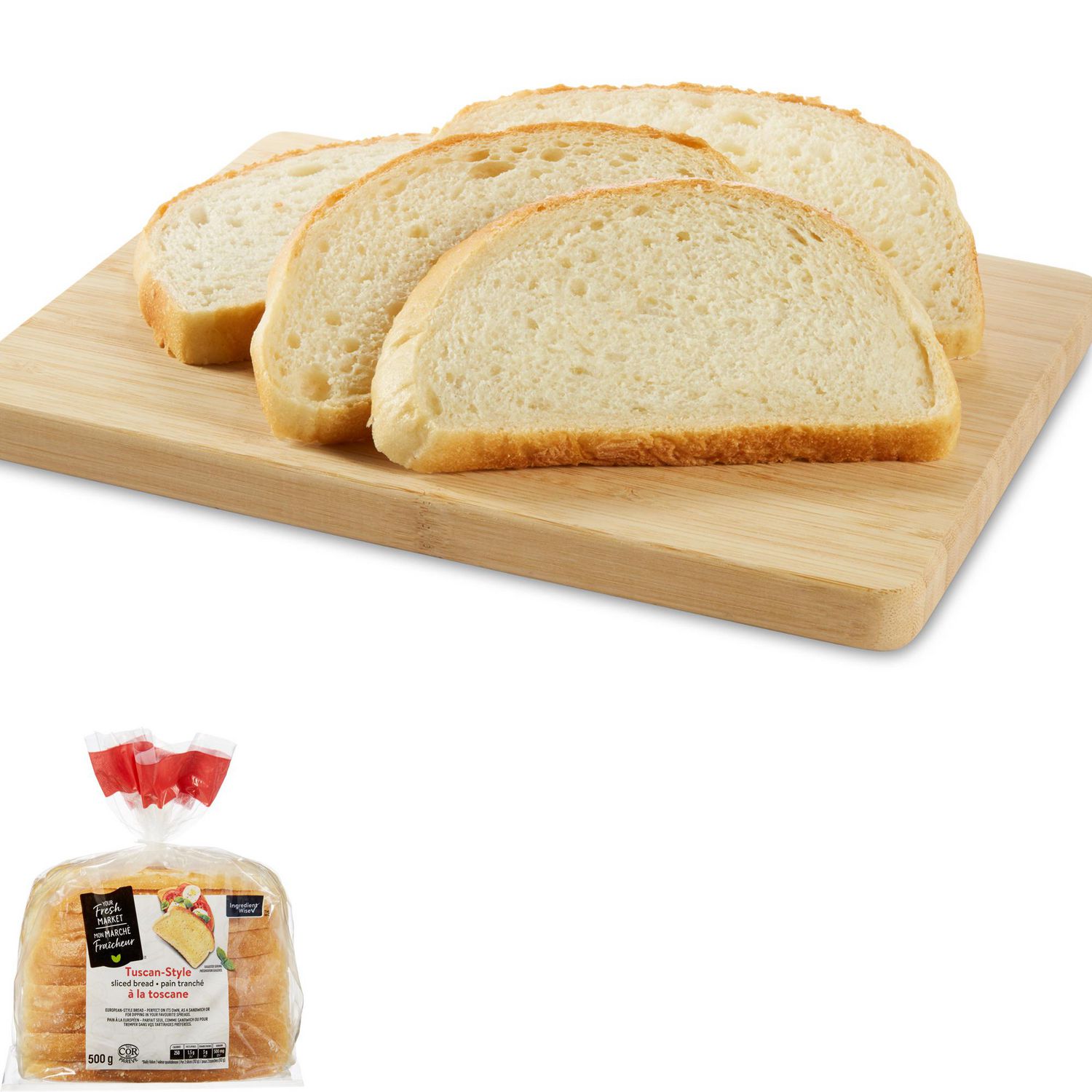


Your Fresh Market Tuscan-Style Sliced Bread
Analysis updated September 2026 · How Scout scores
At a glance
Summary
This bread is made with enriched wheat flour and durum wheat semolina, which provide a good protein content and texture. The ingredient list is relatively clean, with no artificial additives or seed oils, and includes beneficial components like sea salt and apple cider vinegar. However, it is a processed food, which limits its score due to the level of processing involved.
Key ingredients 11
Sea saltGood
Sea salt is a minimally processed salt that contains trace minerals. It is a natural source of sodium and enhances the flavor of the bread. It is considered a healthier alternative to refined table salt.
Risks
Excessive consumption may lead to high blood pressure.
Benefits
Contains trace minerals and is less processed than table salt.
Apple cider vinegarGood
Beneficial ingredient — whole-food or functional value in this product class.
Benefits
May have antimicrobial properties and enhance flavor.
Ascorbic acidGood
Vitamin C — beneficial even when serving as a preservative.
Benefits
Acts as an antioxidant and improves dough texture.
WaterNeutral
Water is a basic ingredient used to hydrate and bind the dough. It is essential for the baking process but does not provide nutritional value. It is a neutral ingredient with no health risks or benefits.
See more about Water →Durum wheat semolinaNeutral
Standard formulation ingredient — neither beneficial nor harmful at typical use.
Benefits
High in protein and provides a firmer texture to the bread.
YeastNeutral
Yeast is a microorganism used to ferment and leaven bread, giving it volume and texture. It is a natural ingredient with no significant health concerns. It is essential for the bread-making process but does not provide direct nutritional benefits.
See more about Yeast →Cultured wheat flourNeutral
Cultured wheat flour is treated with natural cultures to extend shelf life and improve flavor. It is a natural preservative alternative but does not significantly alter the nutritional profile. It is a neutral ingredient with no significant health risks or benefits.
See more about Cultured wheat flour →EnzymesNeutral
Enzymes are used to improve dough handling and bread texture. They are naturally occurring proteins that aid in the baking process. They are neutral as they do not provide direct nutritional benefits or risks.
See more about Enzymes →Malted barley flourNeutral
Malted barley flour is used to enhance flavor and improve dough fermentation. It is a natural ingredient that adds a slight sweetness and aids in browning. It is neutral as it does not significantly impact the nutritional profile.
Benefits
Enhances flavor and aids in dough fermentation.
SaltNeutral
Salt is used to enhance flavor and control yeast activity in bread. It is a common ingredient in baking but does not provide nutritional benefits. It is neutral due to its essential role in baking without significant health risks.
Risks
Excessive consumption may lead to high blood pressure.
Benefits
Enhances flavor and controls yeast activity.
Enriched wheat flourBad
Refined grain flour stripped of bran and germ.
Risks
May contribute to blood sugar spikes due to its refined nature.
Benefits
Provides essential vitamins and minerals due to fortification.
Processing
Processed Foods
Get the full breakdown in the Scout appTake Scout shopping
Scan any product to see lab results, healthy alternatives, and your personalized analysis.
Download on theApp Store GET IT ONGoogle Play