
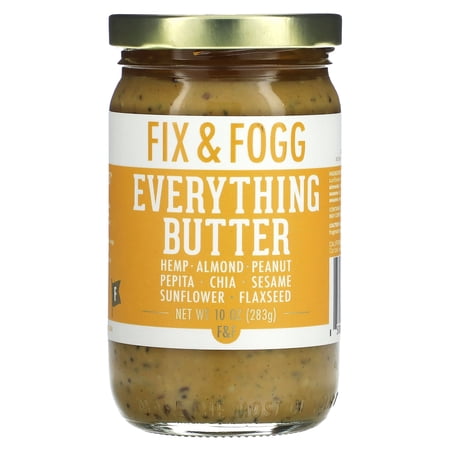



Everything Butter 10 oz (283 g) Fix & Fogg
Analysis updated August 2026 · How Scout scores
At a glance
Summary
This product contains a variety of nutrient-dense ingredients such as hi-oleic peanuts, sunflower seeds, and almonds, which are rich in healthy fats and proteins. The inclusion of sesame oil, a seed oil high in omega-6 fatty acids, slightly detracts from its overall health profile. Despite being processed, the product maintains a clean ingredient list with minimal additives, contributing to a favorable score.
Key ingredients 10
FlaxseedVery Good
Flaxseed is a rich source of omega-3 fatty acids, particularly alpha-linolenic acid (ALA), which supports heart health. It is also high in fiber and lignans, which have antioxidant properties. Flaxseed can aid in digestion and help maintain healthy cholesterol levels.
Risks
May cause digestive issues if consumed in large amounts due to high fiber content.
Benefits
Rich in omega-3 fatty acids and fiber, supporting heart health and digestion. Contains lignans with antioxidant properties.
Hi-Oleic PeanutsGood
Hi-oleic peanuts are rich in monounsaturated fats, which are beneficial for heart health. They are minimally processed and provide a good source of protein and fiber. Compared to regular peanuts, they have a higher oleic acid content, which is more stable and less prone to oxidation.
Risks
Potential allergen for individuals with peanut allergies.
Benefits
Rich in monounsaturated fats that support heart health and provide anti-inflammatory properties. Good source of protein and dietary fiber.
Sunflower SeedsGood
Sunflower seeds are a good source of healthy fats, protein, and essential nutrients like vitamin E. They are whole seeds and not processed into oil, which retains their nutritional benefits. They also contain antioxidants that can help reduce inflammation.
Risks
Potential allergen for some individuals and may contribute to excess calorie intake if consumed in large quantities.
Benefits
Provide healthy fats, protein, and essential nutrients like vitamin E. Contain antioxidants that support overall health.
PepitasGood
Pepitas, or pumpkin seeds, are rich in magnesium, zinc, and healthy fats. They are minimally processed and provide a good source of plant-based protein. Their nutrient profile supports heart health and immune function.
Benefits
Rich in magnesium and zinc, supporting heart health and immune function. Provide plant-based protein and healthy fats.
AlmondsGood
Almonds are a nutrient-dense nut rich in healthy fats, protein, and vitamin E. They are minimally processed and provide antioxidants that support heart health. Almonds also contribute to satiety and can aid in weight management.
Risks
Potential allergen for individuals with nut allergies.
Benefits
Rich in healthy fats, protein, and vitamin E, supporting heart health. Provide antioxidants and contribute to satiety.
Hemp SeedsGood
Hemp seeds are a complete source of plant-based protein, containing all essential amino acids. They are rich in healthy fats, particularly omega-3 and omega-6 fatty acids. Hemp seeds support heart health and provide a good source of minerals like magnesium and zinc.
Benefits
Complete source of plant-based protein and rich in healthy fats. Provide essential minerals like magnesium and zinc.
Chia SeedsGood
Chia seeds are high in fiber, omega-3 fatty acids, and antioxidants. They are minimally processed and can help improve digestion and heart health. Chia seeds also provide a good source of plant-based protein and essential minerals.
Risks
May cause digestive discomfort if consumed in large quantities due to high fiber content.
Benefits
High in fiber and omega-3 fatty acids, supporting digestion and heart health. Provide antioxidants and plant-based protein.
NZ Sea SaltGood
NZ sea salt is a minimally processed source of sodium and trace minerals. It is harvested naturally and retains beneficial minerals that support electrolyte balance. Compared to refined table salt, it offers additional nutritional value.
Risks
Excessive sodium intake can lead to high blood pressure and other cardiovascular issues.
Benefits
Provides essential sodium and trace minerals, supporting electrolyte balance. Offers additional nutritional value compared to refined salt.
Sesame SeedsGood
Sesame seeds are a good source of healthy fats, protein, and essential nutrients like calcium and magnesium. They are whole seeds and not processed into oil, which retains their nutritional benefits. Sesame seeds also contain antioxidants that can help reduce inflammation.
Risks
Potential allergen for some individuals and may contribute to excess calorie intake if consumed in large quantities.
Benefits
Provide healthy fats, protein, and essential nutrients like calcium and magnesium. Contain antioxidants that support overall health.
Sesame OilVery Bad
Sesame oil is a seed oil high in omega-6 fatty acids, which can promote inflammation when consumed in excess. It is extracted through processing methods that may reduce its nutritional quality. Compared to other oils, it is less stable and more prone to oxidation.
Risks
High omega-6 content may promote inflammation when consumed in excess.
Processing
Processed Foods
Get the full breakdown in the Scout appTake Scout shopping
Scan any product to see lab results, healthy alternatives, and your personalized analysis.
Download on theApp Store GET IT ONGoogle Play