
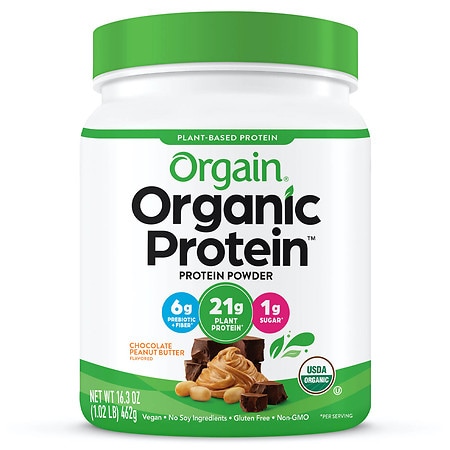
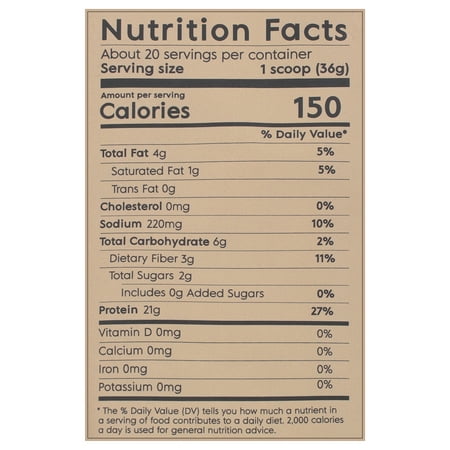



Orgain Organic Vegan 21g Protein Powder Plant Based Chocolate Peanut Butter 1.02lb
Analysis updated June 2026 · How Scout scores
At a glance
Summary
This protein powder features high-quality plant-based proteins like organic pea and brown rice protein, which are beneficial for providing essential amino acids. However, the presence of organic high-oleic sunflower oil, a seed oil, and multiple additives such as natural flavors and emulsifiers, detracts from its overall healthiness. While the product is organic and avoids artificial sweeteners, the use of processed ingredients and lack of transparency in flavoring compounds impact its score.
Key ingredients 18
Organic Brown Rice ProteinGood
Organic brown rice protein is a plant-based protein that complements pea protein by providing a complete amino acid profile. It is hypoallergenic and suitable for those with dietary restrictions. The organic label indicates it is free from synthetic additives and GMOs.
Benefits
Provides a complete amino acid profile when combined with pea protein.
Organic Chia SeedGood
Organic chia seeds are a nutrient-dense whole food rich in omega-3 fatty acids, fiber, and antioxidants. They are minimally processed and retain their natural nutritional profile. The organic certification ensures they are grown without synthetic chemicals.
Benefits
High in omega-3 fatty acids and fiber, supporting heart health and digestion.
Sea SaltGood
Unrefined sea salt — a minimally processed, natural source of sodium and essential trace minerals, and a legitimate whole-food seasoning. Treated as a positive ingredient.
Risks
Excessive consumption may contribute to high blood pressure.
Benefits
Provides essential minerals and enhances flavor.
Organic Pea ProteinNeutral
Standard formulation ingredient — neither beneficial nor harmful at typical use.
Benefits
Rich in essential amino acids and supports muscle growth and repair.
Organic Peanut FlourNeutral
Organic peanut flour is a protein-rich ingredient that adds flavor and nutritional value. It is processed to remove most of the fat, concentrating the protein content. The organic certification ensures it is free from synthetic pesticides.
Risks
Potential allergen for individuals with peanut allergies.
Benefits
Provides additional protein and flavor to the product.
Organic ErythritolNeutral
Organic erythritol is a sugar alcohol used as a low-calorie sweetener. It is naturally occurring and has minimal impact on blood sugar levels. The organic label indicates it is produced without synthetic chemicals.
Risks
Excessive consumption may cause digestive discomfort in some individuals.
Benefits
Provides sweetness with minimal caloric impact and no effect on blood sugar.
Organic Creamer BaseNeutral
Organic creamer base is used to enhance texture and flavor, typically composed of various plant-based ingredients. The organic certification ensures it is free from synthetic additives. Its exact composition can vary, affecting its nutritional impact.
Benefits
Enhances texture and flavor without synthetic additives.
Organic Rice DextrinNeutral
Organic rice dextrin is a carbohydrate used as a filler or thickener. It is derived from rice and is minimally processed. The organic certification ensures it is free from synthetic chemicals.
Benefits
Provides texture and bulk without significant nutritional impact.
Organic Rosemary ExtractNeutral
Organic rosemary extract is used as a natural preservative and antioxidant. It is minimally processed and retains its natural properties. The organic certification ensures it is free from synthetic additives.
Benefits
Provides antioxidant properties and extends shelf life naturally.
Organic Alkalized CocoaNeutral
Organic alkalized cocoa is processed to reduce acidity and improve flavor. It retains some of the natural antioxidants found in cocoa. The organic certification ensures it is free from synthetic chemicals.
Benefits
Provides flavor and some antioxidant properties.
Organic Acid Potassium ChlorideNeutral
Organic acid potassium chloride is used as a salt substitute to reduce sodium content. It is minimally processed and provides potassium, an essential mineral. The organic label ensures it is free from synthetic additives.
Risks
Excessive intake may affect electrolyte balance.
Benefits
Helps reduce sodium intake while providing potassium.
Organic Stevia ExtractNeutral
Organic stevia extract is a natural sweetener derived from the stevia plant. It is calorie-free and does not impact blood sugar levels. The organic certification ensures it is free from synthetic chemicals.
Benefits
Provides sweetness without calories or blood sugar impact.
Organic Guar GumNeutral
Organic guar gum is a natural thickening agent derived from guar beans. It is used to improve texture and stability in food products. The organic certification ensures it is free from synthetic chemicals.
Risks
May cause digestive discomfort in sensitive individuals.
Benefits
Improves texture and stability in food products.
Xanthan GumNeutral
Xanthan gum is a polysaccharide used as a thickening and stabilizing agent. It is produced through fermentation and is widely used in food products. It is generally recognized as safe in small amounts.
Risks
May cause digestive discomfort in sensitive individuals.
Benefits
Improves texture and stability in food products.
Organic Sunflower LecithinBad
Organic sunflower lecithin is an emulsifier derived from sunflower seeds. While it is less processed than soy lecithin, it is still considered a refined additive. The organic label ensures it is free from synthetic chemicals.
Risks
May cause mild digestive issues in sensitive individuals.
Benefits
Acts as an emulsifier, improving texture and consistency.
Organic Natural FlavorsBad
Organic natural flavors are used to enhance taste but lack transparency in their composition. Despite being organic, they are a catch-all term that can include various processed compounds. This lack of specificity is a concern for ingredient transparency.
Risks
Potential for undisclosed allergens or additives.
Benefits
Enhances flavor without synthetic chemicals.
Natural FlavorBad
Natural flavor is a vague term that can include a variety of processed compounds to enhance taste. It lacks transparency and can mask the presence of additives. This lack of specificity is a concern for ingredient transparency.
Risks
Potential for undisclosed allergens or additives.
Benefits
Enhances flavor without synthetic chemicals.
Organic High-Oleic Sunflower OilVery Bad
Organic high-oleic sunflower oil is a seed oil high in monounsaturated fats but still classified as very bad due to its omega-6 content. Despite being organic, seed oils are heavily processed and can contribute to inflammation. The high-oleic variant is more stable but still not ideal.
Risks
High omega-6 content may promote inflammation when consumed in excess.
Benefits
Rich in monounsaturated fats, which are generally heart-healthy.
Processing
Ultra-Processed Foods
Get the full breakdown in the Scout appTake Scout shopping
Scan any product to see lab results, healthy alternatives, and your personalized analysis.
Download on theApp Store GET IT ONGoogle PlayAmazon pricing & content
Amazon price as of . Product prices and availability are accurate as of the date/time indicated and are subject to change. Any price and availability information displayed on Amazon.com at the time of purchase will apply to the purchase of this product.
CERTAIN CONTENT THAT APPEARS ON THIS SITE COMES FROM AMAZON. THIS CONTENT IS PROVIDED “AS IS” AND IS SUBJECT TO CHANGE OR REMOVAL AT ANY TIME.