
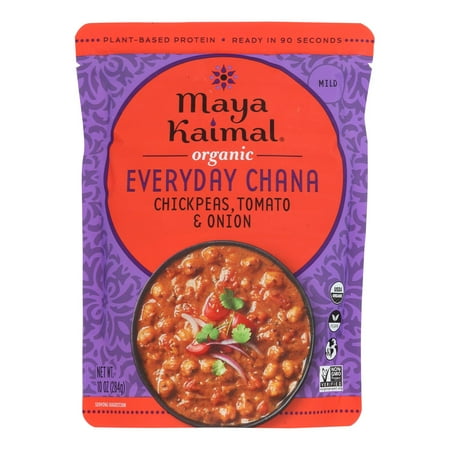

Maya Kaimal Organic Mild Chickpeas Tomato & Onion Everyday Chana 10 oz
Analysis updated September 2026 · How Scout scores
At a glance
Summary
This product contains a variety of beneficial ingredients such as chickpeas, tomatoes, and spices, which are minimally processed and organic, contributing positively to its nutritional profile. However, the presence of sunflower oil, a refined seed oil high in omega-6 fatty acids, detracts from its healthiness. The product is moderately processed, which limits its overall score despite the presence of mostly clean ingredients.
Key ingredients 12
ChickpeasVery Good
Chickpeas are a rich source of plant-based protein and fiber, supporting digestive health and satiety. They are minimally processed and provide essential nutrients like iron and folate. Organic certification ensures no synthetic pesticides or fertilizers are used.
Benefits
High in protein and fiber, chickpeas support digestive health and provide essential nutrients like iron and folate.
TomatoesGood
Tomatoes are rich in vitamins C and K, potassium, and antioxidants like lycopene, which may reduce the risk of chronic diseases. They are used in their whole form with minimal processing. Organic tomatoes ensure reduced exposure to pesticides.
Benefits
Rich in antioxidants and vitamins, tomatoes support immune function and may reduce the risk of chronic diseases.
OnionGood
Onions are a good source of vitamins, minerals, and antioxidants, contributing to heart health and immune support. They are used fresh and retain their nutritional benefits. Organic onions reduce exposure to harmful chemicals.
Benefits
Onions provide antioxidants and nutrients that support heart health and immune function.
GarlicGood
Garlic is known for its potential health benefits, including antimicrobial properties and support for cardiovascular health. It is used in its natural form, retaining its beneficial compounds. Organic garlic ensures reduced exposure to synthetic chemicals.
Benefits
Garlic supports cardiovascular health and has antimicrobial properties.
GingerGood
Ginger is valued for its anti-inflammatory and digestive benefits, often used to alleviate nausea and improve digestion. It is used in its natural form, preserving its active compounds. Organic ginger reduces exposure to pesticides.
Benefits
Ginger provides anti-inflammatory benefits and supports digestive health.
Sea saltGood
Sea salt is a natural source of sodium and trace minerals, supporting electrolyte balance. It is minimally processed compared to refined table salt. The use of sea salt ensures the presence of beneficial trace minerals.
Risks
Excessive sodium intake can lead to hypertension and cardiovascular issues.
Benefits
Sea salt provides essential minerals and supports electrolyte balance.
TurmericGood
Turmeric is known for its anti-inflammatory and antioxidant properties, primarily due to curcumin. It is used in its natural form, retaining its beneficial compounds. Organic turmeric reduces exposure to synthetic chemicals.
Benefits
Turmeric provides anti-inflammatory and antioxidant benefits.
Black pepperGood
Beneficial ingredient — whole-food or functional value in this product class.
Benefits
Black pepper may enhance nutrient absorption and adds flavor to dishes.
CorianderNeutral
Coriander is used for its flavor and potential digestive benefits, though its nutritional impact is minimal. It is used in its natural form without significant processing. Organic coriander ensures reduced exposure to synthetic chemicals.
Benefits
Coriander may aid digestion and adds flavor to dishes.
CuminNeutral
Cumin is used for its flavor and potential digestive benefits, though its nutritional impact is minimal. It is used in its natural form without significant processing. Organic cumin ensures reduced exposure to synthetic chemicals.
Benefits
Cumin may aid digestion and adds flavor to dishes.
Lemon juice concentrateNeutral
Lemon juice concentrate is used for its flavor and acidity, though its nutritional impact is minimal. It is a processed form of lemon juice, which may reduce some vitamin content. Organic certification ensures reduced exposure to synthetic chemicals.
Benefits
Lemon juice concentrate adds flavor and acidity to dishes.
Sunflower oilVery Bad
Sunflower oil is high in omega-6 fatty acids, which can promote inflammation when consumed in excess. It is a refined seed oil, often extracted using high heat and chemicals. This processing can degrade beneficial nutrients and introduce harmful compounds.
Risks
High omega-6 content may promote inflammation when consumed in excess.
Processing
Processed Foods
Get the full breakdown in the Scout appTake Scout shopping
Scan any product to see lab results, healthy alternatives, and your personalized analysis.
Download on theApp Store GET IT ONGoogle Play