
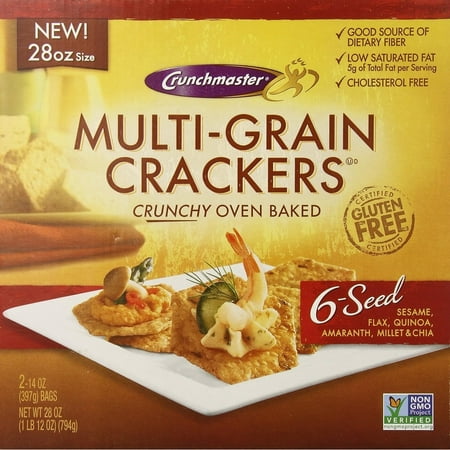


Crunchmaster Multi-Grain Crackers 28 Ounce
Analysis updated April 2026 · How Scout scores
At a glance
Summary
Crunchmaster Multi-Grain Crackers feature a variety of beneficial ingredients like flax seeds, quinoa, and chia seeds, which contribute to a nutritious profile with healthy fats and fiber. However, the presence of safflower oil, a seed oil high in omega-6 fatty acids, is a concern due to its potential inflammatory effects. The product is moderately processed, which limits its score despite the overall clean ingredient list.
Key ingredients 12
Flax seedsVery Good
Flax seeds are an excellent source of omega-3 fatty acids, fiber, and lignans, which have antioxidant properties. They support heart health and may reduce inflammation. Their inclusion in crackers enhances nutritional value and provides a nutty flavor.
Benefits
Rich in omega-3 fatty acids and fiber, supporting heart health and providing anti-inflammatory benefits.
Quinoa seedsVery Good
Quinoa seeds are a complete protein source containing all essential amino acids, making them highly nutritious. They are rich in fiber, vitamins, and minerals, supporting overall health. Their inclusion in crackers boosts protein content and provides a unique texture.
Benefits
Complete protein source rich in fiber and essential nutrients, supporting muscle health and digestion.
Amaranth seedsVery Good
Amaranth seeds are a gluten-free grain rich in protein, fiber, and micronutrients like iron and magnesium. They have anti-inflammatory properties and support cardiovascular health. Their use in crackers enhances nutritional value and provides a slightly nutty flavor.
Benefits
Rich in protein and micronutrients, supporting cardiovascular health and providing anti-inflammatory benefits.
Chia seedsVery Good
Chia seeds are a superfood rich in omega-3 fatty acids, fiber, and antioxidants. They support heart health, improve digestion, and provide sustained energy. Their inclusion in crackers boosts nutritional content and adds a crunchy texture.
Benefits
Rich in omega-3 fatty acids and fiber, supporting heart health and improving digestion.
Brown rice flourGood
Brown rice flour is a whole grain flour that retains the bran and germ, providing more nutrients than refined flours. It is a good source of fiber and essential minerals like magnesium and phosphorus. Its use in crackers adds a nutty flavor and enhances the nutritional profile.
Benefits
Rich in fiber and essential minerals, supporting digestive health and providing sustained energy.
Sesame seedsGood
Sesame seeds are a nutrient-dense ingredient rich in healthy fats, protein, and minerals such as calcium and magnesium. They contain lignans and phytosterols, which may support heart health. Their inclusion in crackers adds a crunchy texture and nutty flavor.
Risks
Allergic reactions may occur in individuals with sesame allergies.
Benefits
High in healthy fats and minerals, supporting bone health and providing antioxidant properties.
Rice fiberGood
Rice fiber is a byproduct of rice processing that is high in insoluble fiber, aiding in digestive health. It adds bulk to the diet and can help maintain regular bowel movements. Its inclusion in crackers enhances fiber content without altering taste.
Benefits
High in insoluble fiber, supporting digestive health and regularity.
MilletGood
Millet is a gluten-free grain high in fiber, protein, and essential minerals such as magnesium and phosphorus. It supports digestive health and provides sustained energy. Its inclusion in crackers adds nutritional diversity and a mild flavor.
Benefits
High in fiber and essential minerals, supporting digestive health and providing sustained energy.
Sea saltGood
Unrefined sea salt — a minimally processed, natural source of sodium and essential trace minerals, and a legitimate whole-food seasoning. Treated as a positive ingredient.
Risks
Excessive sodium intake may lead to elevated blood pressure and cardiovascular issues.
Benefits
Contains trace minerals and enhances flavor in foods.
Potato starchNeutral
Potato starch is a refined carbohydrate used as a thickening agent in food products. It is gluten-free and provides a smooth texture to baked goods. While it adds no significant nutritional value, it is a functional ingredient in food processing.
See more about Potato starch →Tamari soy sauceNeutral
Tamari soy sauce is a gluten-free soy sauce made from fermented soybeans and salt. It adds umami flavor to foods and is often used as a seasoning. While it enhances taste, it is high in sodium, which should be consumed in moderation.
Risks
High sodium content may contribute to elevated blood pressure if consumed in excess.
Benefits
Adds umami flavor and is a gluten-free alternative to traditional soy sauce.
Safflower oilVery Bad
Safflower oil is a seed oil high in omega-6 fatty acids, which can promote inflammation if consumed in excess. It is often highly processed, which may reduce its nutritional quality. Its use in food products is generally discouraged due to potential health concerns.
Risks
High omega-6 content may promote inflammation when consumed in excess.
Processing
Processed Foods
Get the full breakdown in the Scout appTake Scout shopping
Scan any product to see lab results, healthy alternatives, and your personalized analysis.
Download on theApp Store GET IT ONGoogle PlayAmazon pricing & content
Amazon price as of . Product prices and availability are accurate as of the date/time indicated and are subject to change. Any price and availability information displayed on Amazon.com at the time of purchase will apply to the purchase of this product.
CERTAIN CONTENT THAT APPEARS ON THIS SITE COMES FROM AMAZON. THIS CONTENT IS PROVIDED “AS IS” AND IS SUBJECT TO CHANGE OR REMOVAL AT ANY TIME.