
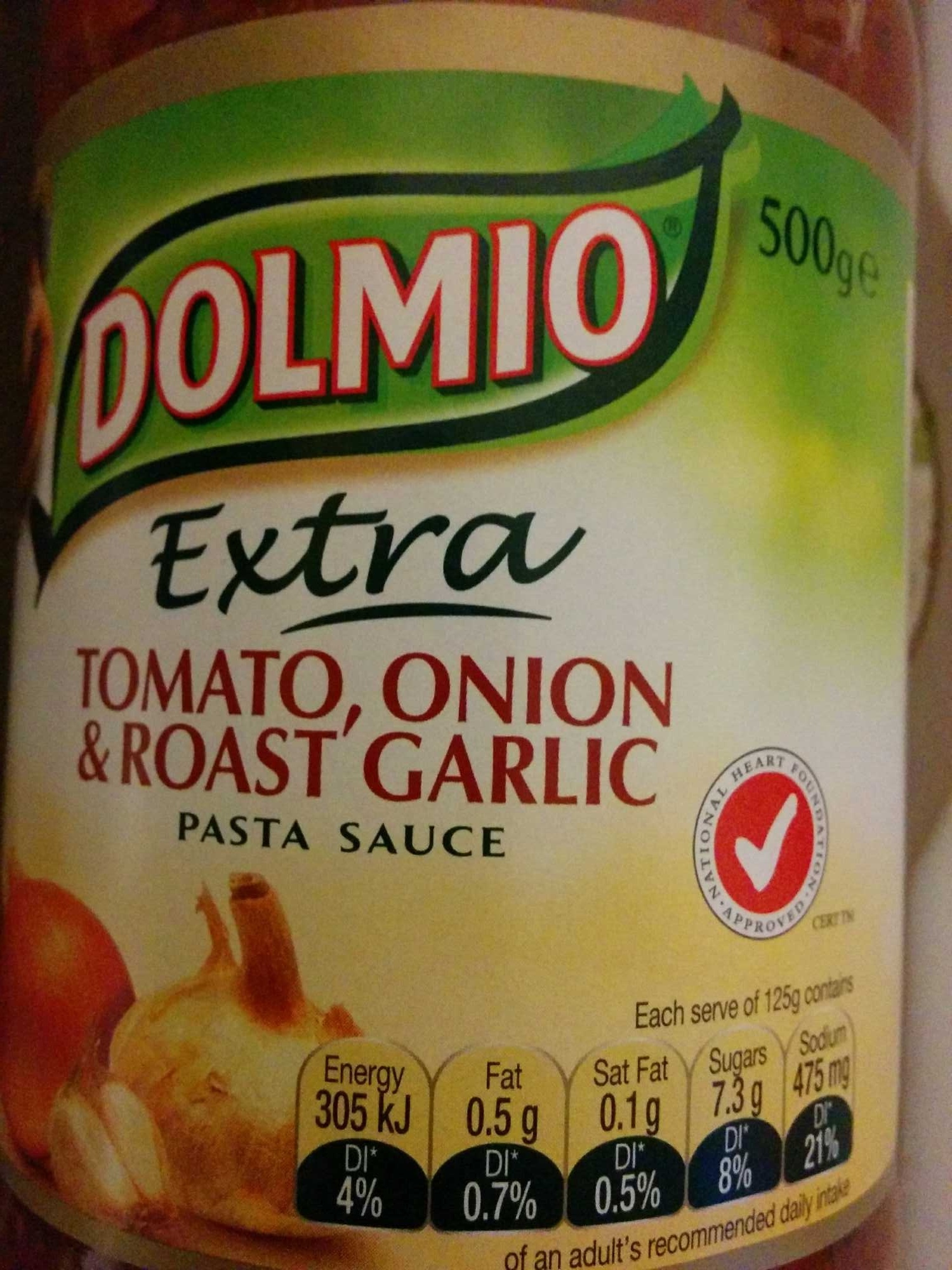


Tomato, Onion & Roast Garlic Pasta Sauce
Analysis updated September 2026 · How Scout scores
At a glance
Summary
This pasta sauce contains a high percentage of tomatoes, which are minimally processed and provide nutritional benefits. However, the presence of refined sugar and the use of modified corn starch contribute to its ultra-processed nature, which limits its health score. Despite the inclusion of beneficial ingredients like garlic and basil, the overall processing level impacts its rating.
Key ingredients 12
TomatoesVery Good
Tomatoes are rich in vitamins, minerals, and antioxidants like lycopene. They are minimally processed in this sauce, retaining most of their nutritional benefits. The high tomato content suggests a focus on natural ingredients.
Benefits
Rich in antioxidants such as lycopene, which may reduce the risk of chronic diseases. Provides essential vitamins and minerals.
OnionGood
Onions are a good source of vitamins, minerals, and antioxidants. They add flavor and nutritional value to the sauce. The processing involved is minimal, preserving their health benefits.
Benefits
Contains antioxidants and compounds that may support heart health and reduce inflammation.
GarlicGood
Garlic is known for its health-promoting properties, including antioxidant and anti-inflammatory effects. It is used in a roasted form, which enhances its flavor profile. The processing retains most of its beneficial compounds.
Benefits
May support immune function and cardiovascular health due to its bioactive compounds.
BasilGood
Basil adds flavor and aroma to the sauce and contains essential oils with potential health benefits. It is used in small amounts, contributing to the overall taste profile. The processing is minimal, preserving its natural properties.
Benefits
Contains antioxidants and essential oils that may support health and wellness.
PepperGood
Pepper adds spice and flavor to the sauce and contains piperine, which may have health benefits. It is used in small amounts, enhancing the overall taste. The processing is minimal, retaining its natural properties.
Benefits
Contains piperine, which may enhance nutrient absorption and support digestion.
PaprikaGood
Paprika adds color and flavor to the sauce and contains antioxidants. It is used in small amounts, contributing to the overall taste profile. The processing is minimal, preserving its beneficial compounds.
Benefits
Rich in antioxidants and may support eye health due to its carotenoid content.
FennelGood
Fennel adds a unique flavor and contains essential oils with potential health benefits. It is used in small amounts, enhancing the overall taste. The processing is minimal, retaining its natural properties.
Benefits
Contains essential oils and antioxidants that may support digestion and overall health.
SaltNeutral
Salt is used to enhance flavor but does not provide additional nutritional benefits. It is a common ingredient in processed foods. The amount used should be monitored to avoid excessive sodium intake.
Risks
High sodium intake can lead to increased blood pressure and cardiovascular issues.
Citric AcidNeutral
Citric acid is used as a preservative and to enhance flavor. It is a common additive in processed foods. The amount used is generally considered safe for consumption.
Risks
Excessive consumption may cause digestive discomfort in sensitive individuals.
Modified Corn StarchNeutral
Modified corn starch is used as a thickening agent in the sauce. It is a processed ingredient that provides texture without significant nutritional benefits. The processing involves altering the starch to improve its functional properties.
See more about Modified Corn Starch →SugarBad
Refined sugar is added to enhance sweetness but offers no nutritional benefits. It is a processed ingredient that can contribute to health issues if consumed in excess. Its inclusion is typical in processed foods to improve taste.
Risks
Excessive consumption of refined sugar can lead to health issues such as obesity, diabetes, and heart disease.
Yeast ExtractBad
Concentrated glutamate source — MSG-adjacent flavor enhancer.
Risks
May contain naturally occurring glutamates, which some individuals are sensitive to.
Processing
Ultra-Processed Foods
Get the full breakdown in the Scout appTake Scout shopping
Scan any product to see lab results, healthy alternatives, and your personalized analysis.
Download on theApp Store GET IT ONGoogle Play