
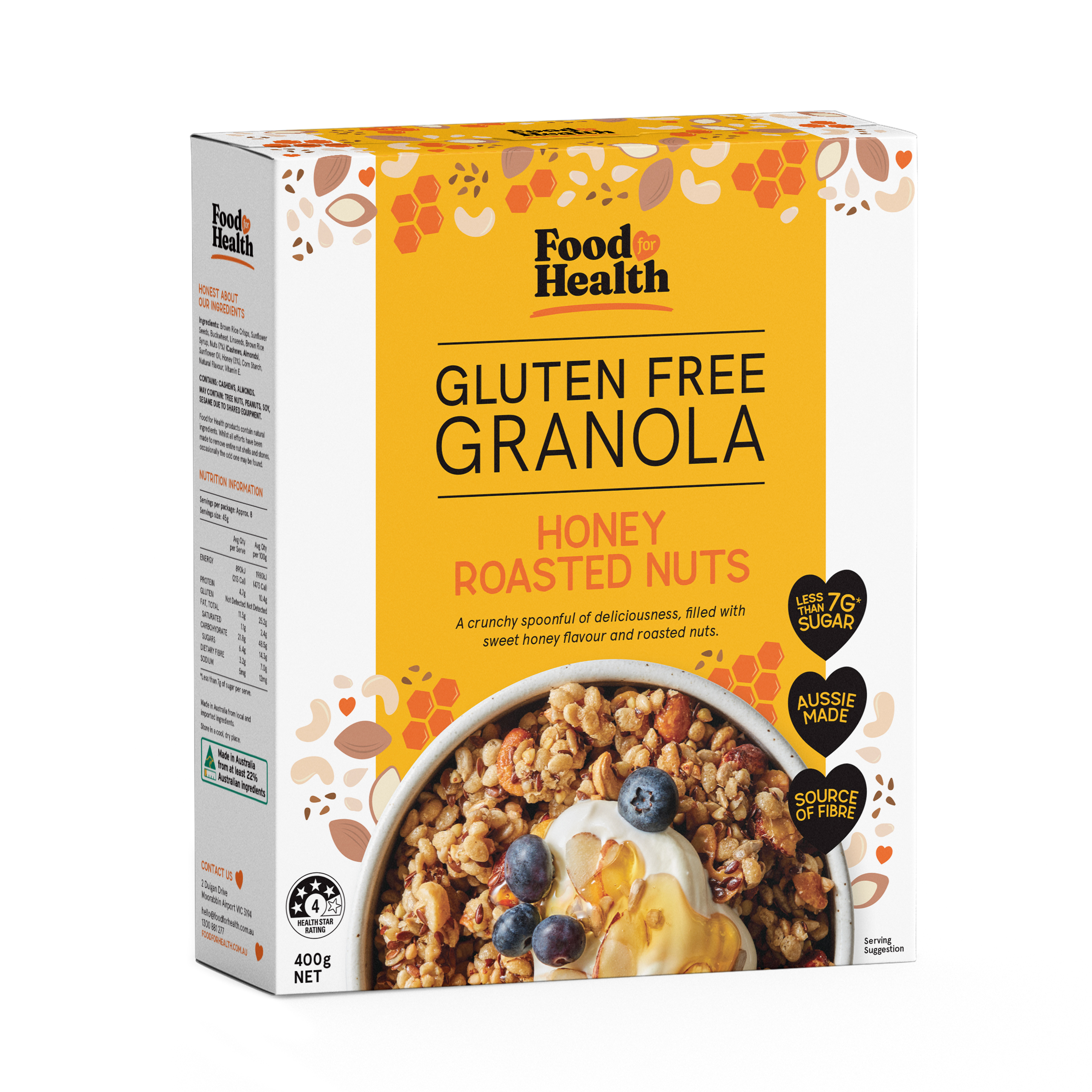


GLUTEN FREE GRANOLA HONEY ROASTED NUTS
Analysis updated June 2026 · How Scout scores
At a glance
Summary
This granola contains several beneficial ingredients such as sunflower seeds, buckwheat, and nuts, which contribute to its nutritional value. However, the presence of sunflower oil, a seed oil high in omega-6 fatty acids, and added sugars like brown rice syrup and raw sugar, negatively impact its healthiness. The product is moderately processed, which further limits its score.
Key ingredients 14
Sunflower SeedsGood
Sunflower seeds are a nutrient-dense whole food rich in healthy fats, protein, and vitamins. They contain vitamin E and selenium, which are antioxidants that support immune function. Their inclusion adds nutritional value to the granola.
Risks
May cause allergic reactions in some individuals.
Benefits
Rich in healthy fats and antioxidants, supporting heart health and immune function.
BuckwheatGood
Buckwheat is a gluten-free whole grain that is high in fiber and essential nutrients. It provides a good source of protein and is rich in antioxidants. Its inclusion enhances the nutritional profile of the granola.
Benefits
Provides fiber and essential nutrients, supporting digestive health and overall nutrition.
LinseedsGood
Linseeds, also known as flaxseeds, are high in omega-3 fatty acids and fiber. They support heart health and have anti-inflammatory properties. Their presence in the granola adds nutritional benefits.
Risks
May cause digestive discomfort if consumed in large quantities.
Benefits
Rich in omega-3 fatty acids and fiber, promoting heart health and digestion.
NutsGood
Nuts are a source of healthy fats, protein, and various vitamins and minerals. They contribute to heart health and provide a satisfying crunch. Their inclusion in granola enhances its nutritional value.
Risks
May cause allergic reactions in some individuals.
Benefits
Rich in healthy fats and protein, supporting heart health and providing satiety.
CashewsGood
Cashews are a nutrient-rich nut providing healthy fats, protein, and essential minerals like magnesium and zinc. They support heart health and bone strength. Their presence in granola adds nutritional benefits.
Risks
May cause allergic reactions in some individuals.
Benefits
Provides healthy fats and essential minerals, supporting heart and bone health.
AlmondsGood
Almonds are a nutrient-dense nut rich in healthy fats, protein, and vitamin E. They support heart health and provide antioxidant benefits. Their inclusion in granola enhances its nutritional profile.
Risks
May cause allergic reactions in some individuals.
Benefits
Rich in healthy fats and vitamin E, supporting heart health and providing antioxidant benefits.
HoneyGood
Traditional whole-food sweetener with trace enzymes and antioxidants.
Risks
May contribute to added sugars in the diet.
Benefits
Provides natural sweetness and some antioxidants.
Brown Rice CrispsNeutral
Brown rice crisps are a processed form of whole grain rice, providing a crunchy texture. They are typically low in nutrients due to processing. However, they are gluten-free and can be part of a balanced diet.
Benefits
Provides a gluten-free option for those with celiac disease or gluten sensitivity.
Corn StarchNeutral
Corn starch is a processed carbohydrate used as a thickener or stabilizer. It provides no significant nutritional benefits. Its inclusion in granola is neutral as it serves a functional purpose without health impacts.
See more about Corn Starch →Plant Based OilNeutral
Plant-based oil is a general term that can refer to various oils derived from plants. Without specific identification, its nutritional impact is unclear. Its inclusion in granola is neutral due to lack of specific information.
Risks
Potential health impacts depend on the specific type of oil used.
Brown Rice SyrupBad
Brown rice syrup is a sweetener derived from brown rice, often used as an alternative to refined sugar. It has a high glycemic index, which can lead to spikes in blood sugar levels. Its use in granola contributes to added sugars without significant nutritional benefits.
Risks
High glycemic index may lead to blood sugar spikes.
Raw SugarBad
Raw sugar is a form of refined sugar that contributes to added sugars in the diet. It provides calories without essential nutrients. Its use in granola is negative due to its impact on blood sugar levels.
Risks
May lead to blood sugar spikes and contribute to excessive calorie intake.
Natural FlavourBad
Natural flavour is a catch-all term for flavoring agents derived from natural sources. It often lacks transparency and can include various additives. Its use in granola is negative due to potential undisclosed ingredients.
Risks
Lack of transparency may pose risks for those with allergies or sensitivities.
Sunflower OilVery Bad
Sunflower oil is a seed oil high in omega-6 fatty acids, which can promote inflammation when consumed in excess. It is often highly processed, which can degrade its nutritional quality. Its use in granola is considered negative due to these factors.
Risks
High omega-6 content may promote inflammation when consumed in excess.
Processing
Processed Foods
Get the full breakdown in the Scout appTake Scout shopping
Scan any product to see lab results, healthy alternatives, and your personalized analysis.
Download on theApp Store GET IT ONGoogle Play