
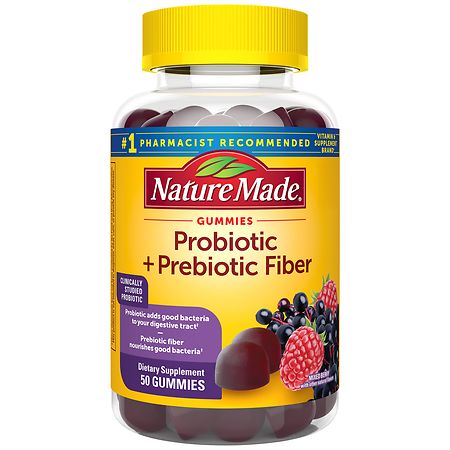


Nature Made Probiotic/Prebiotic Gummies - 50ct: 2 Billion CFUs, Mixed Berry Flavor, Gluten-Free
Analysis updated October 2026 · How Scout scores
At a glance
Summary
This probiotic/prebiotic supplement contains beneficial ingredients like inulin and Bacillus coagulans, which support gut health and digestion. However, the presence of artificial colorants and natural flavors, along with sunflower lecithin as an emulsifier, raises concerns about ingredient transparency and processing. The product's formulation is moderately processed with several additives, which impacts its overall rating.
Key ingredients 14
Bacillus coagulansVery Good
Bacillus coagulans is a probiotic strain that supports gut health and improves digestion. It is known for its ability to survive stomach acid and reach the intestines effectively. This probiotic can enhance immune function and reduce gastrointestinal discomfort.
Benefits
Supports digestive health and boosts immune function.
InulinGood
Inulin is a prebiotic fiber that supports gut health by promoting the growth of beneficial bacteria. It is derived from chicory root and is minimally processed, maintaining its natural benefits. Inulin can enhance digestive health and improve nutrient absorption.
Risks
Excessive consumption may cause digestive discomfort such as bloating or gas.
Benefits
Promotes healthy gut flora and aids in digestion.
Coconut OilGood
Beneficial ingredient — whole-food or functional value in this product class.
Risks
High in saturated fats, which may impact heart health if consumed in excess.
Benefits
Contains MCTs that may provide quick energy.
Monk Fruit ExtractGood
Beneficial ingredient — whole-food or functional value in this product class.
Benefits
Provides sweetness without calories or impacting blood sugar.
PectinNeutral
Pectin is a natural gelling agent derived from fruits, commonly used to thicken and stabilize foods. It is a soluble fiber that can aid in digestion. Pectin is generally considered safe and beneficial for digestive health.
Benefits
May help improve digestion and stabilize blood sugar levels.
WaterNeutral
Water is used as a solvent and processing aid in food products. It is essential for hydration and does not pose any health risks in this context. Water is a neutral ingredient with no direct nutritional benefits in this form.
Benefits
Essential for hydration and processing.
Citric AcidNeutral
Citric acid is a natural preservative and flavor enhancer found in citrus fruits. It is widely used in food products to add acidity and preserve freshness. Citric acid is generally recognized as safe when used in moderation.
Risks
May cause tooth enamel erosion if consumed in large amounts over time.
Benefits
Enhances flavor and preserves freshness.
Medium Chain TriglyceridesNeutral
Medium chain triglycerides (MCTs) are fats that are metabolized quickly for energy. They are often derived from coconut or palm oil and are used in various health products. MCTs are considered neutral in moderate amounts but can be beneficial for quick energy.
Risks
Excessive intake may lead to digestive discomfort.
Benefits
Provides a quick source of energy and may support weight management.
Sodium CitrateNeutral
Sodium citrate is a salt of citric acid used as an emulsifier and preservative. It helps maintain the stability and flavor of food products. Sodium citrate is generally recognized as safe in food applications.
Risks
Excessive consumption may lead to an imbalance in electrolytes.
Benefits
Helps maintain product stability and flavor.
Tapioca StarchNeutral
Tapioca starch is a carbohydrate extracted from the cassava root, used as a thickening agent. It is gluten-free and commonly used in processed foods. Tapioca starch is considered neutral with no significant health risks or benefits.
Benefits
Provides a gluten-free thickening option for food products.
MaltitolBad
A sugar alcohol used to label products sugar-free. It still raises blood sugar — roughly half as much as table sugar — and commonly causes bloating and digestive upset at the amounts found in bars and candy.
Risks
May cause digestive discomfort, such as gas or diarrhea, when consumed in large quantities.
Benefits
Provides sweetness with fewer calories than sugar.
Color AddedBad
Color added refers to artificial or natural colorants used to enhance the appearance of food. Artificial colors can be associated with hyperactivity in children and other health concerns. The specific type of colorant used is not disclosed, which raises concerns about its safety.
Risks
Potential link to hyperactivity and allergic reactions in sensitive individuals.
Natural FlavorsBad
Natural flavors are a catch-all term for flavoring agents derived from natural sources. The lack of transparency about their specific composition can be concerning. They are often used to enhance taste but provide no nutritional benefits.
Risks
Potential allergens and lack of transparency in ingredient composition.
Sunflower LecithinBad
Sunflower lecithin is an emulsifier derived from sunflower seeds. While it is less processed than soy lecithin, it is still considered a processed additive. It is used to improve texture and mixability in food products.
Risks
May contain trace amounts of allergens and is a processed additive.
Benefits
Improves texture and mixability in food products.
Processing
Ultra-Processed Foods
Get the full breakdown in the Scout appTake Scout shopping
Scan any product to see lab results, healthy alternatives, and your personalized analysis.
Download on theApp Store GET IT ONGoogle Play