


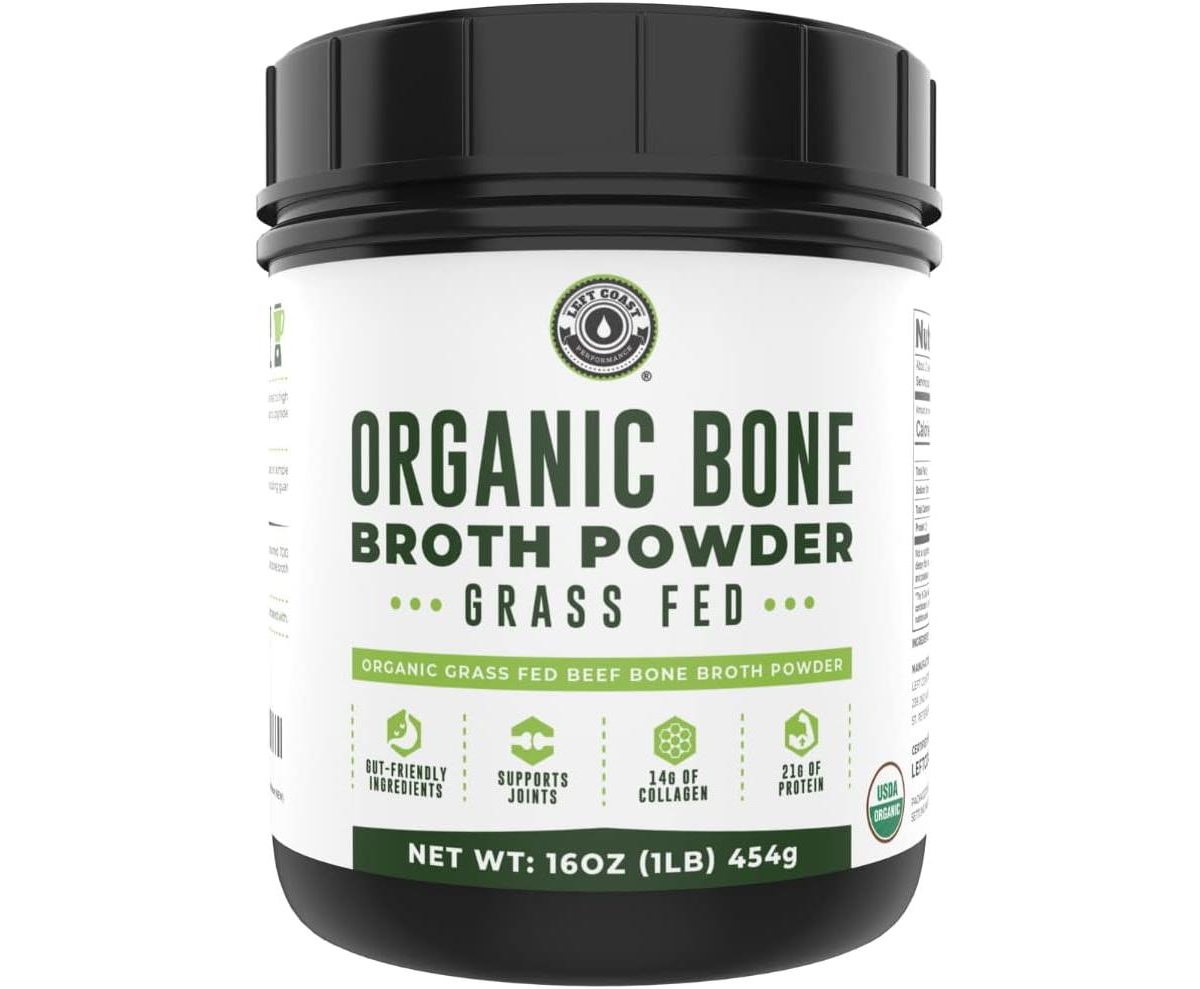

At a glance
Summary
This bone broth contains beneficial ingredients like beef broth, beef, and vegetables, which provide essential nutrients and support joint health. However, the presence of added sugar and the use of corn oil, a seed oil, detract from its overall healthiness. The product is moderately processed, which limits its score despite the presence of nutrient-rich components.
Key ingredients 23
Beef brothGood
Beef broth is a nutrient-rich liquid made by simmering beef bones and connective tissues. It is a good source of collagen, amino acids, and minerals. The slow cooking process helps extract these nutrients, making it beneficial for joint health and digestion.
Benefits
Provides collagen and amino acids that support joint health and digestion. Contains minerals like calcium and magnesium that are beneficial for bone health.
BeefGood
Beef is a high-quality source of protein and essential nutrients like iron and B vitamins. It provides a rich amino acid profile that supports muscle growth and repair. Grass-fed beef is preferred for its higher omega-3 content and better fat profile.
Risks
Excessive consumption of red meat may be linked to health issues such as heart disease.
Benefits
Rich in protein and essential nutrients like iron and B vitamins. Supports muscle growth and repair.
Broth made from bonesGood
Bone broth is rich in collagen, gelatin, and minerals, which are beneficial for joint health and digestion. The slow simmering process extracts these nutrients effectively. It is a traditional food known for its nourishing properties.
Benefits
Provides collagen and gelatin that support joint health and digestion. Contains minerals like calcium and magnesium.
Beef extractGood
Beef extract is a concentrated form of beef flavor and nutrients. It enhances the taste of the broth and provides additional protein and minerals. It is made by reducing beef broth to a thick, flavorful paste.
Benefits
Enhances flavor and provides additional protein and minerals. Supports the nutritional profile of the broth.
Apple cider vinegarGood
Apple cider vinegar is used to help extract minerals from bones during cooking. It has potential health benefits, including aiding digestion and balancing pH levels. It is made from fermented apple juice, retaining beneficial enzymes and acids.
Risks
Excessive consumption may lead to tooth enamel erosion due to its acidity.
Benefits
Aids in mineral extraction from bones and supports digestion. Contains beneficial enzymes and acids.
TomatoGood
Tomatoes are rich in vitamins, minerals, and antioxidants like lycopene. They contribute to the flavor and nutritional profile of the broth. Lycopene is known for its potential to reduce the risk of certain chronic diseases.
Benefits
Rich in vitamins, minerals, and antioxidants like lycopene. Supports heart health and reduces the risk of chronic diseases.
Sea saltGood
Sea salt is a minimally processed salt that contains trace minerals. It is used to enhance flavor and provide essential sodium. Unlike refined table salt, it retains beneficial minerals.
Risks
Excessive sodium intake can lead to high blood pressure and cardiovascular issues.
Benefits
Enhances flavor and provides essential sodium and trace minerals.
CarrotGood
Carrots are rich in beta-carotene, fiber, and antioxidants. They contribute to the nutritional value and flavor of the broth. Beta-carotene is converted to vitamin A, supporting vision and immune health.
Benefits
Rich in beta-carotene, fiber, and antioxidants. Supports vision and immune health.
OnionGood
Onions are a good source of antioxidants and sulfur compounds. They enhance the flavor and nutritional profile of the broth. These compounds have potential anti-inflammatory and immune-boosting properties.
Benefits
Provides antioxidants and sulfur compounds that support immune health and reduce inflammation.
CeleryGood
Celery is low in calories and rich in vitamins, minerals, and antioxidants. It adds flavor and nutrients to the broth. Celery contains compounds that may support heart health and reduce inflammation.
Benefits
Rich in vitamins, minerals, and antioxidants. Supports heart health and reduces inflammation.
Garlic powderGood
Garlic powder provides flavor and some of the health benefits of fresh garlic. It contains sulfur compounds that have potential antimicrobial and cardiovascular benefits. It is a convenient way to add garlic flavor without moisture.
Benefits
Provides flavor and sulfur compounds that support cardiovascular health and have antimicrobial properties.
CornGood
Beneficial ingredient — whole-food or functional value in this product class.
Benefits
Provides carbohydrates and some vitamins and minerals. Adds texture and flavor.
PotatoGood
Beneficial ingredient — whole-food or functional value in this product class.
Benefits
Provides carbohydrates and some vitamins and minerals. Adds texture and flavor.
Black pepperGood
Black pepper is a spice that enhances flavor and has potential health benefits. It contains piperine, which may improve nutrient absorption and has antioxidant properties. It is widely used in cooking for its pungent taste.
Benefits
Enhances flavor and contains piperine, which may improve nutrient absorption and has antioxidant properties.
WaterNeutral
Water is used as a solvent and base in the broth. It is essential for hydration and does not contribute calories or nutrients. It serves as a medium for extracting flavors and nutrients from other ingredients.
Benefits
Essential for hydration and acts as a medium for nutrient extraction in cooking.
Onion powderNeutral
Onion powder is a dehydrated form of onion used for flavoring. It retains some of the beneficial compounds found in fresh onions, such as antioxidants. It is a convenient way to add onion flavor without the moisture content.
Benefits
Provides flavor and some antioxidants found in fresh onions.
Cooked vegetableNeutral
Cooked vegetables add flavor and nutrients to the broth. They provide fiber, vitamins, and minerals. The cooking process may reduce some nutrient content but enhances digestibility.
Benefits
Provides fiber, vitamins, and minerals. Enhances flavor and nutritional profile.
SaltNeutral
Salt is used to enhance flavor and preserve food. It is a source of sodium, which is essential for fluid balance and nerve function. Excessive intake can lead to health issues like high blood pressure.
Risks
Excessive sodium intake can lead to high blood pressure and cardiovascular issues.
Benefits
Enhances flavor and provides essential sodium for fluid balance and nerve function.
OilNeutral
Oil is used for cooking and flavor enhancement. The type of oil is not specified, which affects its health impact. It provides fats that are essential for energy and nutrient absorption.
Risks
Potential health risks depend on the type of oil used, such as high omega-6 content in seed oils.
Benefits
Provides essential fats for energy and nutrient absorption.
FlourNeutral
Flour is used as a thickening agent in the broth. It provides carbohydrates and some nutrients. The type of flour is not specified, which affects its nutritional profile.
Risks
Potential gluten-related issues if wheat flour is used.
Benefits
Provides carbohydrates and acts as a thickening agent.
Carrot powderNeutral
Carrot powder is a dehydrated form of carrot used for flavor and color. It retains some of the nutrients found in fresh carrots, such as beta-carotene. It is a convenient way to add carrot flavor without moisture.
Benefits
Provides flavor and some nutrients like beta-carotene found in fresh carrots.
SugarBad
Sugar is a refined carbohydrate that can contribute to increased blood sugar levels and caloric intake. It is often added for flavor enhancement but offers no nutritional benefits. Excessive consumption is linked to various health issues, including obesity and diabetes.
Risks
High intake can lead to obesity, diabetes, and other metabolic disorders.
Yeast extractBad
Concentrated glutamate source — MSG-adjacent flavor enhancer.
Benefits
Enhances flavor and provides B vitamins and amino acids.
Processing
Processed Foods
Get the full breakdown in the Scout appTake Scout shopping
Scan any product to see lab results, healthy alternatives, and your personalized analysis.
Download on theApp Store GET IT ONGoogle Play