
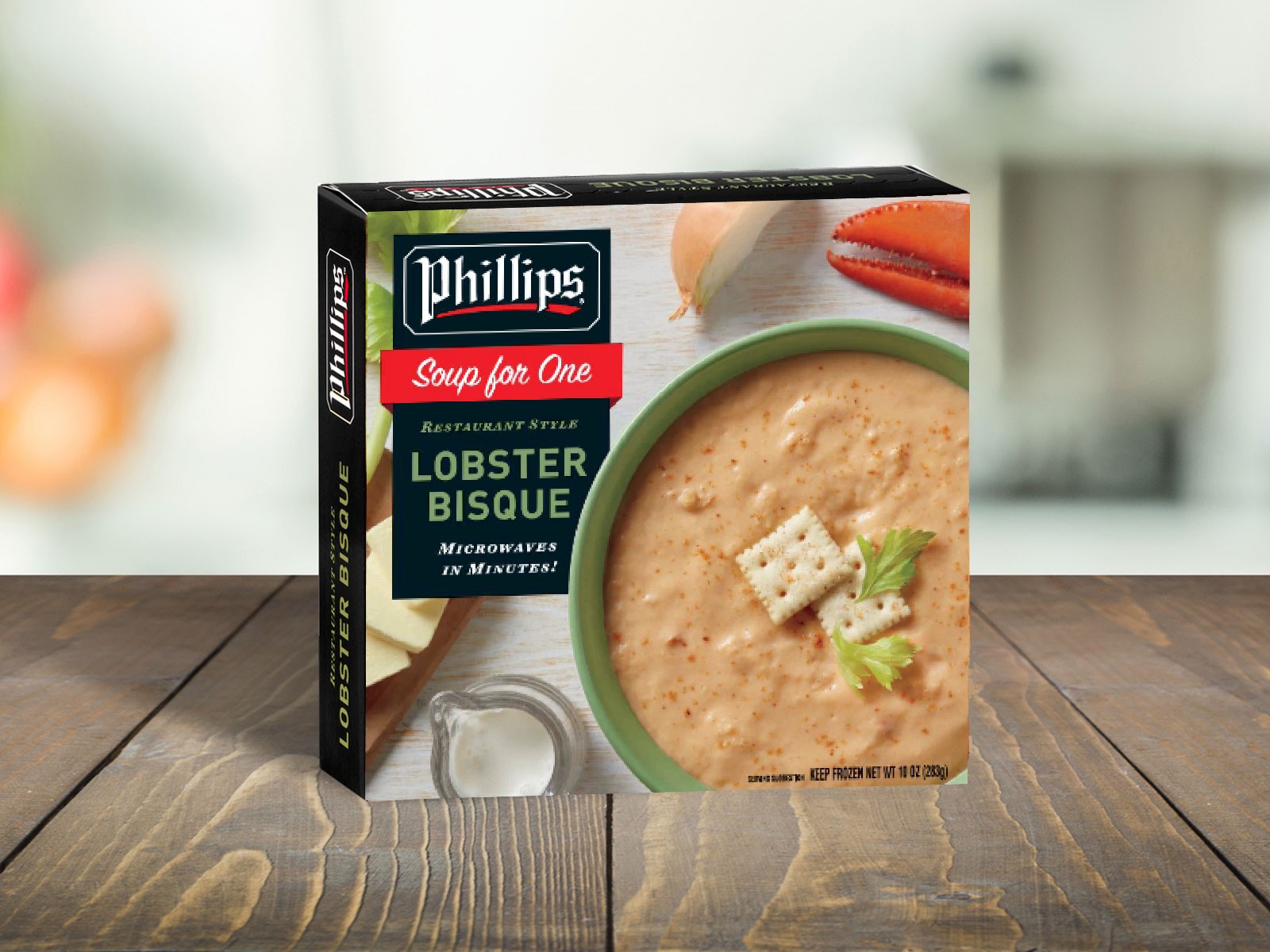


Phillips - Soup For One - Lobster Bisque Soup 10.00 oz
Analysis updated August 2026 · How Scout scores
At a glance
Summary
This lobster bisque soup contains beneficial ingredients such as lobster meat, light cream, and butter, which contribute to its nutritional value by providing high-quality protein and healthy fats. However, the presence of processed ingredients like unbleached hard wheat flour and the overall processing level limit its score. While the soup is fortified with vitamins and minerals, the processing level and use of refined flour prevent it from achieving a higher rating.
Key ingredients 11
Lobster MeatVery Good
Lobster meat is a high-quality protein source rich in essential nutrients like omega-3 fatty acids. It is minimally processed and provides a good amount of vitamins and minerals. The inclusion of lobster enhances the nutritional profile of the soup.
Risks
Potential allergen for individuals with shellfish allergies.
Benefits
Rich in protein and omega-3 fatty acids, supporting heart health and brain function.
Light CreamGood
Light cream adds richness and flavor to the soup while providing some beneficial fats. It is less processed than heavy cream and contains fewer calories. The dairy content can offer calcium and vitamin D.
Risks
May cause issues for individuals with lactose intolerance or dairy allergies.
Benefits
Provides beneficial fats and can be a source of calcium and vitamin D.
ButterGood
Butter is a natural fat that adds flavor and richness to the soup. It contains fat-soluble vitamins like A, D, E, and K. When used in moderation, it can be part of a balanced diet.
Risks
High in saturated fats, which should be consumed in moderation to avoid cardiovascular risks.
Benefits
Provides fat-soluble vitamins and enhances flavor.
NiacinGood
Niacin, also known as vitamin B3, is added for its nutritional benefits. It plays a crucial role in energy metabolism and maintaining healthy skin and nerves. It is often added to foods to enhance their nutritional profile.
Benefits
Supports energy metabolism and maintains healthy skin and nerves.
Thiamin MononitrateGood
Thiamin mononitrate is a form of vitamin B1 added for its nutritional benefits. It is essential for energy metabolism and nerve function. Fortification ensures adequate intake of this important vitamin.
Benefits
Supports energy metabolism and nerve function.
WaterNeutral
Water is a neutral ingredient used as a base in many food products. It provides no nutritional value but is essential for consistency and texture. It is a necessary component in soups to achieve the desired liquid form.
See more about Water →Sherry Cooking WineNeutral
Sherry cooking wine is used to enhance the flavor profile of the soup. It is a processed ingredient with alcohol content that evaporates during cooking. It adds depth to the dish without significant nutritional impact.
Risks
Contains alcohol, which may not be suitable for all individuals, though it typically evaporates during cooking.
Benefits
Enhances flavor without adding significant calories or nutrients.
SaltNeutral
Salt is used to enhance flavor and preserve the soup. It is a common culinary ingredient but provides no nutritional benefits beyond sodium. Excessive consumption can lead to health issues like hypertension.
Risks
High sodium intake can contribute to hypertension and cardiovascular issues.
Benefits
Enhances flavor and acts as a preservative.
Unbleached Hard Wheat FlourNeutral
Unbleached hard wheat flour is used as a thickening agent in the soup. It is less processed than bleached flour, retaining more nutrients. It provides carbohydrates but is not a significant source of other nutrients.
Risks
Contains gluten, which can be problematic for individuals with celiac disease or gluten sensitivity.
Benefits
Provides carbohydrates and is less processed than bleached flour.
Malted Barley FlourNeutral
Malted barley flour is used to enhance flavor and texture. It is a processed grain product that provides some vitamins and minerals. It is not a significant source of nutrients but contributes to the overall taste.
Risks
Contains gluten, which can be problematic for individuals with celiac disease or gluten sensitivity.
Benefits
Adds flavor and texture, with some vitamins and minerals.
Reduced IronNeutral
Standard formulation ingredient — neither beneficial nor harmful at typical use.
Risks
Excessive iron intake can lead to toxicity, but this is rare from food sources.
Benefits
Essential for oxygen transport and preventing anemia.
Processing
Processed Foods
Get the full breakdown in the Scout appTake Scout shopping
Scan any product to see lab results, healthy alternatives, and your personalized analysis.
Download on theApp Store GET IT ONGoogle Play