

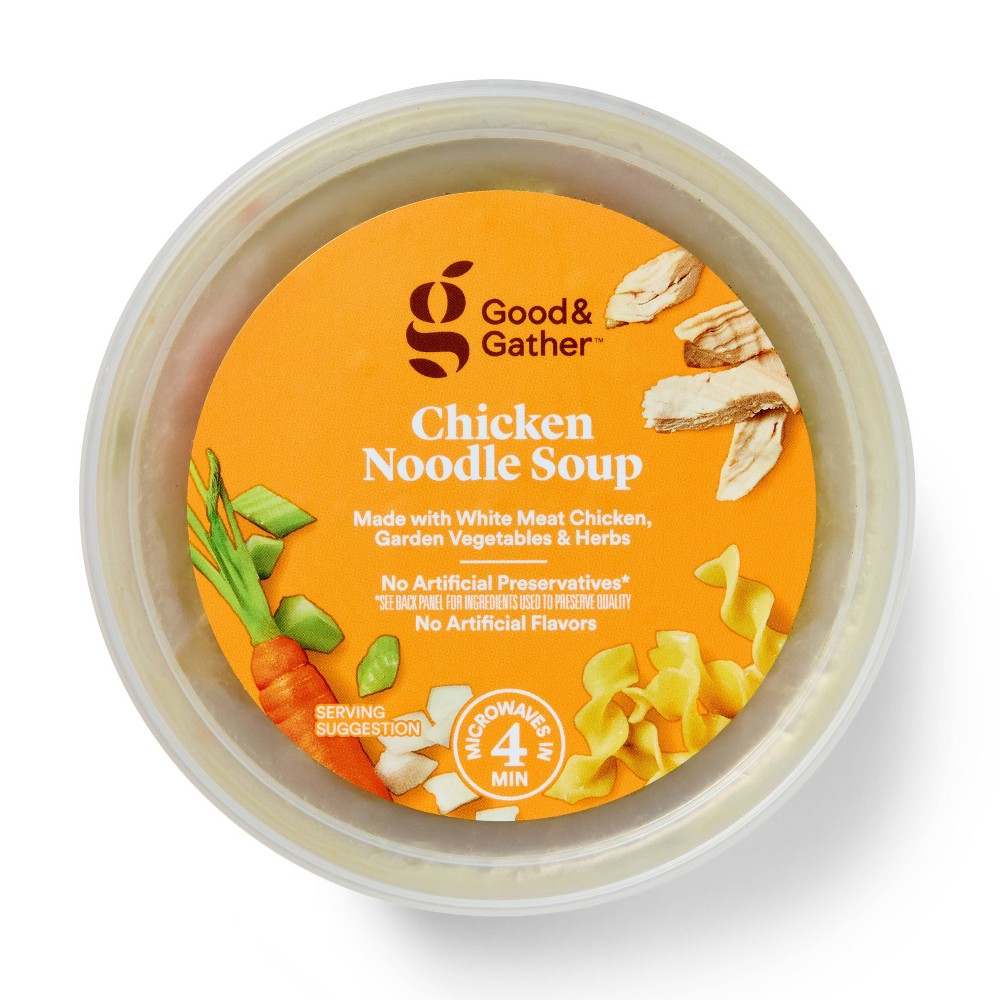


At a glance
Summary
This soup contains several beneficial ingredients such as chicken broth, chicken, and vegetables, which provide essential nutrients and support overall health. However, it is a processed food with ingredients like enriched noodles and food starch, which contribute to its processing level. The presence of olive oil is a positive aspect, but the overall processing and inclusion of additives like potassium chloride limit its score.
Key ingredients 14
Chicken brothGood
Chicken broth is a flavorful base that provides essential nutrients like collagen and amino acids. It is typically made by simmering chicken bones and meat, which extracts beneficial compounds. The broth can support joint health and improve digestion.
Benefits
Rich in collagen and amino acids that support joint health and digestion.
ChickenGood
Chicken is a high-quality source of protein, providing essential amino acids necessary for muscle repair and growth. It is a lean meat that is low in fat when skinless. Consuming chicken can support muscle maintenance and overall health.
Benefits
Provides high-quality protein and essential amino acids for muscle repair and growth.
CarrotsGood
Carrots are a nutritious vegetable rich in beta-carotene, fiber, and antioxidants. They are minimally processed and retain most of their nutrients when cooked. Carrots can support eye health and improve digestion.
Benefits
Rich in beta-carotene and antioxidants that support eye health and provide dietary fiber.
CeleryGood
Celery is a low-calorie vegetable that provides dietary fiber and essential vitamins like vitamin K. It is minimally processed and retains its nutritional value. Celery can aid in digestion and support bone health.
Benefits
Provides dietary fiber and essential vitamins that support digestion and bone health.
Olive oilGood
Olive oil is a healthy fat rich in monounsaturated fats and antioxidants. It is often cold-pressed to preserve its beneficial compounds. Olive oil supports heart health and has anti-inflammatory properties.
Benefits
Rich in monounsaturated fats and antioxidants that support heart health and reduce inflammation.
Sea saltGood
Sea salt is a natural source of sodium and trace minerals. It is minimally processed and retains more minerals compared to refined table salt. Sea salt can enhance flavor and provide essential electrolytes.
Risks
Excessive consumption may contribute to high blood pressure.
Benefits
Provides essential electrolytes and enhances flavor with trace minerals.
GarlicGood
Garlic is a flavorful herb known for its antioxidant and anti-inflammatory properties. It is minimally processed and retains its health benefits. Garlic can support cardiovascular health and boost the immune system.
Benefits
Contains antioxidants and compounds that support cardiovascular health and immune function.
SpicesGood
Whole-food seasonings, antioxidant-bearing.
Benefits
Enhances flavor and may provide antioxidants.
Enriched curly noodleNeutral
Enriched curly noodles provide carbohydrates and are fortified with vitamins and minerals like niacin and iron. They are made from durum semolina and eggs, offering some protein content. While they provide energy, they are a processed food with limited nutritional benefits.
Risks
May contribute to high carbohydrate intake if consumed in excess.
Benefits
Provides carbohydrates for energy and is fortified with essential vitamins and minerals.
OnionsNeutral
Onions are a common vegetable used for flavor and contain antioxidants and sulfur compounds. They are minimally processed and retain their nutritional value. Onions can support immune function and provide flavor without significant calories.
Benefits
Contains antioxidants and sulfur compounds that support immune function.
Food starchNeutral
Food starch is used as a thickening agent in soups and sauces. It is a processed carbohydrate that provides texture but limited nutritional value. While it enhances the consistency of the product, it does not offer significant health benefits.
Benefits
Enhances texture and consistency of the product.
Chicken fatNeutral
Chicken fat is a source of flavor and provides some essential fatty acids. It is a natural fat that can enhance the taste of dishes. While it adds flavor, it should be consumed in moderation due to its fat content.
Risks
Excessive consumption may contribute to high calorie intake.
Benefits
Enhances flavor and provides essential fatty acids.
Potassium chlorideNeutral
Potassium chloride is used as a salt substitute to reduce sodium content. It provides potassium, an essential mineral for heart and muscle function. While beneficial for reducing sodium intake, it should be consumed in moderation.
Risks
Excessive intake may lead to hyperkalemia, especially in individuals with kidney issues.
Benefits
Provides potassium, which is essential for heart and muscle function.
Parmesan cheeseNeutral
Parmesan cheese is a source of protein and calcium, providing essential nutrients. It is a processed cheese with a strong flavor, often used in small amounts. While it adds flavor and nutrients, it is high in sodium.
Risks
High sodium content may be a concern for individuals with hypertension.
Benefits
Provides protein and calcium, supporting bone health and muscle function.
Processing
Processed Foods
Get the full breakdown in the Scout appTake Scout shopping
Scan any product to see lab results, healthy alternatives, and your personalized analysis.
Download on theApp Store GET IT ONGoogle Play