
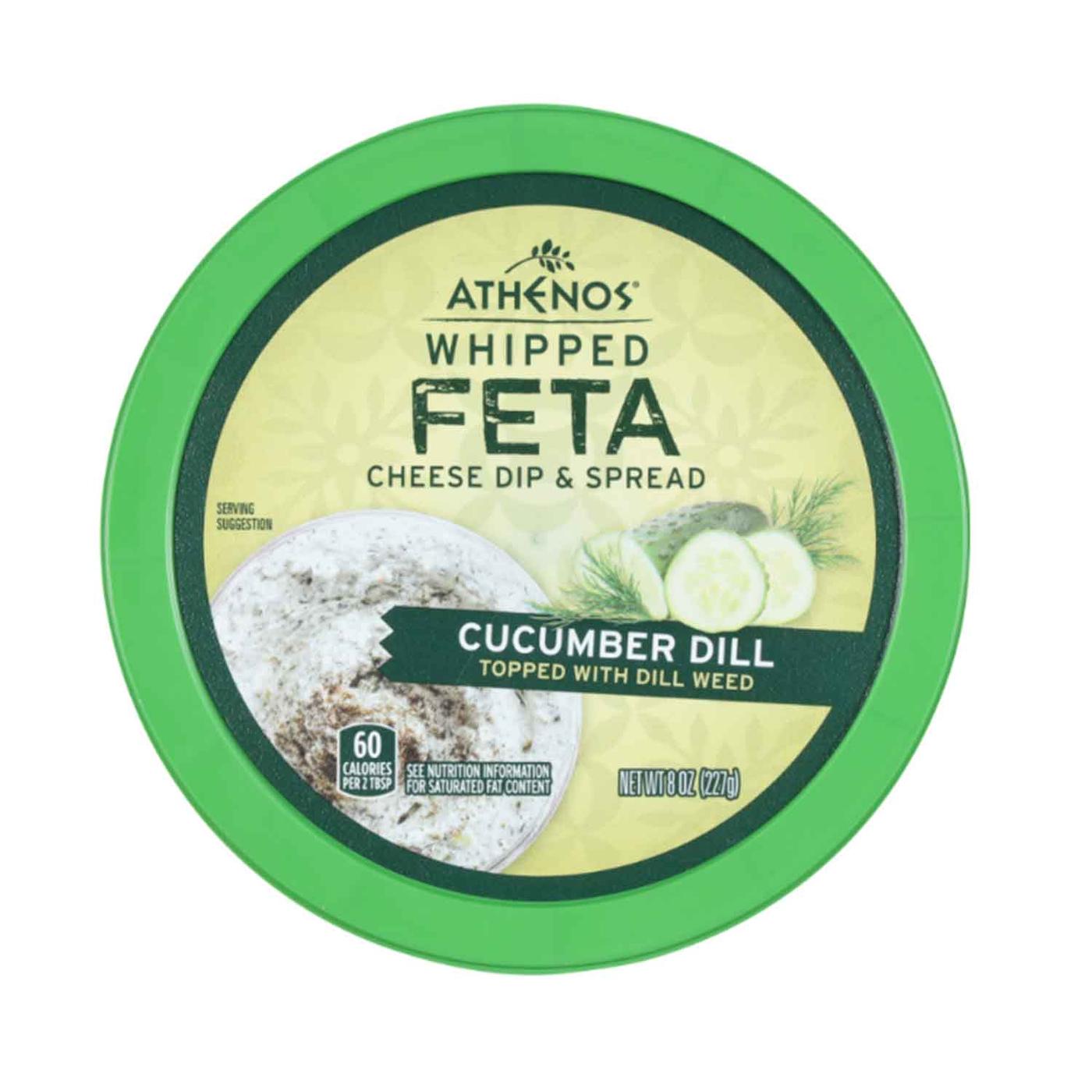



Athenos Whipped Cucumber Dill Feta
Analysis updated August 2026 · How Scout scores
At a glance
Summary
This whipped cucumber dill feta contains beneficial ingredients like feta cheese, cucumber, and olive oil, which provide protein, healthy fats, and antioxidants. However, the presence of canola oil, a seed oil high in omega-6 fatty acids, and sorbic acid, a synthetic preservative, detracts from its overall healthiness. The product is moderately processed, which limits its score despite the inclusion of some high-quality ingredients.
Key ingredients 13
Feta CheeseGood
Feta cheese is a good source of protein and calcium, contributing to bone health. It is made from cultured pasteurized part-skim milk, which ensures safety and quality. The fermentation process also provides beneficial probiotics.
Risks
Contains lactose, which may cause digestive issues for those with lactose intolerance.
Benefits
Rich in calcium and protein, supporting bone health and muscle maintenance.
CucumberGood
Cucumber is a low-calorie vegetable that provides hydration and essential nutrients. It is rich in antioxidants and can support skin health. Its high water content makes it refreshing and hydrating.
Benefits
Provides hydration and essential nutrients with antioxidant properties.
Cultured Pasteurized Milk and CreamGood
Cultured pasteurized milk and cream are sources of high-quality protein and healthy fats. The culturing process enhances digestibility and adds beneficial probiotics. Pasteurization ensures safety by eliminating harmful bacteria.
Risks
Contains lactose, which may cause issues for lactose-intolerant individuals.
Benefits
Offers high-quality protein and healthy fats, with probiotics for gut health.
Milk Protein ConcentrateGood
Beneficial ingredient — whole-food or functional value in this product class.
Risks
May cause allergic reactions in individuals with dairy allergies.
Benefits
Provides essential amino acids and is useful for protein fortification.
Dried DillGood
Dried dill is a flavorful herb that adds aroma and taste to dishes. It contains antioxidants and may support digestive health. The drying process preserves its flavor and nutritional properties.
Benefits
Adds flavor and contains antioxidants that may support health.
Olive OilGood
Olive oil is a high-quality monounsaturated fat with anti-inflammatory properties. It contains antioxidants that support heart health. Cold-pressed extraction preserves beneficial compounds.
Benefits
Rich in monounsaturated fats that support heart health and provide anti-inflammatory properties.
Dried Lemon JuiceNeutral
Dried lemon juice provides a tangy flavor and some vitamin C. It is a convenient form of lemon juice for flavoring. However, the drying process may reduce its vitamin content.
Benefits
Adds tangy flavor and provides some vitamin C.
SaltNeutral
Salt is used to enhance flavor and preserve food. It is a common culinary ingredient but should be consumed in moderation. Excessive intake can lead to health issues like hypertension.
Risks
Excessive salt intake can lead to hypertension and cardiovascular issues.
Benefits
Enhances flavor and acts as a preservative.
EnzymesNeutral
Enzymes are used in cheese-making to aid in the coagulation of milk. They are essential for the development of texture and flavor in cheese. Typically derived from microbial or animal sources.
Benefits
Essential for cheese production, aiding in texture and flavor development.
Carob Bean GumNeutral
Carob bean gum is a natural thickener derived from the seeds of the carob tree. It is used to improve texture and stability in food products. Generally considered safe and well-tolerated.
Benefits
Improves texture and stability in food products.
Xanthan GumNeutral
Xanthan gum is a polysaccharide used as a thickening and stabilizing agent. It is produced through fermentation and is widely used in food products. Generally recognized as safe, but may cause digestive issues in large amounts.
Risks
May cause digestive issues if consumed in large amounts.
Benefits
Improves texture and stability in food products.
Sorbic AcidBad
Sorbic acid is a preservative used to prevent mold and yeast growth. It is synthetically produced and can cause allergic reactions in sensitive individuals. Its use is common in processed foods to extend shelf life.
Risks
May cause allergic reactions in sensitive individuals.
Benefits
Extends shelf life by preventing mold and yeast growth.
Canola OilVery Bad
Canola oil is a seed oil high in omega-6 fatty acids, which can promote inflammation when consumed in excess. It is heavily processed and often refined, which can reduce its nutritional quality. The extraction process may involve chemical solvents.
Risks
High omega-6 content may promote inflammation when consumed in excess.
Processing
Processed Foods
Get the full breakdown in the Scout appTake Scout shopping
Scan any product to see lab results, healthy alternatives, and your personalized analysis.
Download on theApp Store GET IT ONGoogle Play