
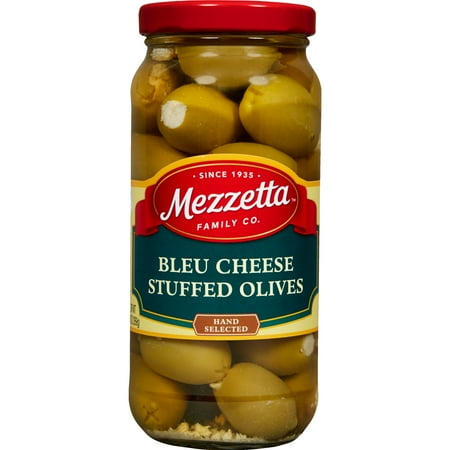


Mezzetta Bleu Cheese Stuffed Olives
Analysis updated June 2026 · How Scout scores
At a glance
Summary
This product is ultra-processed, containing multiple additives such as sodium bisulfite, sodium phosphate, and gums, which are common in processed foods and can pose health concerns. While olives provide beneficial fats and antioxidants, the presence of preservatives and emulsifiers, along with the high level of processing, significantly impacts the overall healthiness of the product.
Key ingredients 12
OlivesGood
Olives are a natural source of healthy monounsaturated fats and antioxidants. They are minimally processed and provide beneficial compounds like oleuropein. Their consumption is associated with heart health benefits.
Benefits
Rich in monounsaturated fats that support heart health and provide anti-inflammatory properties. Contains antioxidants that may reduce oxidative stress.
Sea saltGood
Unrefined sea salt — a minimally processed, natural source of sodium and essential trace minerals, and a legitimate whole-food seasoning. Treated as a positive ingredient.
Risks
Excessive intake can lead to high blood pressure and cardiovascular issues.
Benefits
Contains trace minerals that may be beneficial in small amounts.
Bleu cheeseNeutral
Bleu cheese is a dairy product that provides protein and calcium. It is made from pasteurized milk and contains beneficial bacteria for gut health. However, it is high in sodium and saturated fats.
Risks
High sodium content may contribute to hypertension if consumed in excess.
Benefits
Provides protein and calcium, essential for bone health. Contains beneficial bacteria that may support gut health.
Calcium chlorideNeutral
Calcium chloride is used as a firming agent in food products. It helps maintain the texture of olives. It is generally recognized as safe when used in small amounts.
Benefits
Helps maintain the firmness and texture of food products.
Lactic acidNeutral
Lactic acid is a natural preservative and acidity regulator. It is produced through fermentation and is generally safe for consumption. It can enhance the flavor profile of foods.
Benefits
Acts as a natural preservative and can enhance flavor.
Sodium alginateNeutral
Sodium alginate is a natural thickener and stabilizer derived from seaweed. It is used to improve texture in food products. It is generally recognized as safe for consumption.
Benefits
Improves texture and stability of food products.
Xanthan gumNeutral
Fermentation-derived thickener, well tolerated at food-use levels.
Risks
May cause digestive discomfort, such as bloating or gas, in sensitive individuals.
Benefits
Improves texture and consistency in food products.
Guar gumNeutral
Standard formulation ingredient — neither beneficial nor harmful at typical use.
Risks
May cause digestive discomfort, such as gas or bloating, in sensitive individuals.
Benefits
Improves texture and consistency in food products.
Sodium bisulfiteBad
Sodium bisulfite is used as a preservative and color stabilizer. It can cause allergic reactions in sensitive individuals. Its use is regulated due to potential health concerns.
Risks
May cause allergic reactions, particularly in individuals with asthma.
Benefits
Helps preserve color and extend shelf life of food products.
Sodium phosphateBad
Sodium phosphate is used as an emulsifier and stabilizer in processed foods. It can contribute to an imbalance in phosphate levels if consumed in large quantities. Its use is common in processed cheese products.
Risks
Excessive intake may lead to an imbalance in phosphate levels, affecting kidney function.
Benefits
Acts as an emulsifier and stabilizer, improving texture and consistency.
Sorbic acidBad
Processed additive flagged under Scout's ingredient doctrine.
Benefits
Prevents mold and yeast growth, extending shelf life.
Natural flavorBad
Natural flavor is a catch-all term for flavoring agents derived from natural sources. The lack of specificity can mask the presence of additives or allergens. It is often used to enhance taste in processed foods.
Risks
May contain undisclosed additives or allergens, posing a risk to sensitive individuals.
Benefits
Enhances flavor without adding calories.
Processing
Ultra-Processed Foods
Get the full breakdown in the Scout appTake Scout shopping
Scan any product to see lab results, healthy alternatives, and your personalized analysis.
Download on theApp Store GET IT ONGoogle PlayAmazon pricing & content
CERTAIN CONTENT THAT APPEARS ON THIS SITE COMES FROM AMAZON. THIS CONTENT IS PROVIDED “AS IS” AND IS SUBJECT TO CHANGE OR REMOVAL AT ANY TIME.