
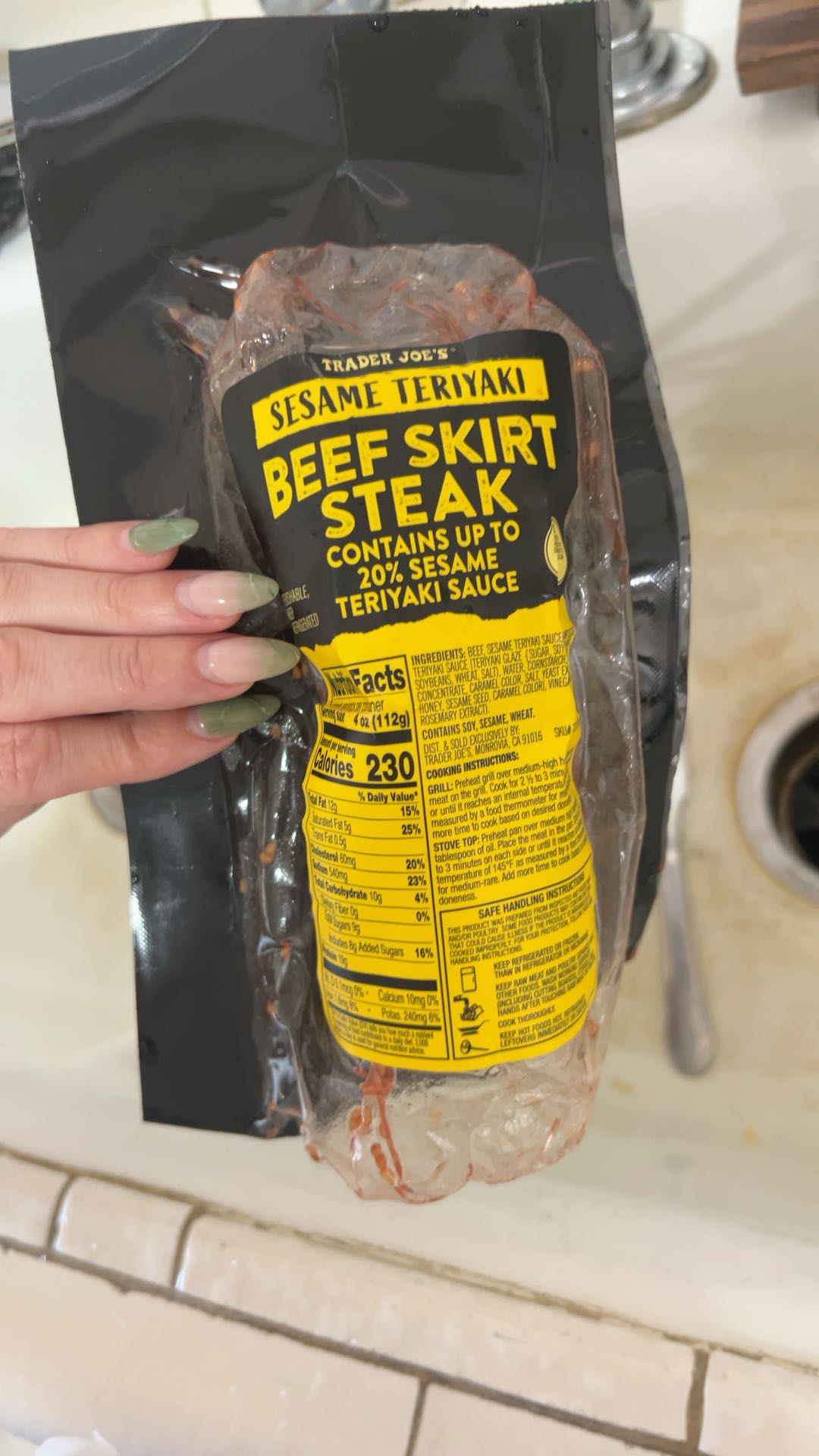






Trader Joe's Sesame teriyaki Beef Skirt Steak
Trader Joe'sAnalysis updated August 2026 · How Scout scores
Near you
Trader Joe's is carried at Trader Joe stores. Find one within 25 miles.
At a glance
Summary
This product is ultra-processed, which limits its potential health score. While it contains beneficial ingredients like beef and sesame, it also includes refined sugar and caramel color, which are less desirable due to their processing and potential health concerns. The presence of these additives and the overall processing level significantly impact the product's health rating.
Key ingredients 13
BeefGood
Beef is a high-quality source of complete protein and essential nutrients like iron and B vitamins. It provides a rich amino acid profile beneficial for muscle growth and repair. Grass-fed beef would be preferable for higher omega-3 content and lower saturated fat.
Risks
Excessive consumption of red meat may be linked to increased risk of certain diseases. Ensure moderate intake and consider sourcing for quality.
Benefits
Rich in protein and essential nutrients, supporting muscle health and energy metabolism.
HoneyGood
Traditional whole-food sweetener with trace enzymes and antioxidants.
Risks
High sugar content can contribute to weight gain and blood sugar spikes if consumed in excess.
Benefits
Contains antioxidants and may have antimicrobial properties, offering a natural alternative to refined sugars.
SesameGood
Sesame seeds are a good source of healthy fats, protein, and minerals like calcium and magnesium. They provide beneficial lignans and antioxidants. Whole seeds offer more nutritional benefits compared to processed oils.
Risks
Allergy risk for individuals sensitive to sesame.
Benefits
Rich in healthy fats and nutrients, supporting heart health and providing antioxidant benefits.
Sesame Teriyaki SauceNeutral
Sesame teriyaki sauce typically contains a mix of soy sauce, sugar, and sesame oil, providing flavor but also added sugars. It enhances taste but may contribute to higher sodium and sugar intake. The quality of ingredients like soy sauce and sesame oil can vary.
Risks
High sodium and sugar content can be a concern for those monitoring blood pressure or sugar intake.
Benefits
Adds flavor and some nutritional benefits from sesame oil, such as healthy fats.
Soy SauceNeutral
Soy sauce is a fermented condiment that adds umami flavor to dishes. It is high in sodium, which can be a concern for those with hypertension. The fermentation process can provide some beneficial compounds.
Risks
High sodium content can contribute to increased blood pressure if consumed in large amounts.
Benefits
Provides umami flavor and some beneficial compounds from fermentation.
WaterNeutral
Water is used as a solvent and to adjust the consistency of sauces. It is a neutral ingredient with no direct health impact. Its presence ensures the desired texture and dilution of flavors.
Benefits
Essential for hydration and does not contribute calories or nutrients.
CornstarchNeutral
Cornstarch is used as a thickening agent in sauces and gravies. It is a refined carbohydrate with minimal nutritional value. Its primary role is functional, providing texture and consistency.
Risks
Excessive consumption of refined carbohydrates can contribute to blood sugar spikes.
Benefits
Provides texture and consistency to sauces without adding significant calories.
VinegarNeutral
Vinegar is used for its acidic properties and flavor enhancement. It is a natural product with potential health benefits like improved digestion. The type of vinegar can influence its health impact, with apple cider vinegar being more beneficial.
Risks
Excessive consumption can lead to digestive discomfort.
Benefits
May aid digestion and provide antimicrobial properties.
SaltNeutral
Salt is used to enhance flavor and preserve food. It is essential for bodily functions but should be consumed in moderation. Excessive intake can lead to hypertension and cardiovascular issues.
Risks
High sodium intake is associated with increased blood pressure and cardiovascular risk.
Benefits
Essential for fluid balance and nerve function in the body.
Pineapple ConcentrateNeutral
Pineapple concentrate is used for its natural sweetness and flavor. It is a concentrated source of sugars and lacks the fiber found in whole fruit. Provides some vitamins and minerals but should be consumed in moderation.
Risks
High sugar content can contribute to blood sugar spikes if consumed in excess.
Benefits
Contains vitamins and minerals, offering some nutritional value.
Vinegar PowderNeutral
Vinegar powder is used for flavoring and acidity in dry mixes. It is a dehydrated form of vinegar, providing similar benefits and risks. Offers convenience in dry formulations without liquid content.
Benefits
Provides flavor and acidity without adding liquid, useful in dry mixes.
SugarBad
Refined sugar is a source of empty calories and can contribute to weight gain and metabolic issues. It is highly processed and lacks nutritional benefits. Excessive intake is linked to various health concerns, including diabetes and heart disease.
Risks
High intake can lead to obesity, insulin resistance, and increased risk of chronic diseases.
Caramel ColorBad
Caramel color is a food additive used to provide color to products. It is a processed ingredient that may contain contaminants like 4-MEI. Its consumption should be limited due to potential health concerns.
Risks
Potential presence of 4-MEI, a compound linked to cancer in animal studies.
Processing
Ultra-Processed Foods
Get the full breakdown in the Scout appTake Scout shopping
Scan any product to see lab results, healthy alternatives, and your personalized analysis.
Download on theApp Store GET IT ONGoogle Play