
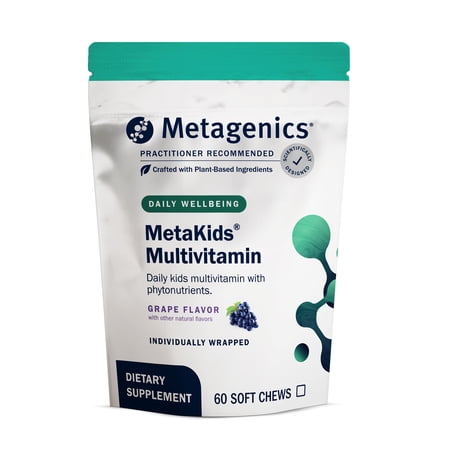

Metagenics MetaKids Multivitamin Soft Chews - Vitamins - Minerals - Phytonutrients - 60 Servings
Analysis updated June 2026 · How Scout scores
At a glance
Summary
This multivitamin supplement contains beneficial ingredients such as bioavailable forms of calcium, vitamins C, E, A, D, iodine, and zinc, which support various health functions. However, the presence of cane sugar and palm oil, along with the use of natural flavors, detracts from its overall healthfulness. These ingredients contribute to increased caloric intake and potential health concerns, impacting the product's formulation quality.
Key ingredients 19
CalciumVery Good
Calcium is an essential mineral important for bone health and muscle function. It is often included in supplements to support skeletal health. Calcium citrate is a highly absorbable form of calcium.
Risks
Excessive intake may lead to kidney stones or impaired absorption of other minerals.
Benefits
Supports bone density and overall skeletal health.
Vitamin CVery Good
Vitamin C is a vital nutrient that supports immune function and acts as an antioxidant. It is commonly included in supplements for its health benefits. Ascorbic acid is a stable and effective form of Vitamin C.
Risks
High doses may cause gastrointestinal discomfort.
Benefits
Enhances immune function and protects against oxidative stress.
Vitamin EVery Good
Vitamin E is an antioxidant that helps protect cells from damage. It is included in supplements to support skin and immune health. D-alpha tocopheryl acetate is a natural and effective form of Vitamin E.
Risks
Excessive intake may interfere with blood clotting.
Benefits
Supports skin health and immune function.
Vitamin AVery Good
Vitamin A is crucial for vision, immune function, and skin health. Retinyl palmitate is a stable form of Vitamin A used in supplements. It is essential for maintaining healthy vision and immune response.
Risks
Excessive intake may lead to toxicity and liver damage.
Benefits
Supports vision and immune health.
Vitamin DVery Good
Vitamin D is essential for calcium absorption and bone health. Cholecalciferol (Vitamin D3) is the most effective form for raising blood levels of Vitamin D. It is crucial for maintaining healthy bones and immune function.
Risks
Excessive intake may lead to hypercalcemia.
Benefits
Enhances calcium absorption and supports bone health.
Pantothenic AcidGood
Pantothenic acid, also known as Vitamin B5, is essential for energy metabolism. It is included in supplements to support adrenal function and energy production. It is water-soluble and generally safe.
Benefits
Supports energy metabolism and adrenal health.
IodineGood
Iodine is a trace mineral essential for thyroid function and hormone production. Potassium iodide is a common form used in supplements. It is crucial for maintaining metabolic rate and energy levels.
Risks
Excessive intake may lead to thyroid dysfunction.
Benefits
Supports thyroid health and hormone production.
ZincGood
Zinc is an essential mineral that supports immune function and wound healing. Zinc citrate is a bioavailable form used in supplements. It plays a vital role in immune response and cellular repair.
Risks
Excessive intake may cause nausea and interfere with copper absorption.
Benefits
Enhances immune function and supports wound healing.
ErythritolNeutral
Erythritol is a sugar alcohol used as a low-calorie sweetener. It is well-tolerated by most people and does not spike blood sugar levels. It is often used in sugar-free products.
Risks
Excessive consumption may cause digestive discomfort in some individuals.
Benefits
Provides sweetness without adding calories or affecting blood sugar levels.
Carnauba WaxNeutral
Carnauba wax is a natural wax used as a glazing agent in supplements. It is derived from the leaves of the carnauba palm. It is considered safe for consumption in small amounts.
Benefits
Provides a shiny coating and helps preserve product integrity.
XylitolNeutral
Xylitol is a sugar alcohol used as a sweetener that has a lower glycemic index than sugar. It is often used in sugar-free products. It is known for its dental health benefits.
Risks
Excessive consumption may cause digestive issues.
Benefits
May help reduce the risk of dental cavities.
Sunflower LecithinNeutral
Sunflower lecithin is an emulsifier that helps blend ingredients. It is derived from sunflower seeds and is considered a safer alternative to soy lecithin. It is often used to improve texture and consistency.
Benefits
May support brain health and improve cholesterol levels.
Citric AcidNeutral
Citric acid is a natural preservative and flavor enhancer. It is commonly used in food and supplements to add a sour taste. It is generally recognized as safe.
Risks
Excessive consumption may cause tooth enamel erosion.
Benefits
Helps preserve freshness and enhance flavor.
Fruit And Vegetable JuiceNeutral
Fruit and vegetable juice is used for natural coloring in supplements. It provides a natural alternative to artificial dyes. It is generally considered safe and adds minimal nutritional value.
Benefits
Provides natural color without artificial additives.
SodiumNeutral
Sodium is an essential electrolyte important for fluid balance and nerve function. It is naturally present in many foods and supplements. While necessary, excessive intake can lead to health issues.
Risks
High intake may contribute to hypertension and cardiovascular disease.
Benefits
Supports fluid balance and nerve function.
Tapioca SyrupBad
Processed additive flagged under Scout's ingredient doctrine.
Risks
Excessive consumption may contribute to increased caloric intake.
Cane SugarBad
Cane sugar is a common sweetener that can contribute to increased caloric intake and potential weight gain. It is often used for flavor enhancement in supplements. Excessive consumption is linked to various health issues.
Risks
High consumption may lead to obesity, diabetes, and dental issues.
Benefits
Provides quick energy but lacks essential nutrients.
Palm OilBad
Palm oil is a widely used vegetable oil that is high in saturated fats. It is often criticized for its environmental impact and potential health concerns. It is used as a stabilizer in many processed foods.
Risks
High saturated fat content may contribute to heart disease if consumed in excess.
Benefits
Provides a stable cooking oil with a long shelf life.
Natural FlavorsBad
Natural flavors are additives used to enhance taste, but their exact composition is often undisclosed. They can contain a variety of chemicals derived from natural sources. The lack of transparency raises concerns about potential allergens.
Risks
Potential allergens and unknown chemical composition may pose health risks.
Benefits
Enhances flavor without adding calories.
Processing
Processed Foods
Get the full breakdown in the Scout appTake Scout shopping
Scan any product to see lab results, healthy alternatives, and your personalized analysis.
Download on theApp Store GET IT ONGoogle PlayAmazon pricing & content
Amazon price as of . Product prices and availability are accurate as of the date/time indicated and are subject to change. Any price and availability information displayed on Amazon.com at the time of purchase will apply to the purchase of this product.
CERTAIN CONTENT THAT APPEARS ON THIS SITE COMES FROM AMAZON. THIS CONTENT IS PROVIDED “AS IS” AND IS SUBJECT TO CHANGE OR REMOVAL AT ANY TIME.