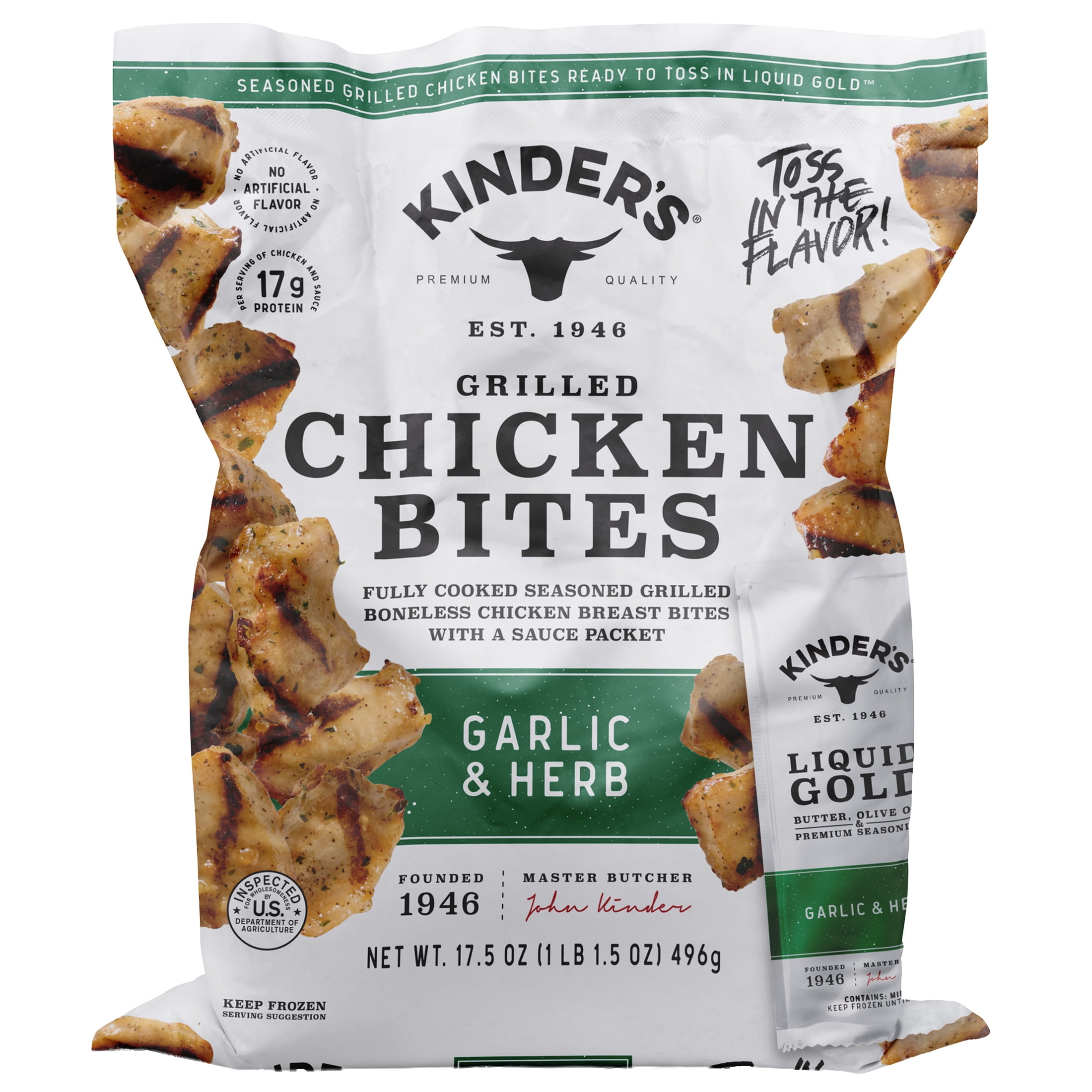
Grilled Chicken Bites
At a glance
Summary
The product contains high-quality ingredients like boneless skinless chicken breast and olive oil, which are beneficial for health. However, it also includes sodium phosphates, dextrose, and sunflower oil, which are less desirable due to their potential negative health impacts and contribution to processing. The presence of these processed ingredients and additives limits the overall healthiness of the product.
Key ingredients 18
Boneless skinless chicken breastVery Good
High-quality source of lean protein with essential amino acids. Minimally processed and provides important nutrients like B vitamins and selenium. Supports muscle growth and maintenance.
Benefits
Excellent source of lean protein that supports muscle growth and repair. Provides essential nutrients like B vitamins and selenium.
Olive oilVery Good
Rich in monounsaturated fats that support heart health. Contains antioxidants like vitamin E and polyphenols. Cold-pressed extraction preserves beneficial compounds.
Benefits
Supports heart health and provides anti-inflammatory properties due to its high monounsaturated fat content.
Granulated garlicGood
Provides flavor and potential health benefits due to its antioxidant properties. Contains allicin, which may support heart health and immune function. Used in small amounts for seasoning.
Benefits
Contains antioxidants and compounds like allicin that may support heart health and immune function.
Sea saltGood
Unrefined mineral salt that provides sodium and trace minerals. Minimally processed and enhances flavor. Contains minerals like magnesium and calcium.
Risks
Excessive consumption may contribute to high blood pressure and cardiovascular issues.
Benefits
Provides essential sodium and trace minerals that are important for fluid balance and nerve function.
ButterGood
A natural source of fat that provides flavor and richness. Contains fat-soluble vitamins like A, D, and E. Made from cream and may support satiety.
Risks
High in saturated fat, which may contribute to heart disease if consumed in excess.
Benefits
Provides fat-soluble vitamins and enhances flavor and texture in foods.
GarlicGood
Contains compounds like allicin that may support heart health and immune function. Provides flavor and potential antioxidant benefits. Used in small amounts for seasoning.
Benefits
May support heart health and immune function due to its antioxidant properties.
ParsleyGood
Herb rich in vitamins A, C, and K, and antioxidants. Provides flavor and potential health benefits. Used in small amounts for seasoning.
Benefits
Rich in vitamins and antioxidants that may support overall health.
Black pepperGood
Contains piperine, which may enhance nutrient absorption and provide antioxidant benefits. Used as a spice to enhance flavor. Commonly used in culinary applications.
Benefits
May enhance nutrient absorption and provide antioxidant benefits.
WaterNeutral
Used as a solvent and processing aid in food products. It is essential for hydration but does not contribute nutritional value in this context. Commonly used in food processing without health concerns.
See more about Water →Food starchNeutral
Used as a thickening agent and stabilizer in food products. Typically derived from corn, potato, or tapioca and is generally considered safe. Provides texture but minimal nutritional value.
Risks
May cause digestive discomfort in sensitive individuals if consumed in large amounts.
Chicken broth powderNeutral
Used for flavor enhancement in food products. Typically made from dehydrated chicken stock and seasonings. Provides flavor but minimal nutritional value.
Risks
May contain added sodium or preservatives, which could be a concern for some individuals.
Benefits
Adds flavor to dishes without significant nutritional benefits.
Rice flourNeutral
Used as a gluten-free alternative to wheat flour in coatings and batters. Provides texture and bulk but limited nutritional value. Commonly used in gluten-free products.
Benefits
Provides a gluten-free option for those with celiac disease or gluten sensitivity.
Lemon & Herb Liquid GoldNeutral
A flavoring blend used to enhance taste. Typically contains lemon juice, herbs, and oils. Provides flavor without significant nutritional value.
Benefits
Enhances flavor without significant nutritional benefits.
Lemon juice concentrateNeutral
Used for flavoring and acidity in food products. Provides a concentrated source of lemon flavor. Contains vitamin C but in reduced amounts compared to fresh lemon juice.
Benefits
Adds flavor and acidity but limited nutritional benefits compared to fresh lemon juice.
Lemon oilNeutral
Used for flavoring in food products. Provides a concentrated source of lemon flavor. Typically used in small amounts for culinary purposes.
Benefits
Adds concentrated lemon flavor without significant nutritional benefits.
Sodium phosphatesBad
Used as a preservative and emulsifier in processed foods. Can contribute to an imbalance in phosphorus levels if consumed in excess. Often found in processed meats and cheeses.
Risks
Excessive intake may lead to imbalances in calcium and phosphorus levels, affecting bone health.
DextroseBad
A simple sugar used as a sweetener and preservative. Can contribute to increased blood sugar levels and caloric intake. Commonly used in processed foods.
Risks
May contribute to obesity, insulin resistance, and other metabolic issues when consumed in excess.
Sunflower oilVery Bad
A seed oil high in omega-6 fatty acids, which can promote inflammation when consumed in excess. Often extracted using high-heat processes that may degrade beneficial compounds. Commonly used in processed foods.
Risks
High omega-6 content may promote inflammation and contribute to chronic diseases when consumed in excess.
Processing
Processed Foods
Get the full breakdown in the Scout appTake Scout shopping
Scan any product to see lab results, healthy alternatives, and your personalized analysis.
Are you Kinder's? Fix an error Get the badge Get tested
Amazon pricing & content
Amazon price as of . Product prices and availability are accurate as of the date/time indicated and are subject to change. Any price and availability information displayed on Amazon.com at the time of purchase will apply to the purchase of this product.
CERTAIN CONTENT THAT APPEARS ON THIS SITE COMES FROM AMAZON. THIS CONTENT IS PROVIDED “AS IS” AND IS SUBJECT TO CHANGE OR REMOVAL AT ANY TIME.