
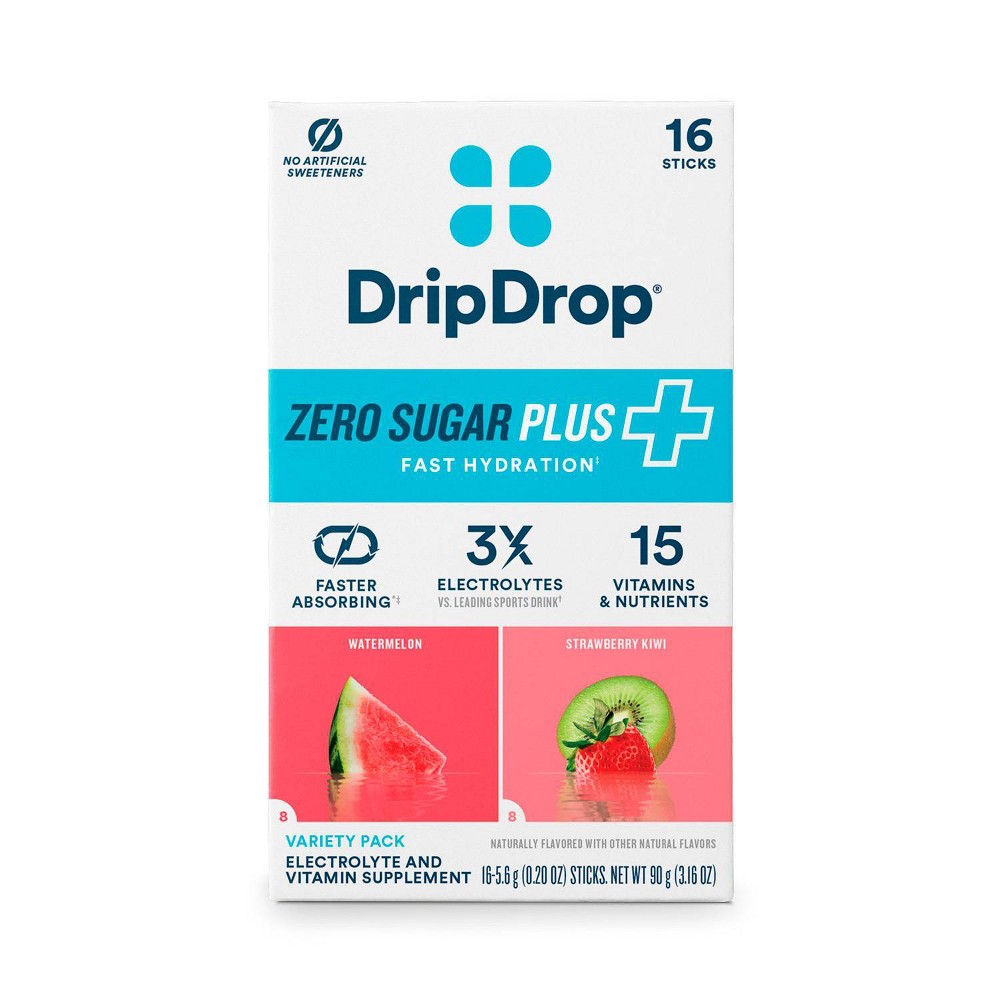


DripDrop Zero Sugar Plus Variety Dietary Supplement Powder - Watermelon, Strawberry, Kiwi - 16ct
Analysis updated August 2026 · How Scout scores
At a glance
Summary
This electrolyte supplement features a clean formulation with beneficial ingredients like sodium citrate, potassium citrate, and magnesium citrate, which support hydration and electrolyte balance. The use of natural flavors is a minor concern due to potential lack of transparency, but the absence of artificial sweeteners, dyes, and excessive additives contributes to its high rating. The inclusion of stevia as a natural sweetener and vegetable juice for color further enhances its ingredient quality.
Key ingredients 21
Chicory Root FiberGood
Chicory root fiber is a prebiotic fiber that supports digestive health. It is derived from the chicory plant and is known to promote beneficial gut bacteria. It can aid in digestion and improve gut health.
Risks
Excessive consumption may cause digestive discomfort in some individuals.
Benefits
Promotes healthy digestion and supports beneficial gut bacteria.
Potassium CitrateGood
Potassium citrate is a potassium salt of citric acid used to prevent low blood potassium levels. It is essential for maintaining proper electrolyte balance and muscle function. It is beneficial for heart health and muscle function.
Risks
High doses can lead to hyperkalemia, which can affect heart function.
Benefits
Supports heart health and muscle function by maintaining electrolyte balance.
Magnesium CitrateGood
Magnesium citrate is a magnesium salt of citric acid that aids in muscle and nerve function. It is well-absorbed and commonly used to prevent magnesium deficiency. It supports muscle relaxation and energy production.
Risks
Excessive intake may cause diarrhea or gastrointestinal discomfort.
Benefits
Supports muscle relaxation, nerve function, and energy production.
Himalayan Pink SaltGood
Himalayan pink salt is a mineral-rich salt that contains trace elements. It is less processed than regular table salt and can provide essential minerals. It is often used for its purported health benefits and flavor enhancement.
Risks
Excessive consumption can lead to high sodium intake, affecting blood pressure.
Benefits
Provides trace minerals and can enhance flavor with less processing.
Ascorbic AcidGood
Ascorbic acid, also known as vitamin C, is an essential nutrient and antioxidant. It supports immune function and skin health and is commonly added to supplements for its health benefits. It is crucial for collagen synthesis and immune defense.
Risks
High doses may cause gastrointestinal discomfort or kidney stones.
Benefits
Supports immune function, skin health, and acts as an antioxidant.
Calcium CitrateGood
Calcium citrate is a calcium salt of citric acid that supports bone health. It is well-absorbed and used to prevent calcium deficiency. It is beneficial for maintaining strong bones and teeth.
Risks
Excessive intake may lead to hypercalcemia, affecting kidney function.
Benefits
Supports bone health and helps prevent calcium deficiency.
D-Calcium PantothenateGood
D-Calcium pantothenate is a form of vitamin B5, essential for energy metabolism. It supports the synthesis of coenzyme A and is important for the metabolism of carbohydrates, proteins, and fats. It is beneficial for energy production and overall metabolic health.
Benefits
Supports energy metabolism and the synthesis of coenzyme A.
NiacinamideGood
Niacinamide is a form of vitamin B3 that supports skin health and energy metabolism. It is involved in DNA repair and the production of cellular energy. It is beneficial for maintaining healthy skin and energy levels.
Risks
High doses may cause flushing or liver damage.
Benefits
Supports skin health and energy metabolism.
Zinc CitrateGood
Zinc citrate is a form of zinc that supports immune function and wound healing. It is well-absorbed and used to prevent zinc deficiency. It is beneficial for immune health and cellular repair.
Risks
Excessive intake may lead to zinc toxicity, affecting immune function.
Benefits
Supports immune function and wound healing.
Pyridoxine HydrochlorideGood
Pyridoxine hydrochloride is a form of vitamin B6 that supports brain health and neurotransmitter synthesis. It is essential for amino acid metabolism and cognitive function. It is beneficial for brain health and mood regulation.
Risks
High doses may cause nerve damage or sensory neuropathy.
Benefits
Supports brain health and neurotransmitter synthesis.
BiotinGood
Biotin is a B-vitamin that supports hair, skin, and nail health. It is involved in the metabolism of fats, carbohydrates, and proteins. It is beneficial for maintaining healthy hair and skin.
Benefits
Supports hair, skin, and nail health.
CyanocobalaminGood
Cyanocobalamin is a form of vitamin B12 that supports nerve function and red blood cell production. It is essential for DNA synthesis and neurological health. It is beneficial for energy production and nerve health.
Benefits
Supports nerve function and red blood cell production.
RiboflavinGood
Riboflavin is a B-vitamin that supports energy production and antioxidant function. It is involved in the metabolism of carbohydrates, fats, and proteins. It is beneficial for energy metabolism and cellular protection.
Benefits
Supports energy production and antioxidant function.
Sodium CitrateNeutral
Standard formulation ingredient — neither beneficial nor harmful at typical use.
Risks
Excessive intake may lead to sodium overload, which can increase blood pressure.
Benefits
Supports hydration and electrolyte balance, especially during physical activity.
Citric AcidNeutral
Citric acid is a natural acid found in citrus fruits, used as a flavoring and preservative. It is generally recognized as safe and widely used in food and beverages. It can enhance flavor and preserve freshness without significant health concerns.
See more about Citric Acid →Monopotassium PhosphateNeutral
Monopotassium phosphate is a source of potassium and phosphorus, used as a food additive. It helps maintain electrolyte balance and is generally recognized as safe. It is used to support hydration and nutrient absorption.
Benefits
Supports hydration and nutrient absorption with potassium and phosphorus.
Silicon DioxideNeutral
Silicon dioxide is used as an anti-caking agent to prevent clumping in powdered products. It is naturally occurring and widely used in the food industry. It is considered safe and does not affect the nutritional value of the product.
See more about Silicon Dioxide →Stevia Leaf ExtractNeutral
Stevia leaf extract is a natural, zero-calorie sweetener derived from the stevia plant. It is used as a sugar substitute without significant health concerns. It provides sweetness without calories, making it suitable for sugar reduction.
Benefits
Provides sweetness without calories, suitable for sugar reduction.
Vegetable Juice For ColorNeutral
Vegetable juice for color is used as a natural coloring agent in food products. It is derived from vegetables and is considered a safer alternative to artificial dyes. It provides color without significant health concerns.
Benefits
Provides natural color without artificial additives.
Folic AcidNeutral
Standard formulation ingredient — neither beneficial nor harmful at typical use.
Risks
Excessive intake may mask vitamin B12 deficiency symptoms.
Benefits
Supports DNA synthesis and prevents neural tube defects.
Natural FlavorBad
Natural flavors are complex mixtures created by flavorists to enhance taste. They can contain many chemical components, some of which may not be disclosed. The lack of transparency and potential for allergens or additives is a concern.
Risks
Potential allergens or undisclosed additives may pose health risks.
Processing
Processed Foods
Get the full breakdown in the Scout appTake Scout shopping
Scan any product to see lab results, healthy alternatives, and your personalized analysis.
Download on theApp Store GET IT ONGoogle Play