
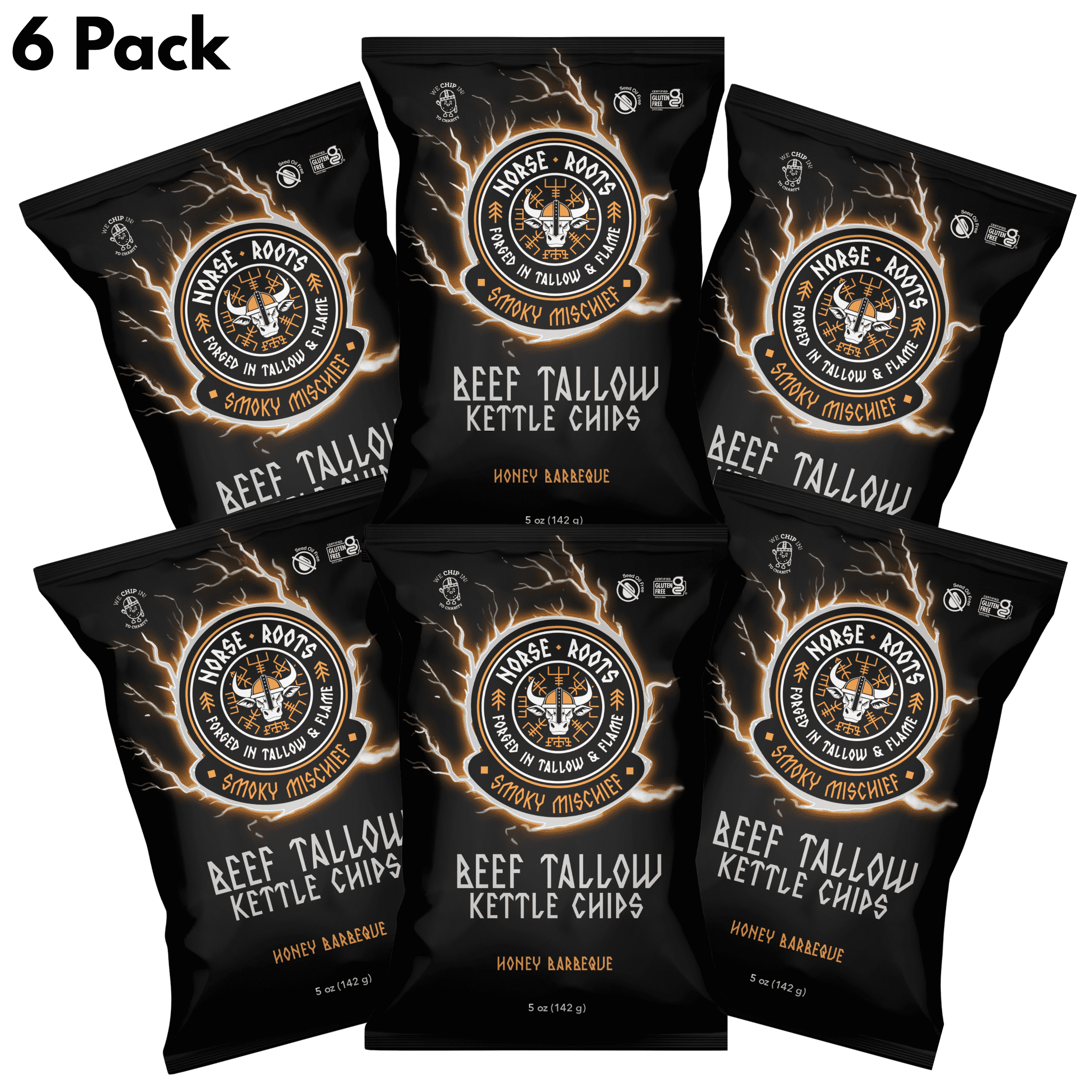


Norse Roots Viking Funeral Beef Tallow Kettle Chips
Analysis updated August 2026 · How Scout scores
At a glance
Summary
This product uses beef tallow instead of industrial seed oils, which is a healthier fat choice and contributes positively to the score. However, it is still considered ultra-processed due to the presence of additives like disodium phosphate and natural flavors, which detract from the overall ingredient quality. The processing level and inclusion of synthetic additives prevent it from achieving a higher score, despite the use of some beneficial ingredients.
Key ingredients 15
PotatoesGood
Potatoes are a whole food source of carbohydrates and fiber. They provide essential nutrients like vitamin C and potassium. When cooked properly, they can be part of a balanced diet.
Risks
Excessive consumption of fried potatoes can lead to high calorie intake and potential weight gain.
Benefits
Rich in carbohydrates for energy and contain fiber which aids in digestion.
Beef TallowGood
Beef tallow is a traditional cooking fat rich in saturated fats. It is stable at high temperatures, making it suitable for frying. When sourced from grass-fed cattle, it contains beneficial compounds like CLA.
Risks
High in saturated fats, which should be consumed in moderation to maintain heart health.
Benefits
Provides a stable cooking fat that is rich in fat-soluble vitamins and CLA when grass-fed.
Cheddar CheeseGood
Beneficial ingredient — whole-food or functional value in this product class.
Risks
High in saturated fats and sodium, which can contribute to heart disease if consumed excessively.
Benefits
Source of calcium and protein, supporting bone health and muscle maintenance.
Garlic PowderGood
Concentrated whole-food seasoning.
Benefits
Provides flavor and antioxidants that may support heart health.
SaltNeutral
Salt is used to enhance flavor in foods. It is a necessary mineral for bodily functions but should be consumed in moderation. Excessive salt intake can lead to hypertension.
Risks
High sodium intake is associated with increased risk of hypertension and cardiovascular diseases.
Benefits
Essential for maintaining fluid balance and nerve function.
WheyNeutral
Whey is a byproduct of cheese production and a source of protein. It contains essential amino acids but is present in small amounts in this product. It may cause allergies in lactose-intolerant individuals.
Risks
May cause allergic reactions in individuals with lactose intolerance or milk allergies.
Benefits
Provides essential amino acids and supports muscle protein synthesis.
Lactic AcidNeutral
Lactic acid is used as a preservative and flavoring agent. It is naturally occurring and generally recognized as safe. It helps maintain the acidity and flavor of foods.
Benefits
Helps preserve food and enhance flavor without significant health concerns.
ButtermilkNeutral
Buttermilk adds a tangy flavor and is a source of calcium and probiotics. It is a fermented dairy product that can aid digestion. However, it may not be suitable for lactose-intolerant individuals.
Risks
May cause digestive issues in lactose-intolerant individuals.
Benefits
Contains probiotics that support gut health and calcium for bone strength.
Onion PowderNeutral
Onion powder is used for flavoring and is derived from dehydrated onions. It retains some of the nutritional benefits of fresh onions, such as antioxidants. It is a convenient way to add onion flavor without moisture.
Benefits
Provides flavor and some antioxidants without adding moisture to the product.
Citric AcidNeutral
Citric acid is used as a preservative and flavor enhancer. It is naturally found in citrus fruits and is generally recognized as safe. It helps maintain the acidity and freshness of foods.
Benefits
Helps preserve food and enhance flavor without significant health concerns.
Extractives Of TurmericNeutral
Extractives of turmeric are used for color and potential health benefits. Turmeric contains curcumin, which has anti-inflammatory properties. However, the amount used in processed foods is typically minimal.
Benefits
Contains curcumin, which may have anti-inflammatory properties.
Extractives Of PaprikaNeutral
Extractives of paprika are used for color and flavor. Paprika contains antioxidants and vitamins, but the extract is primarily used for its coloring properties. It is generally safe and adds visual appeal to foods.
Benefits
Provides color and some antioxidants without significant health concerns.
Disodium PhosphateBad
Disodium phosphate is used as an emulsifier and stabilizer in processed foods. It is a synthetic additive that can affect kidney function if consumed in large amounts. It is not necessary in a natural diet.
Risks
Excessive intake can lead to imbalances in phosphate levels, affecting kidney health.
Natural FlavorsBad
Natural flavors are used to enhance taste but lack transparency in their composition. They can contain a variety of compounds, some of which may be synthetic. This lack of clarity can be concerning for consumers seeking clean labels.
Risks
Potential allergens or synthetic compounds may be present without clear labeling.
Yeast ExtractBad
Concentrated glutamate source — MSG-adjacent flavor enhancer.
Risks
May cause reactions in individuals sensitive to glutamates.
Benefits
Enhances flavor and provides B vitamins.
Processing
Ultra-Processed Foods
Get the full breakdown in the Scout appTake Scout shopping
Scan any product to see lab results, healthy alternatives, and your personalized analysis.
Download on theApp Store GET IT ONGoogle Play