
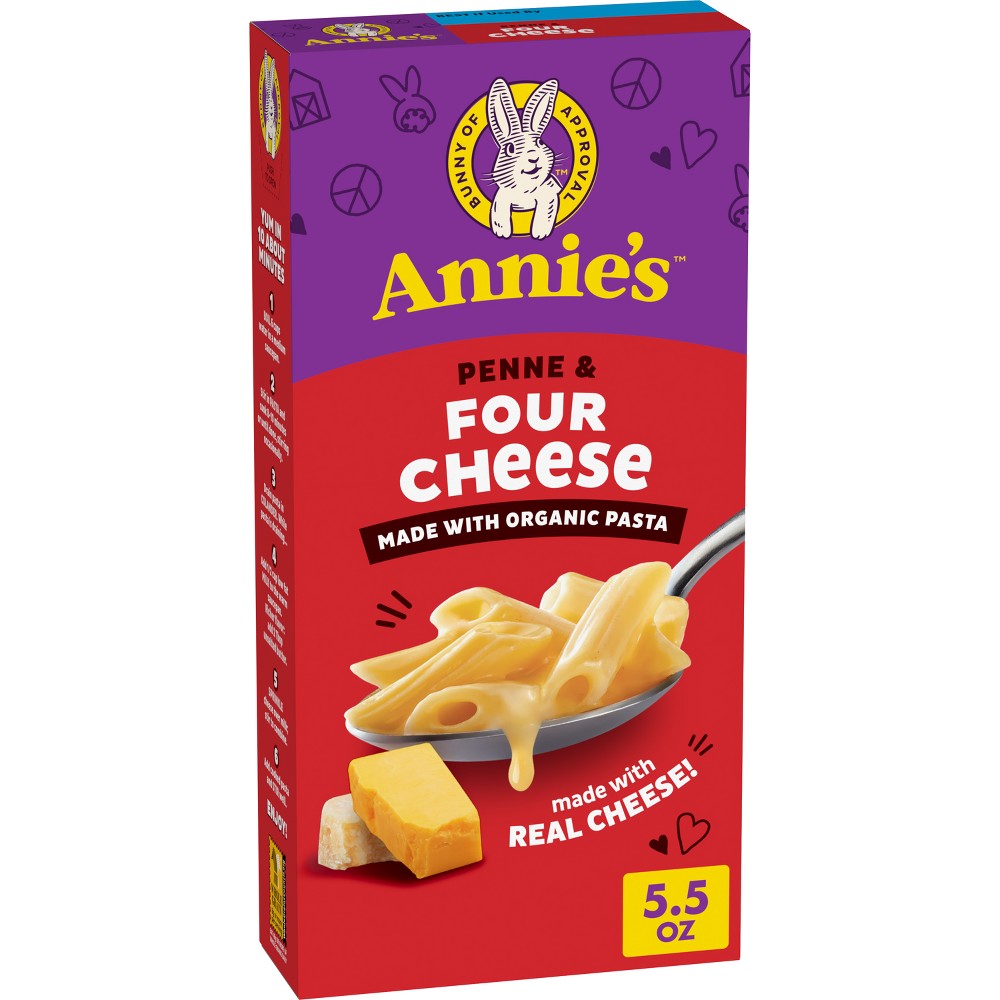




Annie's Four Cheese Mini Penne Pasta with a Blend of Four Cheeses Macaroni & Cheese. Made with Organic Pasta
Analysis updated August 2026 · How Scout scores
At a glance
Summary
This product features organic pasta and a blend of cheeses, which are beneficial for providing protein and essential nutrients. However, it is classified as ultra-processed due to the inclusion of sodium phosphate, a synthetic additive, and the overall processing level. While the ingredient list is relatively clean, the processing level limits its health score.
Key ingredients 17
Organic whole grain wheat flourVery Good
Whole grain wheat flour retains the bran and germ, offering more fiber and nutrients than refined flour. Organic certification ensures it is free from synthetic chemicals. It supports digestive health and provides sustained energy.
Risks
Contains gluten, which can be problematic for those with celiac disease or gluten sensitivity.
Benefits
Rich in dietary fiber, vitamins, and minerals, supporting heart health and digestion. Organic status enhances its nutritional profile by avoiding harmful chemicals.
Cheddar cheeseGood
Cheddar cheese is a good source of calcium and protein. It is made from cultured pasteurized milk, which supports bone health. The fermentation process enhances its flavor and digestibility.
Risks
High in saturated fat and sodium, which can contribute to cardiovascular issues if consumed in excess.
Benefits
Provides essential nutrients like calcium and protein, supporting bone health and muscle function.
Monterey Jack cheeseGood
Monterey Jack cheese is a mild-flavored cheese rich in calcium and protein. It is made from cultured pasteurized milk, enhancing its nutritional value. It is versatile and adds creaminess to dishes.
Risks
Contains saturated fat and sodium, which should be moderated in a balanced diet.
Benefits
Offers calcium and protein, essential for bone health and muscle maintenance.
Parmesan cheeseGood
Parmesan cheese is a hard cheese known for its rich flavor and high calcium content. Made from cultured pasteurized milk, it is aged to develop its distinct taste. It is a concentrated source of nutrients.
Risks
High in sodium and saturated fat, which can impact heart health if overconsumed.
Benefits
Rich in calcium and protein, supporting bone health and providing a flavorful addition to meals.
Ricotta cheeseGood
Ricotta cheese is a soft cheese made from whey, offering a good source of protein and calcium. It is lower in fat compared to other cheeses. It is versatile and adds creaminess to dishes.
Risks
Contains lactose, which may cause issues for those with lactose intolerance.
Benefits
Provides protein and calcium, supporting bone health and muscle maintenance.
Cultured whole milkGood
Cultured whole milk is fermented to enhance its probiotic content and digestibility. It provides essential nutrients like calcium and vitamin D. It supports gut health and bone strength.
Risks
Contains lactose, which can be problematic for those with lactose intolerance.
Benefits
Rich in probiotics, supporting digestive health and providing essential nutrients for bone health.
Onion powderGood
Onion powder is a dehydrated form of onion, offering flavor and some nutritional benefits. It contains antioxidants and compounds that may support heart health. It is a convenient way to add onion flavor to dishes.
Benefits
Contains antioxidants and compounds that may support cardiovascular health.
White pepperGood
White pepper is a spice derived from the dried fruit of the pepper plant. It adds flavor and contains piperine, which may enhance nutrient absorption. It is used in culinary applications for its distinct taste.
Benefits
May enhance nutrient absorption and adds flavor to dishes.
Organic wheat flourNeutral
Standard formulation ingredient — neither beneficial nor harmful at typical use.
Risks
May cause allergic reactions in individuals with wheat allergies or gluten intolerance.
Benefits
Provides carbohydrates for energy and contains some fiber and protein. Organic certification ensures reduced exposure to harmful chemicals.
Corn starchNeutral
Corn starch is a refined carbohydrate used as a thickening agent. It is highly processed and offers little nutritional value. It is commonly used in small amounts in cooking.
See more about Corn starch →Nonfat milkNeutral
Nonfat milk provides protein and calcium without the fat content of whole milk. It is pasteurized to ensure safety and extend shelf life. It is a low-calorie option for dairy intake.
Benefits
Provides calcium and protein, supporting bone health and muscle function.
ButterNeutral
Butter is a dairy product rich in saturated fats. It is made from cream and adds flavor and texture to foods. It should be consumed in moderation due to its fat content.
Risks
High in saturated fat, which can contribute to heart disease if consumed in excess.
Benefits
Adds flavor and richness to dishes, and provides fat-soluble vitamins like A and D.
WheyNeutral
Liquid whey as a minor dairy ingredient — benign.
Risks
May cause digestive issues for those with lactose intolerance.
Benefits
Excellent source of protein, supporting muscle health and recovery.
SaltNeutral
Salt is used to enhance flavor and preserve food. It is a source of sodium, an essential mineral. Excessive intake can lead to health issues.
Risks
High sodium intake can increase blood pressure and risk of cardiovascular diseases.
Benefits
Essential for maintaining fluid balance and nerve function.
Annatto extractNeutral
Annatto extract is a natural colorant derived from the seeds of the achiote tree. It is used to impart a yellow or orange color to foods. It is considered safe and natural.
Benefits
Provides natural coloring without synthetic additives.
Silicon dioxideNeutral
Silicon dioxide is used as an anti-caking agent to prevent clumping in powdered foods. It is a naturally occurring mineral and is considered safe in small amounts. It does not contribute nutritional value.
See more about Silicon dioxide →Sodium phosphateBad
Sodium phosphate is used as an emulsifier and preservative in processed foods. It can contribute to an imbalance in phosphorus levels if consumed excessively. It is a synthetic additive with potential health concerns.
Risks
Excessive intake can lead to kidney damage and imbalanced mineral levels.
Processing
Ultra-Processed Foods
Get the full breakdown in the Scout appTake Scout shopping
Scan any product to see lab results, healthy alternatives, and your personalized analysis.
Download on theApp Store GET IT ONGoogle PlayAmazon pricing & content
CERTAIN CONTENT THAT APPEARS ON THIS SITE COMES FROM AMAZON. THIS CONTENT IS PROVIDED “AS IS” AND IS SUBJECT TO CHANGE OR REMOVAL AT ANY TIME.