
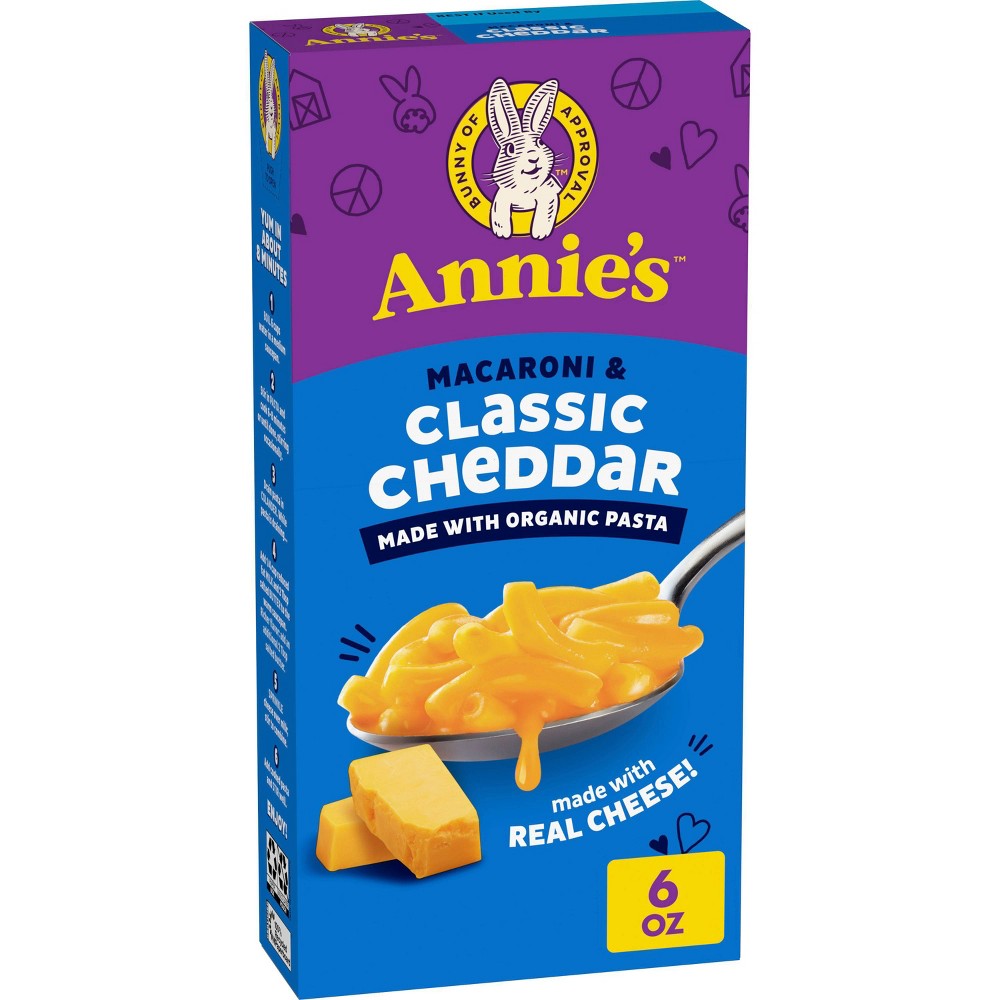



Annie's Classic Cheddar Macaroni & Cheese
Analysis updated September 2026 · How Scout scores
At a glance
Summary
This product contains organic pasta and whey, which are beneficial ingredients providing a cleaner profile and high-quality protein. However, it is classified as ultra-processed due to the presence of additives like sunflower lecithin and sodium phosphate, which are used for stabilization and preservation. The processing level and presence of these additives limit the overall healthiness of the product.
Key ingredients 14
Organic PastaGood
Organic pasta is made from organic wheat flour, which is free from synthetic pesticides and fertilizers. This provides a cleaner ingredient profile compared to conventional pasta. Organic certification ensures adherence to strict agricultural standards.
Risks
Contains gluten, which may be a concern for individuals with celiac disease or gluten sensitivity.
Benefits
Provides carbohydrates for energy and is made from organic wheat, reducing exposure to harmful chemicals.
WheyNeutral
Liquid whey as a minor dairy ingredient — benign.
Risks
May cause allergic reactions in individuals with dairy allergies or lactose intolerance.
Benefits
Supports muscle growth and repair due to its complete amino acid profile and high bioavailability.
Cultured CreamNeutral
Cultured cream is a dairy product that adds richness and flavor. It is made by fermenting cream with beneficial bacteria. Provides a source of fat and some probiotics.
Risks
Contains lactose, which may be problematic for those with lactose intolerance.
Benefits
Adds flavor and creaminess to foods and may contain beneficial probiotics.
Nonfat MilkNeutral
Nonfat milk provides protein and calcium without the fat content of whole milk. It is a source of essential nutrients like vitamin D and calcium. Often used to reduce fat content in dairy products.
Risks
May cause issues for those with lactose intolerance or milk allergies.
Benefits
Provides essential nutrients such as calcium and vitamin D, supporting bone health.
SaltNeutral
Salt is used to enhance flavor and preserve food. It is a common seasoning in many foods. Provides sodium, an essential electrolyte for bodily functions.
Risks
Excessive consumption can lead to high blood pressure and cardiovascular issues.
Benefits
Essential for maintaining fluid balance and nerve function in the body.
ButterNeutral
Butter is a dairy product made from pasteurized cream and salt, providing flavor and richness. It contains saturated fats and fat-soluble vitamins. Used in moderation, it can be part of a balanced diet.
Risks
High in saturated fats, which may contribute to heart disease if consumed in excess.
Benefits
Provides fat-soluble vitamins like A, D, E, and K, and enhances flavor in cooking.
Dried Cheddar CheeseNeutral
Dried cheddar cheese is made from cultured pasteurized milk and provides a concentrated source of cheese flavor. It contains protein and calcium. Used to add cheesy flavor to dishes.
Risks
Contains lactose and may cause issues for those with dairy allergies or lactose intolerance.
Benefits
Rich in calcium and protein, supporting bone health and muscle maintenance.
Corn StarchNeutral
Corn starch is a carbohydrate used as a thickening agent in foods. It is derived from corn and is gluten-free. Provides texture and consistency to sauces and soups.
Benefits
Gluten-free thickening agent suitable for those with gluten sensitivities.
Citric AcidNeutral
Citric acid is a natural preservative and flavor enhancer found in citrus fruits. It is used to add acidity and preserve freshness in foods. Commonly used in processed foods for its preservative properties.
Risks
Excessive consumption may cause tooth enamel erosion.
Benefits
Acts as a natural preservative and enhances flavor with its acidic properties.
Annatto ExtractNeutral
Annatto extract is a natural coloring agent derived from the seeds of the achiote tree. It is used to impart a yellow or orange color to foods. Considered a natural alternative to synthetic dyes.
Risks
May cause allergic reactions in sensitive individuals.
Benefits
Provides natural color to foods without synthetic additives.
Lactic AcidNeutral
Lactic acid is used as a preservative and acidity regulator in foods. It is produced by fermentation and is naturally present in fermented foods. Helps maintain the pH balance in food products.
Benefits
Supports preservation and flavor enhancement in foods.
Silicon DioxideNeutral
Silicon dioxide is used as an anti-caking agent to prevent clumping in powdered foods. It is naturally occurring and considered safe in small amounts. Commonly used in food processing to maintain product quality.
Benefits
Prevents clumping and maintains the quality of powdered food products.
Sunflower LecithinBad
Sunflower lecithin is an emulsifier used to stabilize food products. It is derived from sunflower seeds and is less processed than soy lecithin. However, it is still a refined additive with minimal nutritional value.
Risks
May cause digestive issues in sensitive individuals.
Benefits
Helps improve texture and consistency in food products.
Sodium PhosphateBad
Sodium phosphate is used as a preservative and emulsifier in processed foods. It helps maintain moisture and improve texture. However, excessive intake can lead to imbalances in phosphate levels in the body.
Risks
High intake may lead to kidney damage and imbalances in calcium and phosphate levels.
Benefits
Improves texture and moisture retention in processed foods.
Processing
Ultra-Processed Foods
Get the full breakdown in the Scout appTake Scout shopping
Scan any product to see lab results, healthy alternatives, and your personalized analysis.
Download on theApp Store GET IT ONGoogle PlayAmazon pricing & content
Amazon price as of . Product prices and availability are accurate as of the date/time indicated and are subject to change. Any price and availability information displayed on Amazon.com at the time of purchase will apply to the purchase of this product.
CERTAIN CONTENT THAT APPEARS ON THIS SITE COMES FROM AMAZON. THIS CONTENT IS PROVIDED “AS IS” AND IS SUBJECT TO CHANGE OR REMOVAL AT ANY TIME.