


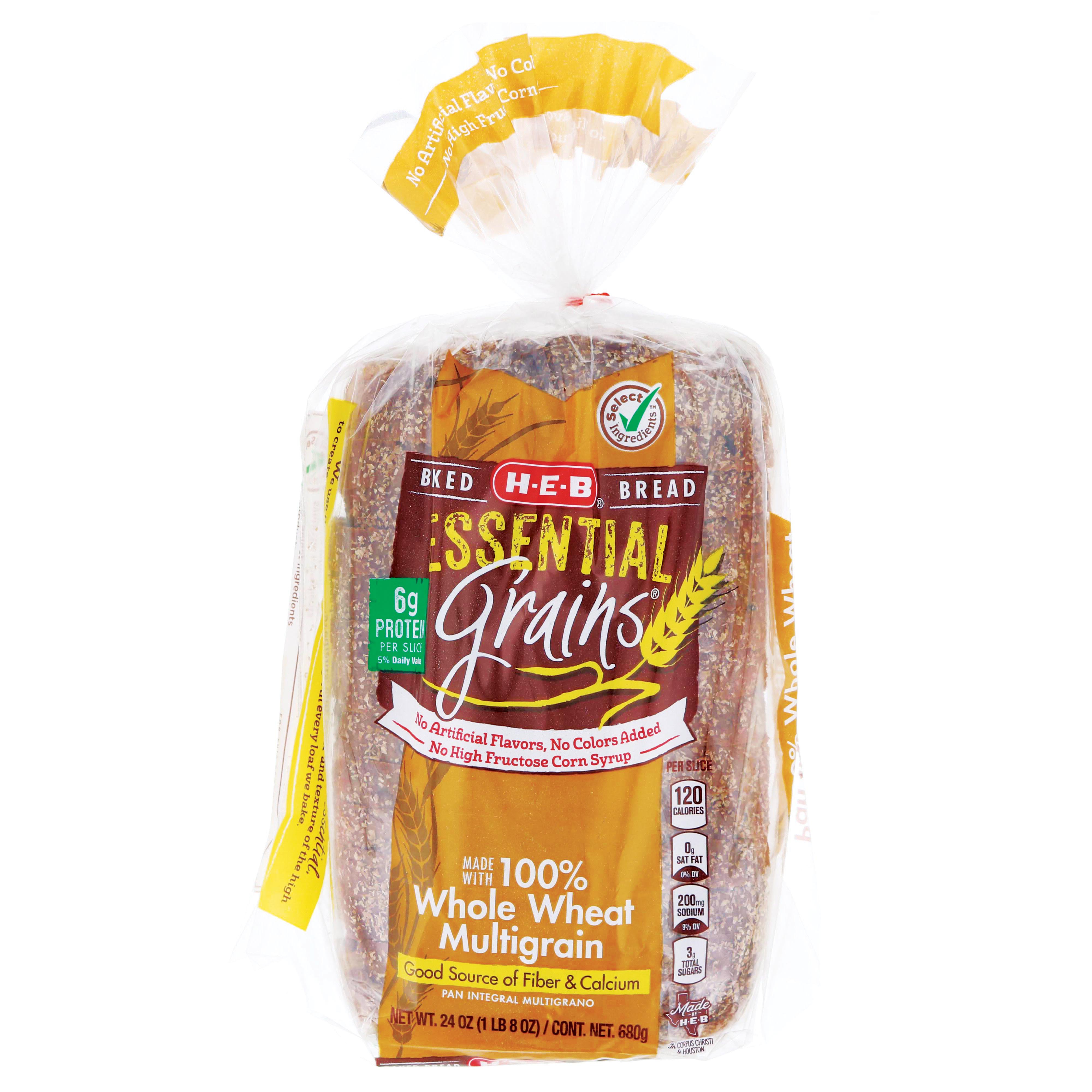

100% WHOLE WHEAT BREAD
Analysis updated August 2026 · How Scout scores
At a glance
Summary
This bread is made with whole wheat flour, which is a beneficial ingredient due to its high fiber content and minimal processing. However, the presence of vegetable oil, such as canola or soy, introduces a refined oil that can promote inflammation and is heavily processed. The product is moderately processed with a few additives, which limits its score despite the presence of some natural ingredients like honey and yeast.
Key ingredients 15
Whole wheat flourVery Good
Whole wheat flour is a whole grain that retains all parts of the grain, providing fiber and essential nutrients. It is minimally processed, preserving its natural vitamins and minerals. Compared to refined flour, it offers more health benefits due to its higher fiber content.
Benefits
Rich in dietary fiber, which supports digestive health and helps maintain stable blood sugar levels.
HoneyGood
Honey is a natural sweetener that provides a unique flavor and some antioxidants. It is less processed than refined sugars and can offer trace nutrients. Compared to refined sugar, honey has a lower glycemic index, which may be beneficial for blood sugar control.
Risks
Excessive consumption can contribute to high sugar intake and related health issues.
Benefits
Contains antioxidants and has a lower glycemic index than refined sugar, which may help in moderating blood sugar levels.
Hard red crushed wheatGood
Hard red crushed wheat is a whole grain ingredient that adds texture and nutritional value to bread. It is minimally processed and retains its natural fiber and nutrients. Compared to refined grains, it offers more health benefits due to its higher fiber content.
Benefits
Provides dietary fiber and essential nutrients, supporting digestive health and overall nutrition.
WaterNeutral
Water is a basic ingredient used in many food products and does not contribute any calories or nutrients. It is essential for hydration and the mixing of ingredients. In bread, it helps activate yeast and develop gluten.
See more about Water →Vital wheat glutenNeutral
Vital wheat gluten is a concentrated protein derived from wheat, used to improve the texture and elasticity of bread. It is a processed ingredient but is commonly used in baking to enhance dough structure. While it is beneficial for bread quality, it may not be suitable for those with gluten sensitivities.
Risks
May cause adverse reactions in individuals with gluten intolerance or celiac disease.
Benefits
Improves the texture and elasticity of bread, making it chewier and more satisfying.
YeastNeutral
Baker's/nutritional yeast in standard use — benign.
Benefits
Enhances the flavor and texture of bread and contributes to the production of B vitamins during fermentation.
SaltNeutral
Salt is used to enhance flavor and preserve food. It is a common ingredient in bread but should be consumed in moderation due to its sodium content. While necessary for bodily functions, excessive intake can lead to health issues.
Risks
Excessive sodium intake can lead to high blood pressure and cardiovascular issues.
Benefits
Enhances flavor and acts as a preservative in food products.
Dough conditionerNeutral
Dough conditioners like ascorbic acid are used to improve dough handling and bread quality. Ascorbic acid is a form of vitamin C and is generally recognized as safe. It helps strengthen the dough and improve the volume of the bread.
Benefits
Improves dough strength and bread volume, enhancing the final product's quality.
Cultured wheat flourNeutral
Cultured wheat flour is treated with natural cultures to enhance flavor and shelf life. It is a minimally processed ingredient that can improve the bread's taste. The fermentation process may also contribute to a more complex flavor profile.
Benefits
Enhances flavor and shelf life through natural fermentation processes.
Calcium sulfateNeutral
Calcium sulfate is used as a firming agent and to improve dough strength. It is a common food additive and is generally recognized as safe. While it provides calcium, its contribution to overall calcium intake is minimal.
Benefits
Used to improve dough strength and texture, contributing to the quality of the bread.
EnzymesNeutral
Enzymes are used in bread making to improve dough handling and enhance texture. They are natural proteins that catalyze biochemical reactions. Enzymes can help break down starches and proteins, improving the bread's softness and shelf life.
Benefits
Enhances dough handling and bread texture, contributing to a softer and longer-lasting product.
Nonfat dry milkNeutral
Nonfat dry milk is used to add flavor and improve the nutritional profile of bread. It is a processed dairy product that provides protein and calcium. While it enhances flavor, it may not be suitable for those with lactose intolerance.
Risks
May cause adverse reactions in individuals with lactose intolerance.
Benefits
Provides protein and calcium, enhancing the nutritional profile of the bread.
Soy flourNeutral
Soy flour is used to improve the texture and nutritional content of bread. It is a processed ingredient that provides protein and can enhance dough handling. While it offers some nutritional benefits, it may not be suitable for those with soy allergies.
Risks
May cause allergic reactions in individuals with soy allergies.
Benefits
Provides protein and improves dough handling, contributing to the bread's texture and nutritional content.
Brown sugarBad
Processed additive flagged under Scout's ingredient doctrine.
Risks
High sugar content can contribute to health issues like obesity and dental cavities if consumed in excess.
Benefits
Provides a distinct flavor and color to baked goods, enhancing their appeal.
Vegetable oilVery Bad
Vegetable oil, such as canola or soy, is a refined oil high in omega-6 fatty acids, which can promote inflammation. It is heavily processed and often extracted using chemical solvents. Compared to healthier fats, it lacks beneficial nutrients and may negatively impact health when consumed in excess.
Risks
High omega-6 content may promote inflammation when consumed in excess.
Processing
Processed Foods
Get the full breakdown in the Scout appTake Scout shopping
Scan any product to see lab results, healthy alternatives, and your personalized analysis.
Download on theApp Store GET IT ONGoogle Play