
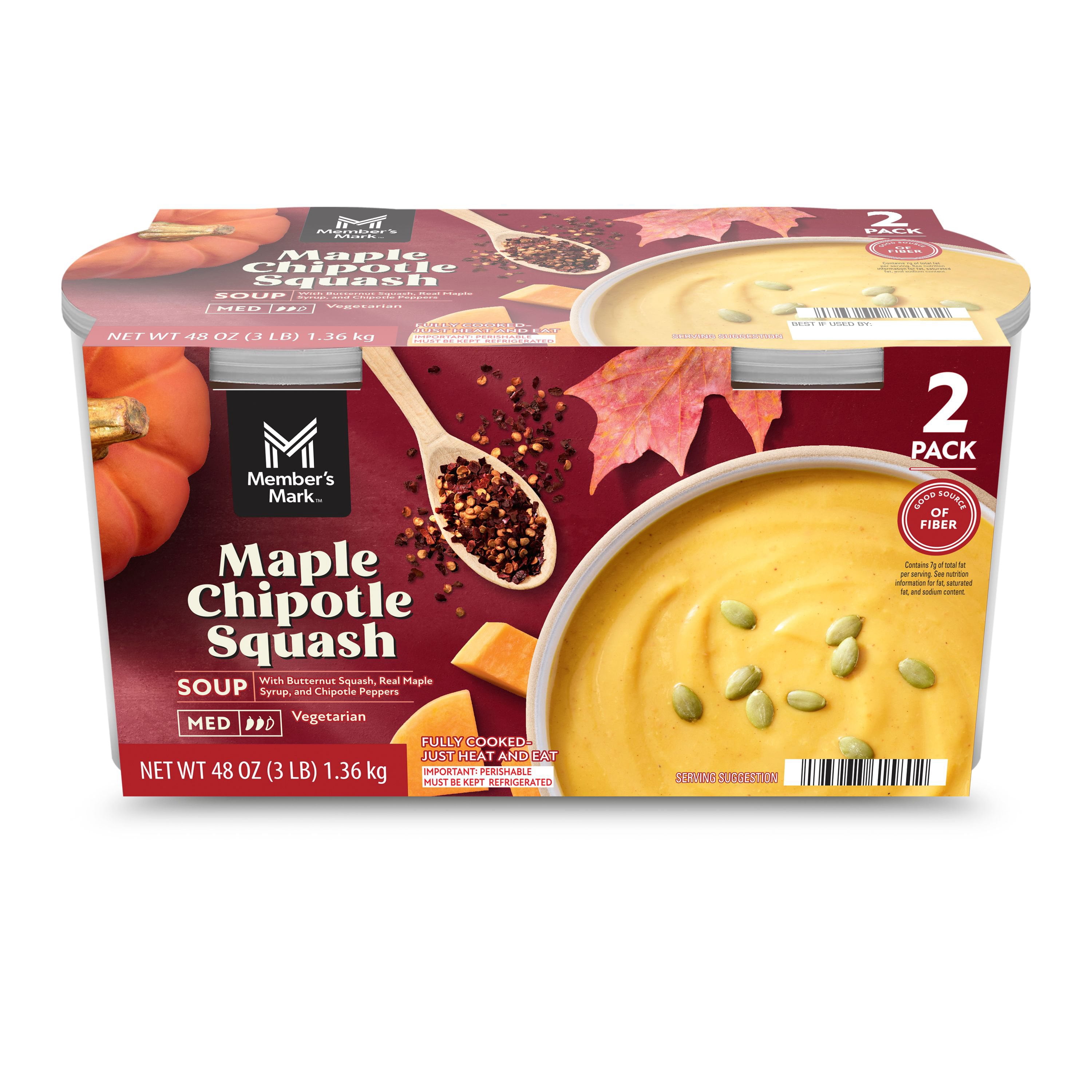


Butternut Squash Soup
Member's MarkAnalysis updated October 2026 · How Scout scores
At a glance
Summary
This butternut squash soup contains beneficial ingredients like butternut squash, tomatoes, and onions, which are rich in vitamins and antioxidants. However, the presence of canola oil, a heavily processed seed oil, and cane sugar, a refined sweetener, detracts from its overall healthiness. The soup's processing level and inclusion of these less desirable ingredients limit its score.
Key ingredients 21
Butternut SquashVery Good
Butternut squash is a nutrient-dense vegetable high in vitamins A and C, fiber, and antioxidants. It is minimally processed and provides a natural sweetness to the soup. Its high beta-carotene content supports eye health.
Benefits
High in vitamins A and C, fiber, and antioxidants, supporting immune function and eye health. Provides natural sweetness and flavor.
Tomato PasteGood
Tomato paste is rich in lycopene, an antioxidant linked to reduced risk of chronic diseases. It is made by cooking tomatoes to remove water content, concentrating nutrients. It enhances flavor and provides vitamins A and C.
Benefits
Rich in antioxidants like lycopene, which may reduce the risk of heart disease and cancer. Provides vitamins A and C, supporting immune function and skin health.
Heavy CreamGood
Beneficial ingredient — whole-food or functional value in this product class.
Risks
High in saturated fats, which may contribute to heart disease if consumed in excess.
Benefits
Provides a rich, creamy texture and enhances the flavor of dishes.
Diced TomatoesGood
Diced tomatoes are a source of vitamins and antioxidants, including vitamin C and lycopene. They are minimally processed, retaining most of their nutritional value. They add flavor and nutrients to the soup.
Benefits
Rich in vitamins C and A, and antioxidants like lycopene, which support immune health and may reduce cancer risk.
OnionsGood
Onions are a flavorful vegetable rich in antioxidants and vitamins. They are minimally processed and add depth to the soup's flavor. They contain quercetin, which has anti-inflammatory properties.
Benefits
Rich in antioxidants and vitamins, supporting immune health and reducing inflammation.
Sea SaltGood
Sea salt is a minimally processed salt that contains trace minerals. It enhances flavor and provides essential sodium for bodily functions. Its mineral content can vary based on the source.
Risks
Excessive consumption may lead to high blood pressure.
Benefits
Provides essential sodium and trace minerals, supporting electrolyte balance.
Organic Tamari SauceGood
Organic tamari sauce is a soy sauce alternative that is often gluten-free and contains less sodium. It is made from fermented soybeans, providing umami flavor and some protein. Its organic certification indicates fewer pesticides and additives.
Risks
Contains soy, which may be an allergen for some individuals.
Benefits
Provides umami flavor and some protein, with potentially fewer additives due to organic certification.
BasilGood
Basil is an herb rich in antioxidants and essential oils, providing flavor and aroma. It is minimally processed and adds nutritional value to dishes. Its antioxidants may support heart health and reduce inflammation.
Benefits
Rich in antioxidants and essential oils, supporting heart health and reducing inflammation.
Dried BasilGood
Dried basil retains the flavor and some nutrients of fresh basil, including antioxidants. It is minimally processed and adds depth to the flavor profile of dishes. Its antioxidants may support heart health and reduce inflammation.
Benefits
Rich in antioxidants, supporting heart health and reducing inflammation.
Granulated OnionGood
Granulated onion provides concentrated onion flavor and nutrients. It is made by dehydrating and grinding onions, retaining most of their nutritional value. It adds flavor and antioxidants to dishes.
Benefits
Provides concentrated flavor and antioxidants, supporting immune health.
Granulated GarlicGood
Granulated garlic offers concentrated garlic flavor and nutrients. It is made by dehydrating and grinding garlic, preserving its beneficial compounds. It adds flavor and may support heart health and immune function.
Benefits
Rich in beneficial compounds that may support heart health and immune function.
Red Pepper FlakesGood
Red pepper flakes add heat and flavor to dishes and are rich in capsaicin. They are minimally processed and provide antioxidants and vitamins. Capsaicin may boost metabolism and reduce inflammation.
Risks
May cause irritation or discomfort for individuals sensitive to spicy foods.
Benefits
Rich in capsaicin, which may boost metabolism and reduce inflammation.
WaterNeutral
Water is a neutral ingredient used as a base in many soups. It provides no nutritional value but is essential for hydration. It acts as a solvent for other ingredients.
See more about Water →Corn StarchNeutral
Corn starch is used as a thickening agent in soups and sauces. It is a refined carbohydrate with no significant nutritional value. It helps achieve the desired consistency in the soup.
See more about Corn Starch →ButterNeutral
Butter adds flavor and richness to dishes but is high in saturated fats. It is made from cream and provides a creamy texture. While it enhances taste, it should be consumed in moderation.
Risks
High in saturated fats, which may contribute to heart disease if consumed in excess.
Benefits
Enhances flavor and provides a creamy texture to dishes.
Cultured DextroseNeutral
Cultured dextrose is used as a natural preservative and flavor enhancer. It is derived from the fermentation of dextrose, a simple sugar. It helps extend shelf life without artificial additives.
Benefits
Helps preserve food naturally and enhances flavor without artificial additives.
Citric AcidNeutral
Citric acid is a natural preservative and flavor enhancer found in citrus fruits. It is used to maintain acidity and freshness in foods. It is generally recognized as safe when used in food products.
Benefits
Helps preserve food and enhance flavor naturally.
Ground Annatto SeedNeutral
Ground annatto seed is used as a natural colorant in foods. It is derived from the seeds of the achiote tree and provides a yellow to orange hue. It is minimally processed and considered safe for consumption.
Benefits
Provides natural color to foods without artificial additives.
Cane SugarBad
Cane sugar is a refined sugar that can contribute to increased blood sugar levels and weight gain. It is processed to remove impurities, resulting in a high-calorie sweetener. Excessive consumption is linked to various health issues.
Risks
High intake may lead to obesity, diabetes, and heart disease.
Benefits
Provides sweetness and enhances flavor, but offers no significant nutritional benefits.
Wheat FlourBad
Refined grain flour stripped of bran and germ.
Risks
May cause issues for individuals with gluten intolerance or celiac disease.
Benefits
Provides carbohydrates and some protein, contributing to energy supply.
Canola OilVery Bad
Canola oil is a seed oil high in omega-6 fatty acids, which may promote inflammation. It is heavily processed and refined, often using chemical solvents. Its high omega-6 content is a concern for balanced omega-3 to omega-6 ratios.
Risks
High omega-6 content may promote inflammation when consumed in excess.
Processing
Processed Foods
Get the full breakdown in the Scout appTake Scout shopping
Scan any product to see lab results, healthy alternatives, and your personalized analysis.
Download on theApp Store GET IT ONGoogle Play