
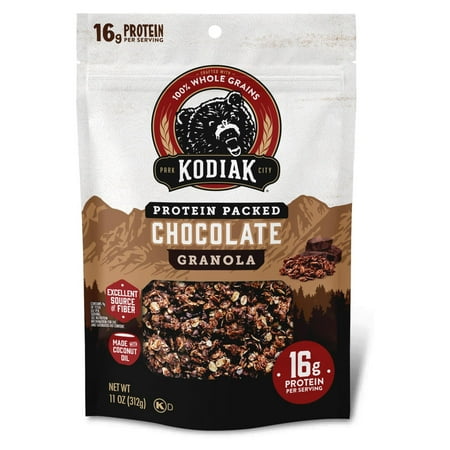

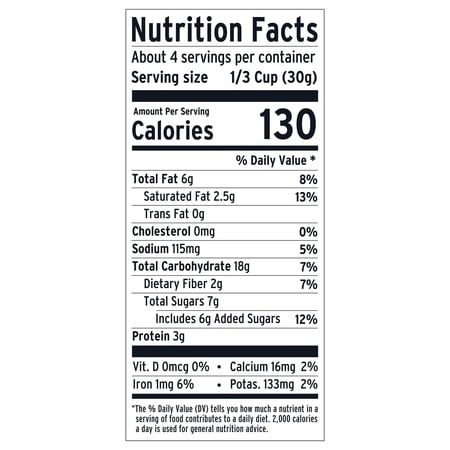


Kodiak Protein-Packed Chocolate Protein Granola Bag 11 oz
Analysis updated September 2026 · How Scout scores
At a glance
Summary
This granola contains several beneficial ingredients such as whole grain rolled oats, coconut oil, and almond butter, which provide fiber, healthy fats, and essential nutrients. However, the presence of refined sugars like cane sugar and tapioca syrup, along with the use of natural flavors, detracts from its overall healthiness. The product is moderately processed, which limits its score despite the inclusion of some high-quality ingredients.
Key ingredients 17
100% Whole Grain Rolled OatsVery Good
Whole grain rolled oats are a rich source of dietary fiber and essential nutrients. They are minimally processed, retaining their natural nutritional profile. Oats can help lower cholesterol levels and support heart health.
Benefits
Rich in beta-glucan fiber, which can help reduce cholesterol and improve heart health. Provides sustained energy and supports digestive health.
Almond ButterVery Good
Almond butter is a nutrient-dense spread made from ground almonds, rich in healthy fats, protein, and vitamins. It is minimally processed, retaining its natural nutritional profile. Supports heart health and provides sustained energy.
Risks
May cause allergic reactions in individuals with nut allergies.
Benefits
Rich in monounsaturated fats, vitamin E, and magnesium, supporting heart health and energy levels.
Soluble Tapioca FiberGood
Soluble tapioca fiber is a prebiotic fiber that supports digestive health. It is derived from the cassava root and is minimally processed. This fiber can aid in maintaining healthy blood sugar levels.
Risks
Excessive consumption may cause digestive discomfort in some individuals.
Benefits
Supports gut health by promoting beneficial bacteria growth. Helps in maintaining stable blood sugar levels.
Coconut OilGood
Coconut oil is a source of medium-chain triglycerides (MCTs) which can provide quick energy. It is minimally processed and retains beneficial compounds. MCTs may support weight management and metabolic health.
Risks
High in saturated fats, which should be consumed in moderation.
Benefits
Contains MCTs that can boost energy levels and support metabolic health.
Milk Protein IsolateGood
Milk protein isolate is a high-quality protein source derived from milk, containing both casein and whey proteins. It is processed to remove fats and lactose, focusing on protein content. Supports muscle repair and growth with a complete amino acid profile.
Risks
May cause allergic reactions in individuals with dairy sensitivities.
Benefits
Rich in essential amino acids, supporting muscle growth and recovery.
Whole MilkGood
Whole milk is a natural source of calcium, vitamin D, and healthy fats. It is minimally processed, retaining its nutritional profile. Supports bone health and provides essential nutrients.
Risks
May cause lactose intolerance symptoms in sensitive individuals.
Benefits
Rich in calcium and vitamin D, supporting bone health and providing essential nutrients.
Sea SaltGood
Sea salt is a natural source of sodium and trace minerals, minimally processed to retain its mineral content. It enhances flavor and provides essential electrolytes. Supports hydration and nerve function.
Risks
Excessive sodium intake can lead to high blood pressure and cardiovascular issues.
Benefits
Provides essential electrolytes and trace minerals, supporting hydration and nerve function.
Wheat Protein IsolateNeutral
Wheat protein isolate is a concentrated protein source derived from wheat. It is processed to remove most carbohydrates and fats, focusing on protein content. Suitable for increasing protein intake but lacks the complete amino acid profile of animal proteins.
Risks
May cause allergic reactions in individuals with wheat or gluten sensitivities.
Benefits
Provides a high protein content that can support muscle maintenance and growth.
Pea Protein ConcentrateNeutral
Pea protein concentrate is a plant-based protein source with a good amino acid profile. It is derived from yellow peas and is less processed than isolates. It is a suitable alternative for those avoiding animal proteins.
Risks
May cause digestive issues in some individuals if consumed in large amounts.
Benefits
Offers a plant-based protein option that is hypoallergenic and supports muscle growth.
Semisweet Chocolate ChipsNeutral
Semisweet chocolate chips contain sugar and cocoa, offering a balance of sweetness and chocolate flavor. They are processed to combine these ingredients into a convenient form. While they add flavor, they also contribute to sugar intake.
Risks
Contains added sugars and fats, which can contribute to weight gain if consumed in excess.
Benefits
Provides a source of antioxidants from cocoa, which may support heart health.
Cocoa (Processed With Alkali)Neutral
Cocoa processed with alkali, also known as Dutch-processed cocoa, has a milder flavor and darker color. The alkalization process reduces acidity but may decrease some antioxidant content. It is used to enhance flavor in chocolate products.
Risks
Reduced antioxidant content compared to natural cocoa.
Benefits
Provides flavor and some antioxidants, supporting heart health.
Liquid Malt ExtractNeutral
Liquid malt extract is a sweetener derived from malted barley, providing a rich flavor. It is processed to concentrate sugars and flavors. Used in small amounts, it adds sweetness and depth to foods.
Risks
High in sugars, which can contribute to weight gain if consumed in excess.
Benefits
Adds flavor and sweetness, but lacks significant nutritional benefits.
MaltoseNeutral
Maltose is a sugar derived from malted grains, used as a sweetener. It is processed to concentrate sugars, contributing to caloric intake. Provides quick energy but should be consumed in moderation.
Risks
High sugar content can lead to weight gain and metabolic issues if consumed excessively.
Benefits
Provides quick energy but lacks significant nutritional benefits.
Baking SodaNeutral
Baking soda is a leavening agent used to help baked goods rise. It is a simple chemical compound with no significant nutritional value. Used in small amounts, it is generally safe and effective.
Risks
Excessive consumption can lead to alkalosis, but this is rare in typical food use.
Cane SugarBad
Cane sugar is a refined sugar that can contribute to increased blood sugar levels. It is highly processed and lacks nutritional benefits. Excessive consumption is linked to various health issues such as obesity and diabetes.
Risks
High intake can lead to weight gain, insulin resistance, and increased risk of chronic diseases.
Benefits
Provides quick energy but should be consumed in moderation.
Tapioca SyrupBad
Tapioca syrup is a sweetener derived from cassava root, often used as a substitute for corn syrup. It is processed to concentrate sugars, contributing to caloric intake without nutritional benefits. Excessive consumption can lead to health issues similar to other refined sugars.
Risks
High in sugars, which can contribute to obesity and metabolic disorders if consumed excessively.
Benefits
Provides sweetness and energy but lacks significant nutritional benefits.
Natural FlavorBad
Natural flavors are additives used to enhance taste, often derived from plant or animal sources. They are highly processed and can contain a variety of chemical compounds. Lack of transparency in sourcing and composition raises health concerns.
Risks
Potential for allergic reactions and unknown chemical exposure.
Benefits
Enhances flavor without adding calories, but lacks nutritional benefits.
Processing
Processed Foods
Get the full breakdown in the Scout appTake Scout shopping
Scan any product to see lab results, healthy alternatives, and your personalized analysis.
Download on theApp Store GET IT ONGoogle PlayAmazon pricing & content
CERTAIN CONTENT THAT APPEARS ON THIS SITE COMES FROM AMAZON. THIS CONTENT IS PROVIDED “AS IS” AND IS SUBJECT TO CHANGE OR REMOVAL AT ANY TIME.