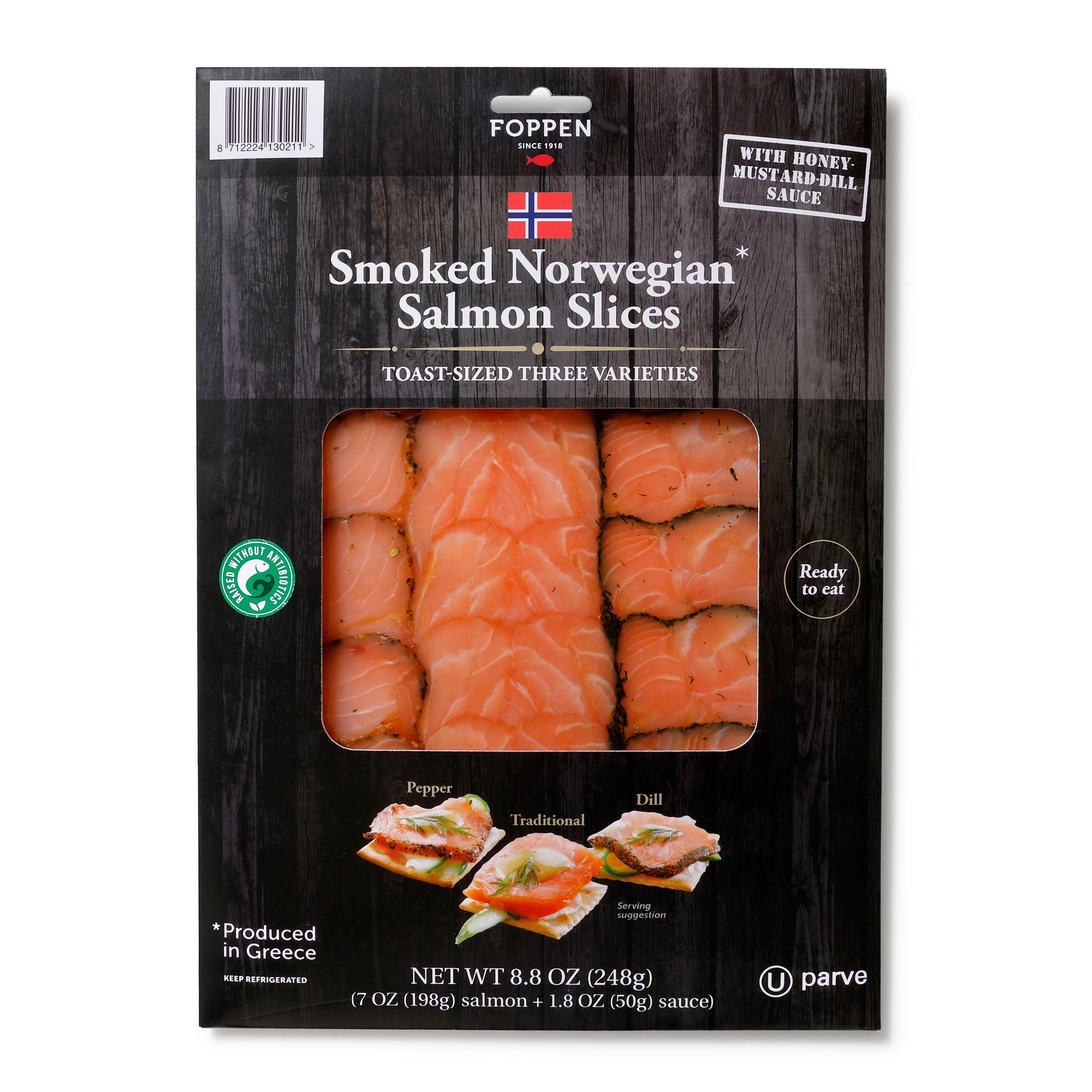
NORWEGIAN SALMON SLICES
At a glance
FDA recall notice
This product's barcode is listed in an FDA recall notice. A recall covers only the packages its notice lists, so check yours against it.
Summary
The Norwegian Salmon Slices are heavily processed, containing several additives and preservatives, which contribute to its ultra-processed classification. While the product includes beneficial ingredients like salmon and herbs, it also contains rapeseed oil and refined sugar, which are considered less healthy due to their potential inflammatory effects and empty calories. The presence of multiple additives further impacts the overall healthiness of the product.
Key ingredients 22
Rapeseed oilVery Bad
Seed oil high in omega-6 fatty acids. Highly processed and may contribute to inflammation. Often used due to its low cost and neutral flavor.
Risks
High omega-6 content may promote inflammation when consumed in excess.
SugarBad
Refined sugar used as a sweetener. High consumption can lead to health issues such as obesity and diabetes. Provides empty calories with no essential nutrients.
Risks
Excessive intake can contribute to obesity, diabetes, and other metabolic disorders.
Modified maize starchBad
Processed starch used as a thickener and stabilizer. Provides no nutritional value and is highly processed. Can cause digestive issues in sensitive individuals.
Risks
May cause digestive issues in sensitive individuals.
Potassium sorbateBad
Synthetic preservative — flagged in daily-use products.
Benefits
Helps to preserve food and prevent spoilage.
FlavorBad
Catch-all term for unspecified flavoring agents. Lack of transparency about specific ingredients used. May include artificial additives or allergens.
Risks
Potential for containing artificial additives or allergens.
SaltNeutral
Common seasoning used to enhance flavor. Provides sodium, an essential mineral for fluid balance and nerve function. Excessive intake can lead to high blood pressure.
Risks
Excessive consumption can contribute to hypertension and cardiovascular issues.
Benefits
Essential for maintaining fluid balance and proper nerve function.
Sodium lactateNeutral
Used as a preservative and acidity regulator. It helps to extend shelf life and maintain product stability. Generally recognized as safe when used in moderation.
Benefits
Helps to maintain product freshness and stability.
Sodium diacetateNeutral
Used as a preservative and flavoring agent. Helps to inhibit microbial growth and enhance flavor. Generally recognized as safe when used in food products.
Benefits
Helps to preserve food and enhance flavor.
TransglutaminaseNeutral
Enzyme used to bind proteins together. Commonly used in processed meat products to improve texture. Generally recognized as safe for consumption.
Benefits
Improves texture and consistency of processed meat products.
Natural wood smokeNeutral
Used to impart a smoky flavor to foods. Provides a traditional method of flavoring without artificial additives. May contain trace amounts of polycyclic aromatic hydrocarbons (PAHs).
Risks
May contain trace amounts of PAHs, which are potential carcinogens.
Benefits
Adds natural smoky flavor without artificial additives.
WaterNeutral
Basic component used in many food products. Acts as a solvent and carrier for other ingredients. Essential for hydration and various bodily functions.
Benefits
Essential for hydration and supports various bodily functions.
VinegarNeutral
Used as a preservative and flavor enhancer. Contains acetic acid, which may have antimicrobial properties. Provides a tangy flavor to foods.
Benefits
May have antimicrobial properties and enhances flavor.
Mustard flourNeutral
Ground mustard seeds used for flavoring. Contains compounds that may have antioxidant properties. Minimal processing retains its natural compounds.
Benefits
May provide antioxidant benefits and enhance flavor.
Xanthan gumNeutral
Used as a thickener and stabilizer in food products. Derived from fermentation of sugars by Xanthomonas campestris. Generally recognized as safe but may cause digestive issues in large amounts.
Risks
May cause digestive issues such as bloating and gas in sensitive individuals.
Benefits
Helps to stabilize and thicken food products, improving texture.
Carrot extractNeutral
Natural extract used for color and flavor. Contains beta-carotene, a precursor to vitamin A. Minimal processing retains its natural compounds.
Benefits
Provides beta-carotene, which is beneficial for vision and immune health.
Farmed Norwegian salmonGood
Rich source of high-quality protein and omega-3 fatty acids. Farmed salmon provides essential nutrients like vitamin D and selenium. However, it may contain higher levels of contaminants compared to wild-caught salmon.
Risks
Potential for higher levels of contaminants and antibiotics compared to wild-caught salmon.
Benefits
Excellent source of omega-3 fatty acids which support heart and brain health.
PepperGood
Natural spice that adds flavor and potential health benefits. Contains piperine, which may enhance nutrient absorption. Minimal processing retains its beneficial compounds.
Benefits
May enhance nutrient absorption and provide antioxidant benefits.
DillGood
Herb known for its aromatic flavor and potential health benefits. Contains antioxidants and may support digestion. Minimal processing preserves its natural compounds.
Benefits
Provides antioxidants and may aid in digestion.
PaprikaGood
Natural spice that adds color and flavor. Contains antioxidants and vitamins such as vitamin A. Minimal processing retains its beneficial compounds.
Benefits
Rich in antioxidants and vitamins, supporting overall health.
ParsleyGood
Herb known for its fresh flavor and nutritional benefits. Rich in vitamins A, C, and K, and antioxidants. Minimal processing preserves its natural nutrients.
Benefits
Provides essential vitamins and antioxidants, supporting immune health.
HoneyGood
Traditional whole-food sweetener with trace enzymes and antioxidants.
Risks
High in calories and sugars, which can contribute to weight gain if consumed in excess.
Benefits
Contains antioxidants and may have antimicrobial properties.
SpicesGood
Whole-food seasonings, antioxidant-bearing.
Benefits
May provide antioxidant benefits and enhance flavor.
Processing
Ultra-Processed Foods
Get the full breakdown in the Scout appTake Scout shopping
Scan any product to see lab results, healthy alternatives, and your personalized analysis.
Are you Foppen? Fix an error Get the badge Get tested