
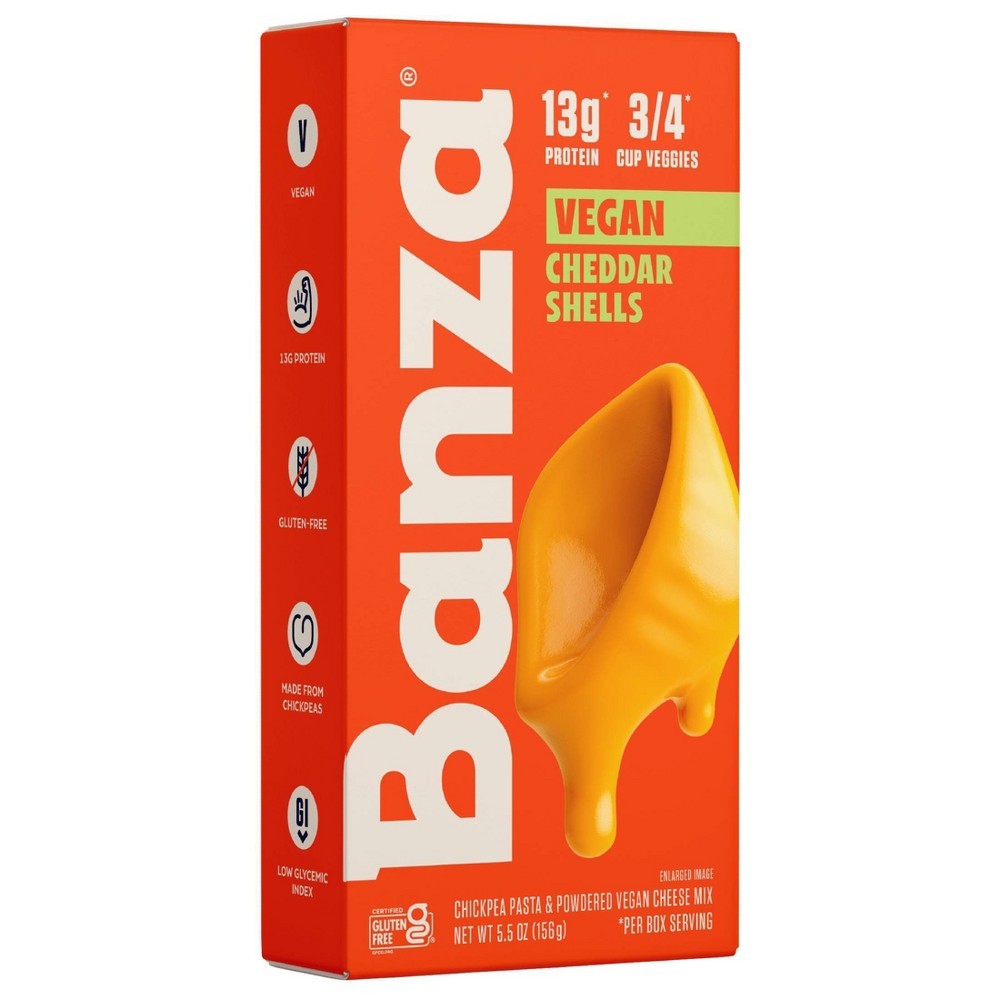


Banza Gluten Free Chickpea Shells and Vegan Cheddar - 5.5oz
Analysis updated July 2026 · How Scout scores
At a glance
Summary
This product is ultra-processed, which limits its potential score despite having some beneficial ingredients like chickpeas and sweet potatoes. The presence of high oleic sunflower oil, a processed seed oil, and organic natural flavors, which lack transparency, further impact the rating. While the product contains a good amount of protein and fiber, the level of processing and inclusion of additives such as xanthan gum and citric acid contribute to a moderate score.
Key ingredients 10
ChickpeasGood
Chickpeas are a nutrient-dense legume providing a good source of plant-based protein and fiber. They are minimally processed and contribute to satiety and digestive health. Chickpeas also offer essential vitamins and minerals, including folate and iron.
Benefits
Rich in protein and fiber, supporting digestive health and providing essential nutrients like folate and iron.
Sweet PotatoGood
Sweet potatoes are a nutritious root vegetable rich in vitamins, minerals, and antioxidants. They provide dietary fiber and are a good source of beta-carotene, which the body converts to vitamin A. Their natural sweetness and nutrient profile make them a beneficial ingredient.
Benefits
Rich in beta-carotene and fiber, supporting eye health and digestion.
Nutritional YeastGood
Nutritional yeast is a deactivated yeast rich in B vitamins, including B12, and provides a cheesy flavor to vegan dishes. It is a complete protein and is often fortified with additional nutrients. Its nutrient density makes it a valuable addition to plant-based diets.
Benefits
Rich in B vitamins and a complete protein source, beneficial for vegan diets.
Sea SaltGood
Sea salt is a minimally processed salt that retains trace minerals, offering a more natural sodium source. It enhances flavor without the additives found in table salt. Its mineral content can contribute to electrolyte balance.
Risks
Excessive sodium intake can lead to hypertension and cardiovascular issues.
Benefits
Provides trace minerals and enhances flavor naturally.
Pea StarchNeutral
Pea starch is used as a thickening agent and provides a gluten-free alternative to wheat-based starches. It is derived from peas and is generally considered a neutral ingredient in terms of health impact. It does not provide significant nutritional benefits but is useful for texture.
Benefits
Provides a gluten-free thickening option, useful for texture in gluten-free products.
TapiocaNeutral
Tapioca is a starch extracted from cassava root, commonly used as a thickener in food products. It is gluten-free and provides a neutral taste and texture. While it is low in nutrients, it is a useful ingredient for those with gluten sensitivities.
Benefits
Offers a gluten-free alternative for thickening and texture in food products.
Xanthan GumNeutral
Xanthan gum is a common food additive used as a thickener and stabilizer. It is produced through fermentation and is generally recognized as safe in small quantities. It helps improve texture and consistency in gluten-free products.
Risks
Excessive consumption may cause digestive discomfort in sensitive individuals.
Benefits
Improves texture and consistency in gluten-free products, enhancing the eating experience.
Coconut Oil PowderNeutral
Coconut oil powder is derived from coconut oil and is used for its creamy texture and flavor. It contains medium-chain triglycerides (MCTs), which are easily digestible fats. While it provides some benefits, it is processed and should be consumed in moderation.
Risks
High in saturated fats, which should be consumed in moderation to avoid cardiovascular risks.
Benefits
Contains MCTs that are easily digestible and may provide quick energy.
Organic Natural FlavorBad
Natural flavors are often used to enhance taste but can be highly processed and lack transparency. Even when labeled organic, they can contain a variety of compounds not disclosed on labels. This lack of transparency and potential for processing detracts from their health value.
Risks
Potential for undisclosed additives and processing methods may pose health concerns.
High Oleic Sunflower OilVery Bad
High oleic sunflower oil is a processed oil high in monounsaturated fats, but it is still a seed oil. It is more stable than regular sunflower oil due to its oleic acid content. However, it is still processed and can contribute to an imbalance of omega-6 fatty acids.
Risks
High omega-6 content may promote inflammation when consumed in excess.
Benefits
Contains monounsaturated fats that are more stable and heart-healthy compared to regular sunflower oil.
Processing
Ultra-Processed Foods
Get the full breakdown in the Scout appTake Scout shopping
Scan any product to see lab results, healthy alternatives, and your personalized analysis.
Download on theApp Store GET IT ONGoogle PlayAmazon pricing & content
Amazon price as of . Product prices and availability are accurate as of the date/time indicated and are subject to change. Any price and availability information displayed on Amazon.com at the time of purchase will apply to the purchase of this product.
CERTAIN CONTENT THAT APPEARS ON THIS SITE COMES FROM AMAZON. THIS CONTENT IS PROVIDED “AS IS” AND IS SUBJECT TO CHANGE OR REMOVAL AT ANY TIME.