
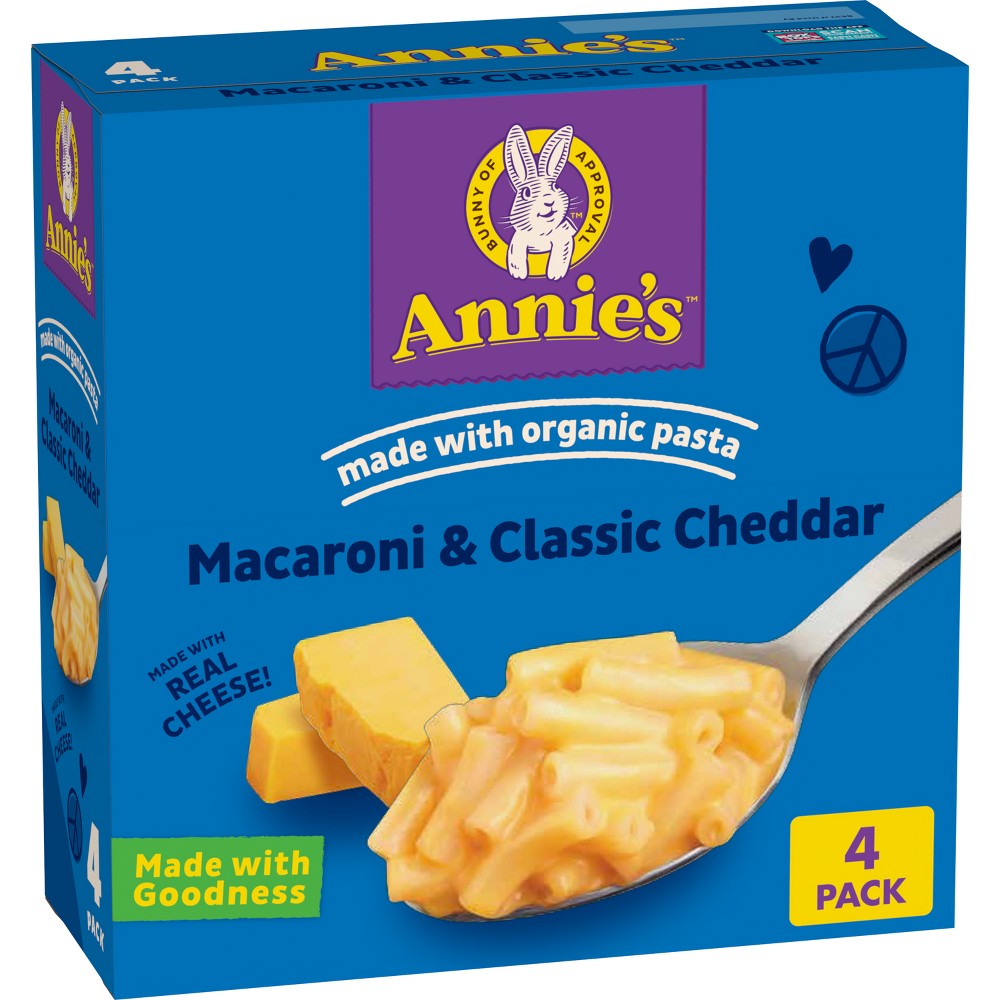



Annie's Organic Classic Cheddar Mac and Cheese - 24oz/4pk
Analysis updated August 2026 · How Scout scores
At a glance
Summary
This product contains organic pasta and high-quality protein sources like whey and cultured cream, which are beneficial. However, it is classified as ultra-processed due to the presence of additives like sodium phosphate and natural flavors, which reduce transparency and may impact health negatively. The processing level and presence of these additives limit the overall healthiness of the product.
Key ingredients 14
Organic PastaGood
Organic pasta is a minimally processed carbohydrate source. It is made from organic wheat, which is free from synthetic pesticides and fertilizers. This provides a cleaner ingredient profile compared to conventional pasta.
Benefits
Provides a source of energy and fiber, supporting digestive health. Organic certification ensures reduced exposure to harmful chemicals.
Cultured CreamGood
Cultured cream is a fermented dairy product that contains beneficial probiotics. It is made from cream that has been fermented with lactic acid bacteria. This process enhances its nutritional profile and digestibility.
Risks
May not be suitable for individuals with dairy allergies or lactose intolerance.
Benefits
Contains probiotics that support gut health and improve digestion. Provides a rich source of calcium and healthy fats.
WheyNeutral
Liquid whey as a minor dairy ingredient — benign.
Risks
May cause digestive issues for individuals with lactose intolerance.
Benefits
Supports muscle repair and growth due to its complete amino acid profile. Easily digestible and absorbed, making it an efficient protein source.
ButterNeutral
Butter is a natural fat derived from cream. It contains saturated fats, which should be consumed in moderation. While it provides flavor and texture, it lacks significant nutritional benefits.
Risks
High in saturated fats, which may contribute to heart disease if consumed in excess.
Benefits
Adds flavor and richness to foods. Contains fat-soluble vitamins like A and D.
Dried Cheddar CheeseNeutral
Dried cheddar cheese is a concentrated source of dairy nutrients. It provides protein and calcium but is also high in sodium. The drying process preserves the cheese but may reduce some nutrient content.
Risks
High sodium content may contribute to hypertension if consumed in excess.
Benefits
Provides protein and calcium, supporting bone health. Adds flavor and richness to dishes.
SaltNeutral
Salt is a common seasoning used to enhance flavor. It is a source of sodium, which is essential for fluid balance and nerve function. However, excessive intake can lead to health issues.
Risks
Excessive sodium intake can lead to hypertension and cardiovascular issues.
Benefits
Essential for maintaining fluid balance and nerve function. Enhances the flavor of foods.
Corn StarchNeutral
Corn starch is a refined carbohydrate used as a thickening agent. It is derived from corn and is highly processed. While it provides texture, it lacks significant nutritional value.
Benefits
Provides texture and thickness to foods. Useful in culinary applications for its thickening properties.
Silicon DioxideNeutral
Silicon dioxide is an anti-caking agent used to prevent clumping. It is a naturally occurring mineral and is generally recognized as safe. It does not contribute any nutritional value.
Benefits
Prevents clumping in powdered products, ensuring consistent texture.
Nonfat MilkNeutral
Nonfat milk is a dairy product with the fat removed. It provides protein and calcium but lacks the fat-soluble vitamins found in whole milk. It is a low-calorie option for dairy consumption.
Risks
May not be suitable for individuals with lactose intolerance.
Benefits
Provides protein and calcium, supporting bone health. Low in calories compared to whole milk.
Annatto ExtractNeutral
Annatto extract is a natural coloring agent derived from the seeds of the achiote tree. It is used to impart a yellow to orange color to foods. It is generally considered safe and has minimal nutritional impact.
Risks
May cause allergic reactions in sensitive individuals.
Benefits
Provides natural color to foods without synthetic dyes. Generally considered safe for consumption.
Citric AcidNeutral
Citric acid is a natural preservative and flavor enhancer. It is found naturally in citrus fruits and is used to add acidity to foods. It is generally recognized as safe and has minimal nutritional impact.
Benefits
Enhances flavor and acts as a preservative in foods. Naturally found in citrus fruits.
Lactic AcidNeutral
Lactic acid is a naturally occurring acid used as a preservative and flavoring agent. It is produced by fermentation and is generally recognized as safe. It helps maintain the acidity and flavor of foods.
Benefits
Acts as a preservative and flavor enhancer. Produced naturally through fermentation.
Natural FlavorBad
Natural flavor is a catch-all term for flavoring agents derived from natural sources. It lacks transparency and can include a wide range of substances. This makes it difficult to assess its health impact.
Risks
Lack of transparency can lead to potential allergens or unwanted additives.
Sodium PhosphateBad
Sodium phosphate is an additive used to enhance texture and moisture retention. It is a processed ingredient that can contribute to high phosphorus intake. Excessive consumption may affect kidney function.
Risks
High phosphorus intake can lead to imbalances in calcium and phosphorus levels, affecting bone health.
Benefits
Improves texture and moisture retention in processed foods.
Processing
Ultra-Processed Foods
Get the full breakdown in the Scout appTake Scout shopping
Scan any product to see lab results, healthy alternatives, and your personalized analysis.
Download on theApp Store GET IT ONGoogle PlayAmazon pricing & content
Amazon price as of . Product prices and availability are accurate as of the date/time indicated and are subject to change. Any price and availability information displayed on Amazon.com at the time of purchase will apply to the purchase of this product.
CERTAIN CONTENT THAT APPEARS ON THIS SITE COMES FROM AMAZON. THIS CONTENT IS PROVIDED “AS IS” AND IS SUBJECT TO CHANGE OR REMOVAL AT ANY TIME.