
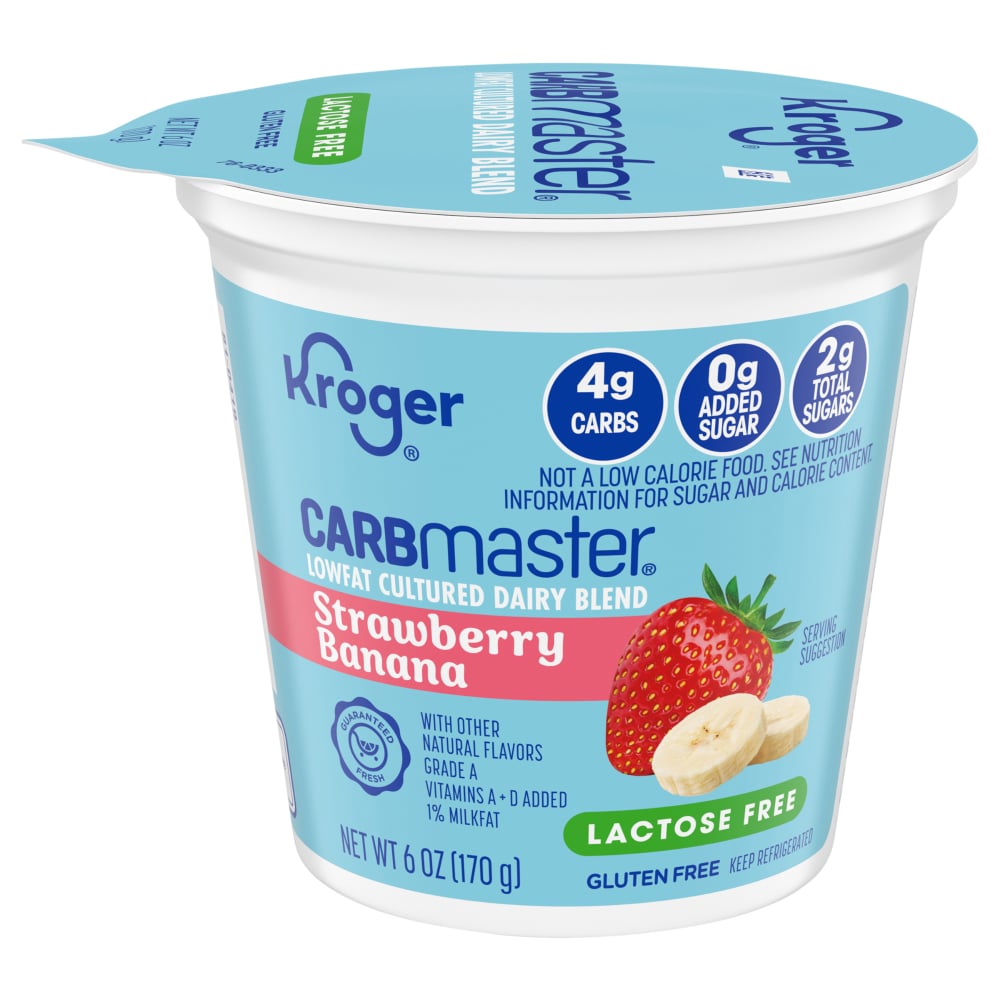


Kroger CarbMaster Strawberry Banana Cultured Dairy Blend - 6.0 oz
Analysis updated August 2026 · How Scout scores
At a glance
Summary
This product contains beneficial ingredients like milk protein concentrate, strawberries, and active cultures, which contribute to its nutritional value. However, it is moderately processed and includes artificial sweeteners such as sucralose and acesulfame potassium, as well as caramel color, which are concerning due to their potential health impacts. The presence of modified corn starch and natural flavors further detracts from its overall healthiness.
Key ingredients 23
Milk Protein ConcentrateGood
Milk protein concentrate is a high-quality protein source derived from milk. It provides essential amino acids necessary for muscle repair and growth. It is less processed compared to plant-based protein isolates.
Risks
May cause allergic reactions in individuals with milk allergies.
Benefits
Rich in essential amino acids and supports muscle health and recovery.
Milk Protein IsolateGood
Milk protein isolate is a refined form of milk protein that offers a high concentration of protein with minimal fat and lactose. It is beneficial for those seeking to increase protein intake without additional calories. It is a complete protein source with all essential amino acids.
Risks
May cause allergic reactions in individuals with milk allergies.
Benefits
Provides a concentrated source of high-quality protein with minimal fat and lactose.
CreamGood
Cream is a dairy product rich in fats and provides a creamy texture and flavor. It contains fat-soluble vitamins like A and D. When used in moderation, it can enhance the nutritional profile of dairy products.
Risks
High in saturated fats, which should be consumed in moderation to avoid cardiovascular risks.
Benefits
Provides fat-soluble vitamins and enhances the texture and flavor of dairy products.
StrawberriesGood
Strawberries are a natural fruit ingredient rich in vitamins, antioxidants, and fiber. They provide natural sweetness and flavor to the product. Their inclusion adds nutritional value and enhances the taste profile.
Risks
May cause allergic reactions in some individuals.
Benefits
Rich in vitamin C, antioxidants, and dietary fiber, supporting overall health.
Banana PureeGood
Banana puree is a natural ingredient that adds sweetness and flavor. It is a source of potassium and other essential nutrients. Its inclusion enhances the nutritional profile and taste of the product.
Risks
May cause allergic reactions in some individuals.
Benefits
Provides potassium and natural sweetness, contributing to the nutritional value of the product.
Lactase EnzymeGood
Lactase enzyme is added to help break down lactose, making dairy products more digestible for lactose-intolerant individuals. It improves the digestibility of lactose-containing products. It is beneficial for those with lactose intolerance.
Benefits
Improves lactose digestion, making dairy products accessible to lactose-intolerant individuals.
Vitamin D3Good
Vitamin D3 is added to fortify foods and support bone health by aiding calcium absorption. It is essential for maintaining healthy bones and immune function. It is commonly added to dairy products to enhance nutritional value.
Benefits
Supports bone health and immune function by aiding calcium absorption.
Active CulturesGood
Active cultures, including S. thermophilus and L. bulgaricus, are beneficial bacteria used in yogurt fermentation. They support gut health by promoting a healthy microbiome. Their presence enhances the probiotic content of the product.
Benefits
Supports gut health and digestion through probiotic activity.
WaterNeutral
Water is a neutral ingredient used as a base in many food products. It does not contribute any nutritional value but is essential for consistency and texture. It is a common and necessary component in dairy blends.
See more about Water →Skim MilkNeutral
Skim milk is milk with most of the fat removed, providing a low-calorie source of protein and calcium. It is often used to reduce the fat content in dairy products. It retains essential nutrients like calcium and protein.
Risks
May cause allergic reactions in individuals with milk allergies.
Benefits
Low in calories and provides essential nutrients like calcium and protein.
Vegetable Juice (for color)Neutral
Vegetable juice is used as a natural coloring agent in food products. It provides color without the use of artificial dyes. It does not significantly impact the nutritional profile of the product.
Benefits
Offers a natural alternative to artificial colorings.
GelatinNeutral
Gelatin is a protein derived from animal collagen used as a gelling agent. It provides texture and stability to food products. It is a common ingredient in dairy and dessert products.
Risks
May cause allergic reactions in individuals with sensitivities to animal products.
Benefits
Provides texture and stability in food products.
Tricalcium PhosphateNeutral
Tricalcium phosphate is used as a calcium supplement and anti-caking agent. It helps fortify foods with calcium, supporting bone health. It is commonly used in processed foods to maintain texture and prevent clumping.
Risks
Excessive intake may lead to imbalances in mineral absorption.
Benefits
Provides additional calcium, supporting bone health.
SaltNeutral
Salt is used to enhance flavor and preserve food. It is a common ingredient in many processed foods. While necessary in small amounts, excessive consumption can lead to health issues.
Risks
High sodium intake can contribute to hypertension and cardiovascular issues.
Benefits
Enhances flavor and acts as a preservative.
PectinNeutral
Pectin is a natural polysaccharide used as a gelling agent in food products. It is derived from fruits and helps improve texture. It is commonly used in jams, jellies, and dairy products.
Benefits
Provides texture and stability in food products.
AgarNeutral
Agar is a gelatinous substance derived from seaweed used as a thickening agent. It is a vegetarian alternative to gelatin. It is commonly used in desserts and dairy products for texture.
Benefits
Provides a vegetarian alternative to gelatin for texture in food products.
Turmeric (for color)Neutral
Turmeric is used as a natural coloring agent in food products. It provides color without the use of artificial dyes. It does not significantly impact the nutritional profile of the product.
Benefits
Offers a natural alternative to artificial colorings.
Vitamin A PalmitateNeutral
Vitamin A palmitate is a synthetic form of vitamin A used to fortify foods. It helps support vision and immune function. It is commonly added to dairy products to enhance nutritional value.
Risks
Excessive intake can lead to hypervitaminosis A, a condition of vitamin A toxicity.
Benefits
Supports vision and immune function as a form of vitamin A.
Modified Corn StarchBad
Modified corn starch is a processed carbohydrate used as a thickening agent. It is highly processed and offers little nutritional value. It is often used to improve texture and stability in processed foods.
Risks
May contribute to blood sugar spikes and is a highly processed ingredient.
Benefits
Provides texture and stability in food products but offers no significant nutritional benefits.
Natural FlavorBad
Natural flavor is a vague term that can include a variety of chemical compounds derived from natural sources. It lacks transparency and can mask the use of artificial additives. It does not contribute any nutritional value.
Risks
Lack of transparency can lead to potential allergens or unwanted additives.
SucraloseBad
Sucralose is an artificial sweetener used to provide sweetness without calories. It is highly processed and may affect gut health. It is often used in low-calorie and sugar-free products.
Risks
May impact gut microbiota and cause digestive issues in some individuals.
Benefits
Provides sweetness without adding calories, suitable for low-calorie diets.
Acesulfame PotassiumBad
Acesulfame potassium is an artificial sweetener used to enhance sweetness without calories. It is highly processed and may have potential health concerns. It is often used in combination with other sweeteners to improve taste.
Risks
Potential health concerns include effects on metabolism and gut health.
Benefits
Provides sweetness without calories, often used in sugar-free products.
Caramel ColorBad
Caramel color is a food coloring agent made by heating sugar. It is highly processed and may contain contaminants like 4-MEI. It is used to enhance the appearance of food products.
Risks
May contain contaminants like 4-MEI, which have potential health concerns.
Processing
Processed Foods
Get the full breakdown in the Scout appTake Scout shopping
Scan any product to see lab results, healthy alternatives, and your personalized analysis.
Download on theApp Store GET IT ONGoogle Play