
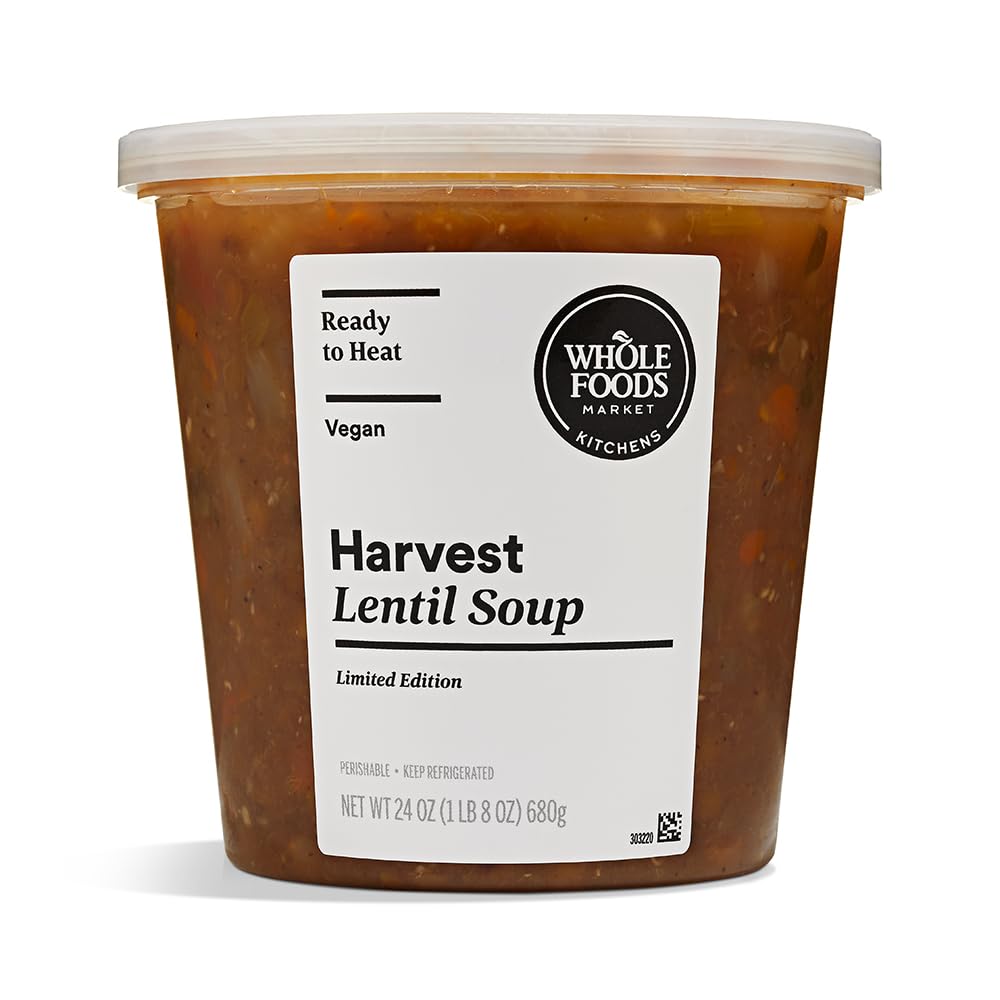



Harvest Lentil Soup
Whole Foods MarketAnalysis updated July 2026 · How Scout scores
At a glance
Summary
This soup contains a variety of beneficial ingredients such as lentils, onions, and olive oil, which contribute to its nutritional value. However, the presence of natural flavors and palm oil, along with its classification as an ultra-processed product, limits its overall healthiness. The processing level and use of certain additives prevent it from achieving a higher score.
Key ingredients 25
LentilsVery Good
Lentils are a rich source of plant-based protein and fiber. They support digestive health and provide essential nutrients like iron and folate. They are a staple in healthy diets.
Benefits
High in protein and fiber, supporting digestive health and providing essential nutrients.
Olive oilVery Good
Olive oil is a high-quality monounsaturated fat with anti-inflammatory properties. It contains antioxidants that support heart health. Cold-pressed extraction preserves beneficial compounds.
Benefits
Rich in monounsaturated fats that support heart health and provide anti-inflammatory properties.
OnionsGood
Onions are a good source of vitamins and antioxidants. They contain quercetin, which has anti-inflammatory properties. They add flavor and nutritional value to dishes.
Risks
May cause digestive discomfort in some individuals.
Benefits
Rich in antioxidants and vitamins that support immune health and reduce inflammation.
Diced tomatoesGood
Diced tomatoes are rich in vitamins A and C and lycopene, an antioxidant. They support heart health and reduce inflammation. They add flavor and nutritional value to dishes.
Benefits
High in antioxidants like lycopene, which may reduce the risk of chronic diseases.
CarrotsGood
Carrots are rich in beta-carotene, which the body converts to vitamin A. They support eye health and provide antioxidants. They add sweetness and nutritional value to dishes.
Benefits
Rich in beta-carotene and antioxidants, supporting eye health and immune function.
CeleryGood
Celery is low in calories and provides vitamins and minerals. It contains antioxidants and supports hydration. It adds flavor and crunch to dishes.
Benefits
Provides vitamins and antioxidants, supporting overall health and hydration.
GarlicGood
Garlic is known for its potential health benefits, including immune support. It contains allicin, which has antimicrobial properties. It adds flavor and nutritional value to dishes.
Risks
May cause digestive discomfort in some individuals.
Benefits
Supports immune health and has antimicrobial properties.
Sea saltGood
Sea salt is a minimally processed source of sodium and trace minerals. It is often preferred for its natural mineral content. It enhances flavor in dishes.
Risks
Excessive consumption can lead to high blood pressure.
Benefits
Provides trace minerals and enhances flavor.
ParsleyGood
Parsley is rich in vitamins A, C, and K and antioxidants. It supports immune health and reduces inflammation. It adds flavor and nutritional value to dishes.
Benefits
Rich in vitamins and antioxidants, supporting immune health.
CuminGood
Cumin is a spice with antioxidant properties. It supports digestion and may improve blood sugar control. It adds flavor and nutritional value to dishes.
Benefits
Supports digestion and provides antioxidants.
Smoked paprikaGood
Smoked paprika is rich in antioxidants and adds a smoky flavor. It contains vitamins A and E, supporting immune health. It enhances the flavor profile of dishes.
Benefits
Rich in antioxidants and vitamins, supporting immune health.
Porcini mushroom powderGood
Porcini mushroom powder is rich in umami flavor and nutrients. It contains antioxidants and supports immune health. It enhances the flavor and nutritional value of dishes.
Benefits
Provides antioxidants and enhances flavor with umami richness.
Black pepperGood
Black pepper contains piperine, which enhances nutrient absorption. It has antioxidant and anti-inflammatory properties. It adds flavor and nutritional value to dishes.
Benefits
Enhances nutrient absorption and provides antioxidants.
WaterNeutral
Water is a neutral ingredient used as a base in soups. It provides no nutritional value but is essential for hydration. It acts as a solvent for other ingredients.
See more about Water →Tomato juiceNeutral
Tomato juice provides vitamins and minerals but can be high in sodium. It is used to enhance flavor and consistency in soups. It is less beneficial than whole tomatoes due to processing.
Risks
High sodium content may be a concern for individuals with hypertension.
Benefits
Provides vitamins and minerals, including vitamin C and potassium.
SaltNeutral
Salt is used to enhance flavor but provides no nutritional benefits. Excessive intake can lead to health issues like hypertension. It is a common ingredient in processed foods.
Risks
Excessive consumption can lead to high blood pressure and cardiovascular issues.
Citric acidNeutral
Citric acid is used as a preservative and flavor enhancer. It is naturally found in citrus fruits. It helps maintain the stability and freshness of the product.
Risks
May cause irritation in individuals with sensitive stomachs.
Benefits
Helps preserve food and enhance flavor without significant health risks.
Tomato pasteNeutral
Tomato paste is concentrated and provides a rich source of lycopene. It enhances flavor and color in dishes. It is more processed than fresh tomatoes.
Benefits
Rich in lycopene, an antioxidant that supports heart health.
CornstarchNeutral
Cornstarch is used as a thickening agent in soups. It provides no significant nutritional value. It is a refined carbohydrate with minimal health benefits.
Risks
May contribute to blood sugar spikes if consumed in large amounts.
Red wine vinegarNeutral
Red wine vinegar adds acidity and flavor to dishes. It is made from fermented red wine. It contains minimal calories and no significant nutrients.
Benefits
Adds flavor with minimal calories and no significant nutrients.
Broth concentrateNeutral
Broth concentrate is used to enhance flavor in soups. It may contain added sodium and preservatives. It provides no significant nutritional benefits.
Risks
May be high in sodium and contain preservatives.
Benefits
Enhances flavor without significant nutritional benefits.
Xanthan gumNeutral
Xanthan gum is used as a thickening and stabilizing agent. It is a polysaccharide produced through fermentation. It provides no significant nutritional value.
Risks
May cause digestive issues in sensitive individuals.
Bay leavesNeutral
Bay leaves are used for flavoring and have minimal nutritional value. They are typically removed before consumption. They add a subtle aroma and flavor to dishes.
Benefits
Adds subtle flavor and aroma to dishes.
Natural flavorBad
Natural flavor is a catch-all term for flavoring agents. It lacks transparency and may contain additives. It is often used in processed foods to enhance taste.
Risks
Lack of transparency may hide unwanted additives or allergens.
Expeller pressed palm oilBad
Palm oil is high in saturated fats, which may impact heart health. Expeller pressing is a mechanical extraction method that avoids chemical solvents. It is often criticized for environmental concerns.
Risks
High saturated fat content may impact heart health negatively.
Benefits
Provides a stable cooking fat with a high smoke point.
Processing
Ultra-Processed Foods
Get the full breakdown in the Scout appTake Scout shopping
Scan any product to see lab results, healthy alternatives, and your personalized analysis.
Download on theApp Store GET IT ONGoogle Play