
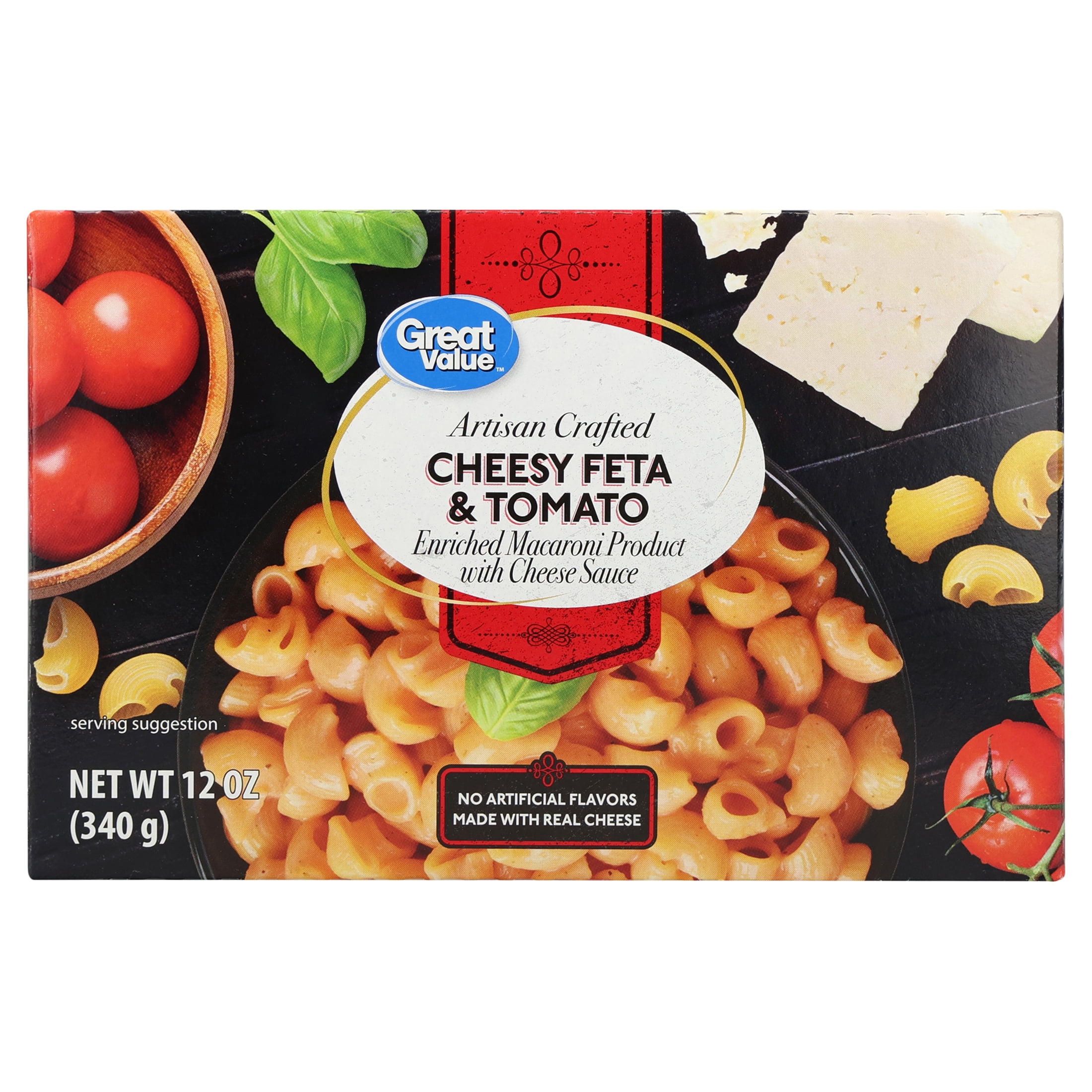



Artisan Crafted Cheesy Feta & Tomato Enriched Macaroni Product with Cheese Sauce
Great ValueAnalysis updated June 2026 · How Scout scores
Near you
Great Value is carried at Walmart stores. Find one within 25 miles.
At a glance
Summary
This product contains enriched macaroni, which provides essential nutrients like niacin, iron, and folic acid, contributing positively to its nutritional profile. However, the presence of canola oil, a highly processed seed oil, is a significant drawback due to its potential inflammatory effects. The product is moderately processed, which limits its overall health rating despite the inclusion of beneficial ingredients like cheddar and feta cheese.
Key ingredients 13
NiacinGood
Niacin, or vitamin B3, is added to enriched flour to support metabolic health. It plays a crucial role in converting food into energy. Enrichment ensures adequate intake of this essential nutrient.
Benefits
Supports energy metabolism and overall cellular health.
IronGood
Iron is an essential mineral added to enriched flour to prevent deficiencies. It is crucial for oxygen transport in the blood. Enrichment helps maintain adequate iron levels, especially important for those at risk of anemia.
Risks
Excessive iron intake can lead to toxicity, but this is rare from food sources.
Benefits
Supports oxygen transport and energy production in the body.
Thiamine mononitrateGood
Thiamine mononitrate is a form of vitamin B1 added to enriched flour to support nervous system health. It is essential for carbohydrate metabolism. Enrichment helps prevent deficiencies, particularly in populations with limited dietary diversity.
Benefits
Essential for energy metabolism and nervous system function.
RiboflavinGood
Riboflavin, or vitamin B2, is added to enriched flour to support energy production and cellular function. It is important for the metabolism of fats, drugs, and steroids. Enrichment ensures adequate intake of this essential nutrient.
Benefits
Supports energy production and antioxidant protection.
Cheddar cheeseGood
Cheddar cheese provides protein and calcium, supporting bone health and muscle function. It is made from pasteurized milk, which reduces the risk of harmful bacteria. The cheese adds flavor and nutritional value to the product.
Risks
High in saturated fat and sodium, which can be a concern if consumed in excess.
Benefits
Rich in protein and calcium, supporting bone and muscle health.
Feta cheeseGood
Feta cheese is a flavorful cheese that provides protein and calcium, supporting bone health. It is traditionally made from sheep's milk, which may be easier to digest for some individuals. The cheese adds a distinct taste and nutritional value to the product.
Risks
High in sodium, which can be a concern if consumed in excess.
Benefits
Rich in protein and calcium, supporting bone health and adding flavor.
TomatoGood
Tomatoes are a source of vitamins A and C, as well as antioxidants like lycopene. They contribute to heart health and may reduce the risk of certain cancers. The inclusion of tomatoes adds nutritional value and flavor to the product.
Benefits
Rich in vitamins and antioxidants, supporting heart health and reducing cancer risk.
SpicesGood
Whole-food seasonings, antioxidant-bearing.
Benefits
May provide antioxidants and enhance flavor, depending on the specific spices used.
Folic acidNeutral
Standard formulation ingredient — neither beneficial nor harmful at typical use.
Risks
Excessive intake can mask vitamin B12 deficiency, but this is rare from food sources.
Benefits
Supports DNA synthesis and is crucial for fetal development.
Skim milkNeutral
Standard formulation ingredient — neither beneficial nor harmful at typical use.
Benefits
Provides protein and calcium with lower fat content, supporting bone health.
SaltNeutral
Salt is used to enhance flavor and preserve food. It is essential for maintaining fluid balance and nerve function. However, excessive intake can lead to hypertension and cardiovascular issues.
Risks
Excessive salt intake can lead to high blood pressure and cardiovascular issues.
Benefits
Essential for fluid balance and nerve function in moderation.
Wheat flourBad
Refined grain flour stripped of bran and germ.
Risks
Refined wheat flour can contribute to blood sugar spikes and lacks fiber.
Benefits
Provides a source of carbohydrates necessary for energy.
Canola oilVery Bad
Canola oil is a seed oil high in omega-6 fatty acids, which can promote inflammation when consumed in excess. It is often highly processed, involving chemical extraction and refining. The presence of canola oil is a negative aspect due to its potential health impacts.
Risks
High omega-6 content may promote inflammation when consumed in excess.
Processing
Processed Foods
Get the full breakdown in the Scout appTake Scout shopping
Scan any product to see lab results, healthy alternatives, and your personalized analysis.
Download on theApp Store GET IT ONGoogle Play