
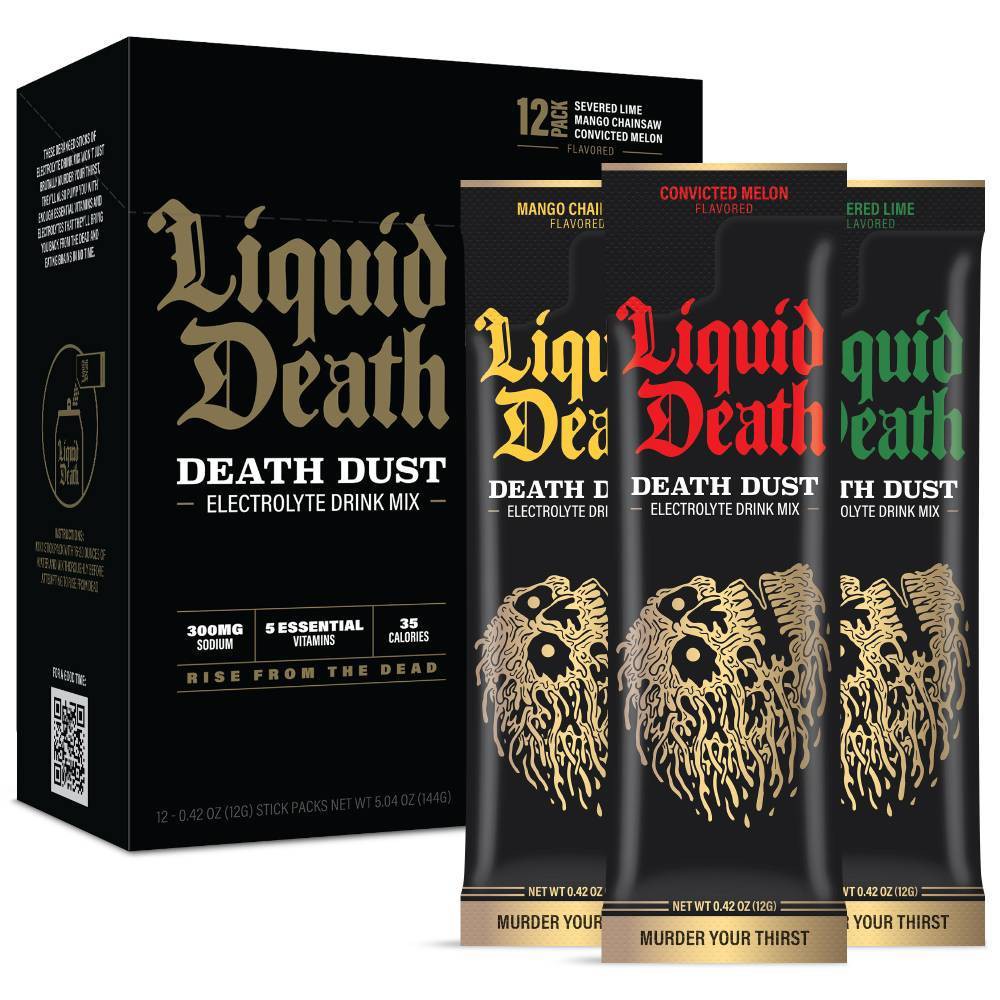


Liquid Death Death Dust Variety Pack Electrolyte Drink Mix - 12pk/0.42 oz Sticks
Analysis updated August 2026 · How Scout scores
At a glance
Summary
This electrolyte drink mix contains beneficial ingredients like potassium citrate, magnesium citrate, and vitamin C, which support hydration and electrolyte balance. However, the presence of cane sugar as a primary ingredient contributes to high sugar content, which can lead to rapid blood sugar spikes and potential metabolic issues. The product also includes natural flavors and vegetable coloring, which are common in flavored supplements but add to the level of processing.
Key ingredients 15
Potassium CitrateGood
Potassium citrate is a potassium salt of citric acid that helps maintain electrolyte balance. It is beneficial for heart health and muscle function. It can also help prevent kidney stones by alkalizing urine.
Risks
High doses may cause gastrointestinal discomfort.
Benefits
Supports cardiovascular health and proper muscle function.
Ascorbic AcidGood
Ascorbic acid, also known as vitamin C, is an essential nutrient that supports immune function and acts as an antioxidant. It is crucial for collagen synthesis and skin health. It also enhances iron absorption from plant-based foods.
Risks
High doses may cause gastrointestinal upset.
Benefits
Boosts immune function and acts as a powerful antioxidant.
Magnesium CitrateGood
Magnesium citrate is a magnesium salt of citric acid that supports muscle and nerve function. It is easily absorbed and helps maintain normal muscle and nerve function. It also plays a role in energy production and bone health.
Risks
Excessive intake may lead to diarrhea or gastrointestinal discomfort.
Benefits
Supports muscle and nerve function and contributes to bone health.
Vitamin CGood
Vitamin C is an essential vitamin that supports immune health and acts as an antioxidant. It is important for collagen production and skin health. It also aids in the absorption of iron from plant-based sources.
Risks
High doses may cause gastrointestinal upset.
Benefits
Enhances immune function and acts as a powerful antioxidant.
SodiumGood
Sodium is an essential electrolyte that helps regulate fluid balance and nerve function. It is crucial for maintaining blood pressure and muscle contractions. Adequate sodium intake is necessary for proper hydration and electrolyte balance.
Risks
Excessive sodium intake can lead to high blood pressure and cardiovascular issues.
Benefits
Supports fluid balance and nerve function.
NiacinamideGood
Niacinamide, a form of vitamin B3, supports energy metabolism and skin health. It is important for converting food into energy and maintaining healthy skin. It also plays a role in DNA repair and cell signaling.
Risks
High doses may cause flushing or gastrointestinal discomfort.
Benefits
Supports energy metabolism and skin health.
Pantothenic AcidGood
Pantothenic acid, also known as vitamin B5, is essential for synthesizing coenzyme A, which is crucial for energy metabolism. It supports the production of hormones and cholesterol. It is important for maintaining healthy skin and hair.
Benefits
Supports energy metabolism and hormone production.
Vitamin B6Good
Vitamin B6 is essential for protein metabolism and cognitive development. It plays a role in neurotransmitter synthesis and immune function. It is also important for hemoglobin formation and energy production.
Risks
High doses may cause nerve damage.
Benefits
Supports protein metabolism and cognitive development.
CyanocobalaminGood
Cyanocobalamin is a synthetic form of vitamin B12 that is crucial for nerve function and red blood cell formation. It supports DNA synthesis and energy production. It is especially important for vegetarians and vegans who may have limited dietary sources of B12.
Benefits
Supports nerve function and red blood cell formation.
Citric AcidNeutral
Citric acid is a natural preservative and flavor enhancer found in citrus fruits. It is commonly used to add a sour taste to foods and beverages. It is generally recognized as safe when consumed in moderate amounts.
Risks
Excessive consumption may cause tooth enamel erosion.
Benefits
May enhance the absorption of minerals such as calcium.
SilicaNeutral
Silica is used as an anti-caking agent to prevent clumping in powdered products. It is generally recognized as safe in small amounts. It does not provide any nutritional benefits.
See more about Silica →Leaf ExtractNeutral
Leaf extract is a general term that can refer to various plant extracts used for flavor or health benefits. The specific benefits and risks depend on the type of leaf used. Without specific identification, it is considered neutral.
Risks
Potential allergenicity if specific sources are not disclosed.
Vegetable ColoringNeutral
Vegetable coloring is used to add color to foods and is derived from natural sources. It is generally considered safe and preferable to artificial dyes. It does not provide any nutritional benefits.
Cane SugarBad
Cane sugar is a simple carbohydrate that can lead to rapid spikes in blood sugar levels. It is often used as a sweetener but provides no essential nutrients. Excessive consumption can contribute to obesity and metabolic disorders.
Risks
High sugar intake is associated with increased risk of obesity, type 2 diabetes, and heart disease.
Natural FlavorsBad
Umbrella term that can hide dozens of undisclosed synthetic constituents.
Risks
Potential allergenicity if specific sources are not disclosed.
Processing
Ultra-Processed Foods
Get the full breakdown in the Scout appTake Scout shopping
Scan any product to see lab results, healthy alternatives, and your personalized analysis.
Download on theApp Store GET IT ONGoogle Play