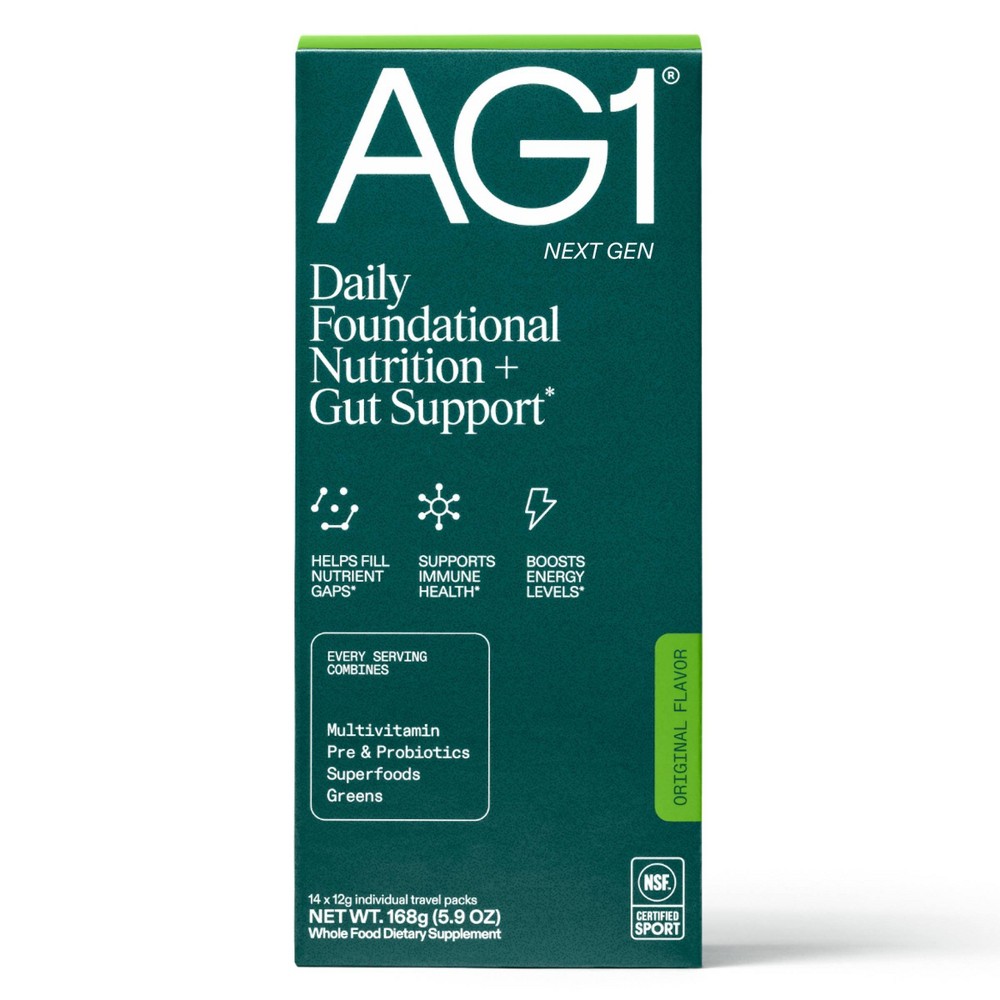
AG1 Next Gen Powder - Original - 14ct
At a glance
Summary
This supplement features a comprehensive blend of vitamins, minerals, and probiotics, using bioavailable forms like 5-MTHF for folate and methylcobalamin for B12, which enhance absorption and efficacy. The inclusion of natural flavors is a minor concern due to potential undisclosed additives, but the overall formulation is clean with beneficial ingredients and minimal harmful components. The product's high-quality ingredient profile and minimal processing additives contribute to its strong rating. Its plastic packaging can shed microplastics into the product and lowers its score.
Key ingredients 39
Vitamin AGood
Vitamin A is essential for maintaining healthy vision, immune function, and skin health. It is provided in the form of beta-carotene, which is a safe precursor that the body converts to Vitamin A as needed. This form reduces the risk of toxicity associated with preformed Vitamin A.
Risks
Excessive intake of Vitamin A can lead to toxicity, but beta-carotene is generally considered safe.
Benefits
Supports vision, immune function, and skin health.
Vitamin CGood
Vitamin C is a powerful antioxidant that supports immune function and skin health. Ascorbic acid is a well-absorbed form of Vitamin C. It also aids in the absorption of iron from plant-based foods.
Risks
High doses may cause gastrointestinal discomfort.
Benefits
Enhances immune function and acts as an antioxidant.
Vitamin EGood
Vitamin E acts as an antioxidant, protecting cells from oxidative damage. Mixed tocopherols provide a broad spectrum of Vitamin E forms, enhancing its effectiveness. It supports skin health and immune function.
Risks
High doses can interfere with blood clotting.
Benefits
Protects cells from oxidative damage and supports skin health.
ThiaminGood
Thiamin (Vitamin B1) is crucial for energy metabolism and nerve function. Thiamine hydrochloride is a common and effective form used in supplements. It helps convert carbohydrates into energy.
Benefits
Supports energy metabolism and nerve function.
RiboflavinGood
Riboflavin (Vitamin B2) is essential for energy production and cellular function. It plays a role in the metabolism of fats, drugs, and steroids. It also supports healthy skin and eyes.
Benefits
Supports energy production and cellular function.
NiacinGood
Niacin is important for energy metabolism and DNA repair. It is provided as nicotinic acid and niacinamide, both effective forms. It supports cardiovascular health by improving cholesterol levels.
Risks
High doses can cause flushing and liver damage.
Benefits
Supports energy metabolism and cardiovascular health.
Vitamin B6Good
Vitamin B6 is vital for protein metabolism and cognitive development. Pyridoxal-5-phosphate (P5P) is the active form, enhancing its bioavailability. It also supports neurotransmitter synthesis.
Risks
Excessive intake can lead to nerve damage.
Benefits
Supports protein metabolism and cognitive development.
FolateGood
Folate is crucial for DNA synthesis and cell division. The form 5-MTHF is highly bioavailable and beneficial for those with MTHFR mutations. It supports fetal development during pregnancy.
Benefits
Supports DNA synthesis and fetal development.
Vitamin B12Good
Vitamin B12 is essential for nerve function and red blood cell formation. Methylcobalamin is a bioactive form that is readily absorbed. It is particularly important for vegetarians and vegans.
Benefits
Supports nerve function and red blood cell formation.
BiotinGood
Biotin supports carbohydrate, fat, and protein metabolism. D-biotin is the naturally occurring form that is well-utilized by the body. It is also known for promoting healthy hair, skin, and nails.
Benefits
Supports metabolism and promotes healthy hair, skin, and nails.
Pantothenic AcidGood
Pantothenic acid (Vitamin B5) is important for synthesizing coenzyme A, crucial for fatty acid metabolism. Calcium pantothenate is a stable form used in supplements. It supports energy production and hormone synthesis.
Benefits
Supports energy production and hormone synthesis.
CholineGood
Choline is essential for liver function, brain development, and muscle movement. Choline bitartrate is a common form used in supplements. It supports cognitive function and memory.
Risks
High doses can cause fishy body odor and gastrointestinal distress.
Benefits
Supports liver function and cognitive health.
CalciumGood
Calcium is crucial for bone health and muscle function. Calcium citrate is a well-absorbed form, especially beneficial for those with low stomach acid. It also supports nerve transmission and hormone secretion.
Risks
Excessive intake can lead to kidney stones and impaired absorption of other minerals.
Benefits
Supports bone health and muscle function.
IronGood
Iron is essential for oxygen transport and energy production. It is crucial for the formation of hemoglobin and myoglobin. Adequate iron intake prevents anemia and supports immune function.
Risks
Excessive iron can cause toxicity and organ damage.
Benefits
Supports oxygen transport and prevents anemia.
PhosphorusGood
Phosphorus is important for bone health and energy production. It is a component of ATP, the energy currency of cells. It also plays a role in DNA and RNA synthesis.
Risks
Excessive intake can lead to imbalanced calcium levels.
Benefits
Supports bone health and energy production.
MagnesiumGood
Magnesium is vital for muscle and nerve function, blood glucose control, and bone health. Dimagnesium malate and magnesium glycinate are well-absorbed forms. It also supports over 300 enzymatic reactions in the body.
Risks
High doses can cause diarrhea and abdominal cramping.
Benefits
Supports muscle and nerve function and bone health.
ZincGood
Zinc is crucial for immune function, wound healing, and DNA synthesis. Zinc citrate is a bioavailable form used in supplements. It also supports taste and smell senses.
Risks
Excessive intake can interfere with copper absorption and cause nausea.
Benefits
Supports immune function and wound healing.
SeleniumGood
Selenium is an antioxidant that supports thyroid function and immune health. Selenized yeast is a natural form that is well-absorbed. It also plays a role in DNA synthesis and reproduction.
Risks
High doses can lead to selenosis, causing hair loss and nail brittleness.
Benefits
Supports thyroid function and acts as an antioxidant.
CopperGood
Copper is essential for iron metabolism, connective tissue formation, and brain function. Copper gluconate is a common form used in supplements. It also supports the immune system and cardiovascular health.
Risks
Excessive intake can lead to toxicity and liver damage.
Benefits
Supports iron metabolism and connective tissue formation.
ManganeseGood
Manganese is important for bone formation, blood clotting, and reducing inflammation. Amino acid chelate form enhances its absorption. It also supports metabolism of carbohydrates, amino acids, and cholesterol.
Risks
High doses can lead to neurological problems.
Benefits
Supports bone formation and metabolism.
ChromiumGood
Chromium is important for macronutrient metabolism and blood sugar regulation. Chromium picolinate is a highly absorbable form. It enhances the action of insulin and supports glucose metabolism.
Benefits
Supports blood sugar regulation and insulin action.
MolybdenumGood
Molybdenum is a trace element that acts as a cofactor for enzymes involved in detoxification. Molybdenum glycinate is a bioavailable form. It supports the metabolism of sulfur-containing amino acids.
Benefits
Supports enzyme function and detoxification.
PotassiumGood
Potassium is crucial for heart function, muscle contraction, and nerve signaling. Dipotassium phosphate is a form used in supplements. It helps maintain normal blood pressure levels.
Risks
Excessive intake can lead to hyperkalemia, affecting heart function.
Benefits
Supports heart function and blood pressure regulation.
Vitamin K2Good
Vitamin K2 is important for bone and cardiovascular health. Menaquinone-7 is a highly bioavailable form. It helps direct calcium to bones and away from arteries.
Benefits
Supports bone health and cardiovascular function.
BenfotiamineGood
Benfotiamine is a derivative of thiamine that supports nerve health and glucose metabolism. It is more bioavailable than thiamine itself. It may help reduce complications of diabetes.
Benefits
Supports nerve health and glucose metabolism.
Myo-inositolGood
Myo-inositol is involved in cellular signaling and insulin sensitivity. It is often used to support mental health and fertility. It plays a role in fat metabolism and liver function.
Benefits
Supports cellular signaling and insulin sensitivity.
BoronGood
Boron supports bone health and hormone regulation. Boron glycinate is a bioavailable form. It may enhance the body's use of Vitamin D and calcium.
Risks
High doses can lead to toxicity and hormonal imbalances.
Benefits
Supports bone health and hormone regulation.
Coenzyme Q10Good
Coenzyme Q10 is an antioxidant that supports energy production and heart health. Ubiquinone is a common form used in supplements. It is essential for mitochondrial function.
Benefits
Supports energy production and heart health.
Alpha-lipoic AcidGood
Alpha-lipoic acid (ALA) is an antioxidant that supports energy metabolism and reduces oxidative stress. It is both water and fat-soluble, enhancing its effectiveness. It may also support nerve health.
Risks
High doses can cause skin rash and gastrointestinal issues.
Benefits
Supports energy metabolism and reduces oxidative stress.
Lactobacillus Rhamnosus GGGood
Lactobacillus rhamnosus GG is a probiotic that supports gut health and immune function. It is one of the most studied probiotic strains. It helps maintain a healthy balance of gut bacteria.
Benefits
Supports gut health and immune function.
Lactobacillus Acidophilus NCFMGood
Lactobacillus acidophilus NCFM is a probiotic that supports digestive health and lactose digestion. It is a well-researched strain with proven benefits. It also supports immune health.
Benefits
Supports digestive health and lactose digestion.
Bifidobacterium Lactis HN019Good
Bifidobacterium lactis HN019 is a probiotic that supports digestive and immune health. It is known for its ability to enhance gut barrier function. It also helps reduce gastrointestinal discomfort.
Benefits
Supports digestive and immune health.
Lactobacillus Casei LC-11Good
Lactobacillus casei LC-11 is a probiotic that supports gut health and digestion. It helps maintain a balanced gut microbiota. It also supports immune function.
Benefits
Supports gut health and digestion.
Lactobacillus Plantarum LP-115Good
Lactobacillus plantarum LP-115 is a probiotic that supports digestive health and reduces inflammation. It is effective in maintaining gut flora balance. It also supports immune health.
Benefits
Supports digestive health and reduces inflammation.
SodiumNeutral
Sodium is essential for fluid balance and nerve function. It is a common electrolyte found in many foods. While necessary, excessive intake can lead to hypertension.
Risks
High intake can contribute to high blood pressure.
Benefits
Supports fluid balance and nerve function.
Citric AcidNeutral
Citric acid is used as a preservative and flavor enhancer. It is naturally found in citrus fruits and is generally recognized as safe. It helps maintain product freshness.
Risks
Excessive intake can cause tooth enamel erosion.
Benefits
Helps maintain product freshness and enhances flavor.
SteviaNeutral
Stevia is a natural, zero-calorie sweetener derived from the Stevia rebaudiana plant. It is used as a sugar substitute without significant health concerns. It provides sweetness without calories.
Benefits
Provides sweetness without calories.
SilicaNeutral
Silica is used as an anti-caking agent to prevent clumping in powdered products. It is generally recognized as safe and is naturally found in foods. It does not contribute any nutritional value.
Benefits
Prevents clumping in powdered products.
Natural FlavorsBad
Natural flavors are often used to enhance taste but can be a catch-all for various additives. They lack transparency, making it difficult to assess their health impact. This ingredient is penalized for potential undisclosed additives.
Risks
Potential for undisclosed additives and allergens.
Processing
Ultra-Processed Foods
Get the full breakdown in the Scout appTake Scout shopping
Scan any product to see lab results, healthy alternatives, and your personalized analysis.