
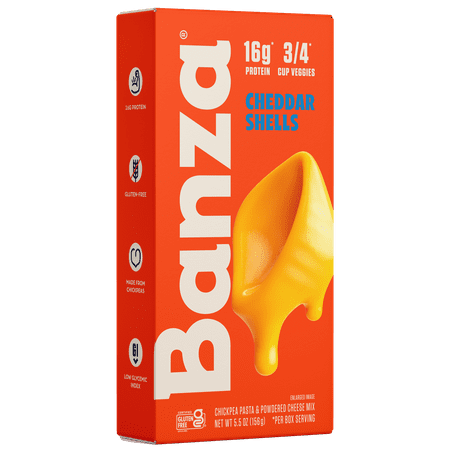


Banza CHICKPEA PASTA MAC AND CHEESE
Analysis updated August 2026 · How Scout scores
At a glance
Summary
This chickpea pasta mac and cheese contains beneficial ingredients like chickpeas, cheddar cheese, and buttermilk, which provide protein, fiber, and essential nutrients. However, it is classified as ultra-processed due to the presence of additives like disodium phosphate and xanthan gum, which are used to stabilize and emulsify the product. The processing level and the use of additives limit its healthiness despite the presence of nutritious components.
Key ingredients 12
ChickpeasGood
Chickpeas are a rich source of plant-based protein and fiber. They provide essential nutrients such as iron, magnesium, and folate. Their low glycemic index helps in maintaining stable blood sugar levels.
Benefits
High in protein and fiber, which support digestive health and satiety. Contains essential vitamins and minerals beneficial for overall health.
Cheddar cheeseGood
Cheddar cheese is a source of high-quality protein and calcium. It is made from cultured pasteurized milk and provides essential nutrients like vitamin A and B12. The fermentation process enhances its flavor and digestibility.
Risks
High in saturated fats and sodium, which may be a concern for heart health if consumed in excess.
Benefits
Rich in calcium and protein, supporting bone health and muscle maintenance.
ButtermilkGood
Buttermilk is a fermented dairy product that is low in fat and rich in probiotics. It aids in digestion and provides a source of calcium and vitamin B12. The fermentation process enhances its digestibility and flavor.
Benefits
Contains probiotics that support gut health and digestion. Provides essential nutrients like calcium and vitamin B12.
TapiocaNeutral
Tapioca is a starch extracted from cassava root, primarily used as a thickening agent. It is gluten-free and provides carbohydrates but lacks significant nutritional value. It is often used in gluten-free products to improve texture.
Benefits
Provides a gluten-free source of carbohydrates, suitable for those with gluten intolerance.
Pea starchNeutral
Pea starch is derived from peas and is used as a thickening agent. It is gluten-free and provides a source of carbohydrates. It lacks significant nutritional benefits beyond its carbohydrate content.
Benefits
Offers a gluten-free carbohydrate source, useful in gluten-free cooking and baking.
Xanthan gumNeutral
Xanthan gum is a polysaccharide used as a thickening and stabilizing agent in foods. It is produced by fermentation of sugars by the Xanthomonas campestris bacterium. It is generally recognized as safe but can cause digestive issues in large amounts.
Risks
May cause digestive discomfort such as bloating or gas when consumed in large quantities.
Benefits
Helps improve texture and stability in gluten-free and low-fat foods.
Nonfat milkNeutral
Standard formulation ingredient — neither beneficial nor harmful at typical use.
Benefits
Offers a low-fat source of calcium and protein, beneficial for bone health and muscle function.
ButterNeutral
Butter is a dairy product made from cream and is high in saturated fats. It provides flavor and texture to foods but should be consumed in moderation due to its fat content. It contains fat-soluble vitamins like A and D.
Risks
High in saturated fats, which may impact heart health if consumed in excess.
Benefits
Provides fat-soluble vitamins and enhances flavor in culinary applications.
SaltNeutral
Salt is used to enhance flavor and preserve food. It is essential for maintaining fluid balance and nerve function. Excessive intake can lead to health issues such as hypertension.
Risks
High sodium intake is associated with increased risk of hypertension and cardiovascular diseases.
Benefits
Essential for maintaining electrolyte balance and proper nerve function.
Annatto extractNeutral
Annatto extract is a natural colorant derived from the seeds of the achiote tree. It is used to impart a yellow to orange color in foods. It is generally considered safe and has minimal impact on flavor.
Risks
Rarely, it may cause allergic reactions in sensitive individuals.
Benefits
Provides natural coloring without artificial additives.
Paprika extractNeutral
Paprika extract is a natural colorant derived from paprika peppers. It is used to add color and mild flavor to foods. It is generally recognized as safe and provides a natural alternative to synthetic dyes.
Benefits
Adds natural color and mild flavor to foods without artificial additives.
Disodium phosphateBad
Disodium phosphate is an additive used to stabilize and emulsify foods. It is a source of phosphorus, but excessive intake can disrupt calcium balance. It is often used in processed foods to improve texture.
Risks
Excessive phosphorus intake can lead to imbalances in calcium metabolism and bone health issues.
Processing
Ultra-Processed Foods
Get the full breakdown in the Scout appTake Scout shopping
Scan any product to see lab results, healthy alternatives, and your personalized analysis.
Download on theApp Store GET IT ONGoogle PlayAmazon pricing & content
Amazon price as of . Product prices and availability are accurate as of the date/time indicated and are subject to change. Any price and availability information displayed on Amazon.com at the time of purchase will apply to the purchase of this product.
CERTAIN CONTENT THAT APPEARS ON THIS SITE COMES FROM AMAZON. THIS CONTENT IS PROVIDED “AS IS” AND IS SUBJECT TO CHANGE OR REMOVAL AT ANY TIME.