
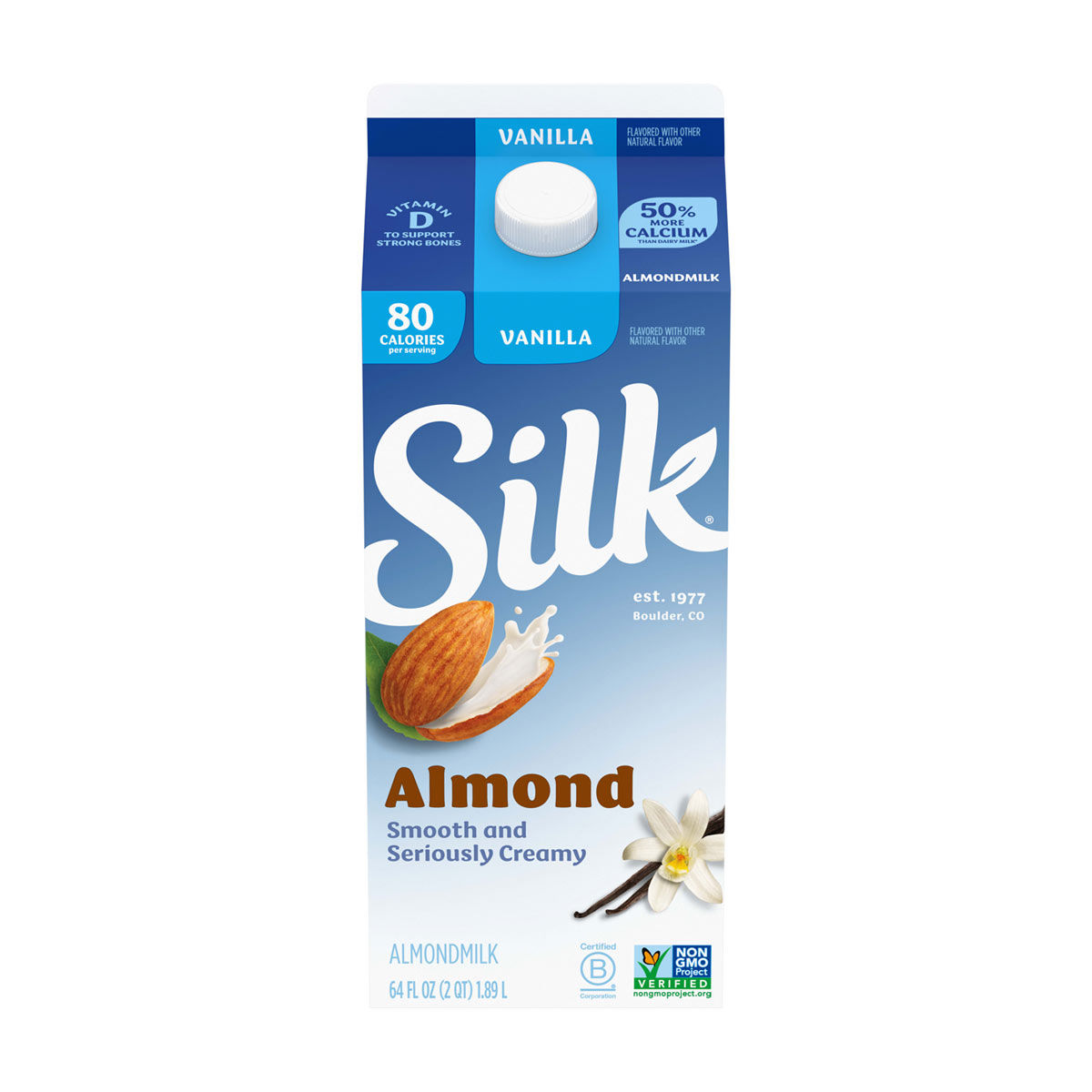



Silk Delicious Almondmilk Vanilla Almond
Analysis updated April 2026 · How Scout scores
At a glance
Summary
This almond milk is fortified with beneficial vitamins and minerals, enhancing its nutritional profile. However, it contains added cane sugar and natural flavors, which are processed ingredients that detract from its healthiness. The presence of multiple additives and its high processing level further limit its overall score.
Key ingredients 14
AlmondmilkGood
Almondmilk is a plant-based milk alternative that is low in calories and contains healthy fats. It is often fortified with vitamins and minerals, making it a nutritious option for those avoiding dairy. The use of filtered water and almonds suggests minimal processing, preserving its natural benefits.
Benefits
Rich in vitamin E and healthy fats, supporting heart health and skin health.
Sea SaltGood
Unrefined sea salt — a minimally processed, natural source of sodium and essential trace minerals, and a legitimate whole-food seasoning. Treated as a positive ingredient.
Risks
Excessive sodium intake can lead to high blood pressure and cardiovascular issues.
Benefits
Provides essential minerals like magnesium and calcium in small amounts.
Vitamin E AcetateGood
Vitamin E acetate is a form of vitamin E used to fortify foods, providing antioxidant benefits. It helps protect cells from oxidative damage and supports immune function. Its inclusion enhances the nutritional profile of the product.
Benefits
Acts as an antioxidant, supporting skin health and immune function.
Zinc GluconateGood
Zinc gluconate is a zinc supplement used to fortify foods, supporting immune health and wound healing. It is a bioavailable form of zinc, ensuring effective absorption. Its presence in the product enhances its nutritional value.
Risks
Excessive zinc intake can interfere with copper absorption and cause gastrointestinal issues.
Benefits
Supports immune function and aids in wound healing.
Riboflavin (B2)Good
Riboflavin, or vitamin B2, is essential for energy production and cellular function. It is water-soluble and must be consumed regularly to maintain adequate levels. Fortification with riboflavin enhances the nutritional profile of the product.
Benefits
Supports energy production and cellular function, contributing to overall health.
Vitamin B12Good
Vitamin B12 is crucial for nerve function and the production of red blood cells. It is often added to plant-based products to compensate for its absence in non-animal sources. Fortification with vitamin B12 supports those following a plant-based diet.
Benefits
Supports nerve function and red blood cell production, preventing anemia.
Vitamin D2Good
Vitamin D2 is a plant-based form of vitamin D used to fortify foods, supporting bone health and immune function. It is essential for calcium absorption and maintaining healthy bones. Its inclusion is beneficial for those with limited sun exposure.
Risks
Excessive intake can lead to toxicity, causing hypercalcemia and other health issues.
Benefits
Supports bone health and immune function, essential for calcium absorption.
Locust Bean GumNeutral
Locust bean gum is a natural thickening agent derived from carob seeds. It is used to improve texture and stability in food products. It is generally considered safe and has minimal impact on health when consumed in typical amounts.
Benefits
May aid in digestion and improve gut health due to its fiber content.
Gellan GumNeutral
Gellan gum is a gelling agent used to stabilize and thicken food products. It is produced through bacterial fermentation and is generally recognized as safe. It has minimal nutritional impact and is used in small quantities.
Benefits
May aid in texture improvement without adding calories or fat.
Calcium CarbonateNeutral
Standard formulation ingredient — neither beneficial nor harmful at typical use.
Risks
Excessive intake can lead to kidney stones and impaired absorption of other minerals.
Benefits
Supports bone health and helps prevent osteoporosis.
Vitamin A PalmitateNeutral
Standard formulation ingredient — neither beneficial nor harmful at typical use.
Risks
Excessive intake can lead to toxicity, causing liver damage and other health issues.
Benefits
Supports vision and immune health, essential for growth and development.
Cane SugarBad
Cane sugar is a source of added sugars, which can contribute to excessive calorie intake and potential weight gain. It is processed to remove impurities, resulting in a refined product with no significant nutritional benefits. High consumption of added sugars is linked to increased risk of chronic diseases.
Risks
Excessive intake can lead to obesity, type 2 diabetes, and heart disease.
Sunflower LecithinBad
Sunflower lecithin is an emulsifier derived from sunflower seeds, often used to improve texture and shelf life. It is a processed ingredient that may contain high levels of omega-6 fatty acids, which can promote inflammation if consumed in excess. Despite being a natural alternative to soy lecithin, it still poses similar health concerns.
Risks
High omega-6 content may promote inflammation when consumed in excess.
Benefits
May support brain health and improve cholesterol levels due to its phospholipid content.
Natural FlavorBad
Natural flavor is a catch-all term for flavoring agents derived from natural sources but often highly processed. It lacks transparency, making it difficult to assess its true impact on health. The use of natural flavors can mask the presence of less desirable ingredients.
Risks
Potential for undisclosed additives and allergens; lacks transparency.
Processing
Ultra-Processed Foods
Get the full breakdown in the Scout appTake Scout shopping
Scan any product to see lab results, healthy alternatives, and your personalized analysis.
Download on theApp Store GET IT ONGoogle PlayAmazon pricing & content
Amazon price as of . Product prices and availability are accurate as of the date/time indicated and are subject to change. Any price and availability information displayed on Amazon.com at the time of purchase will apply to the purchase of this product.
CERTAIN CONTENT THAT APPEARS ON THIS SITE COMES FROM AMAZON. THIS CONTENT IS PROVIDED “AS IS” AND IS SUBJECT TO CHANGE OR REMOVAL AT ANY TIME.