
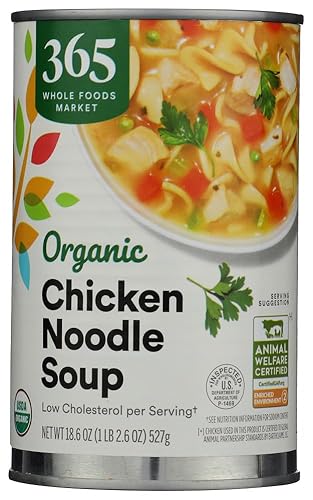






365 Whole Foods Market Organic Chicken Noodle Soup
365 Whole Foods MarketAnalysis updated August 2026 · How Scout scores
At a glance
Summary
This organic chicken noodle soup contains several beneficial ingredients such as organic chicken broth, vegetables, and high-quality protein from organic chicken meat. However, it is classified as ultra-processed due to the presence of natural flavors and maltodextrin, which are indicative of higher processing levels. Despite its organic certification and nutritious components, the processing level limits its overall health score.
Key ingredients 17
Organic Chicken BrothGood
Organic chicken broth is a flavorful base that provides essential nutrients. It is minimally processed and free from artificial additives. The organic certification ensures no synthetic pesticides or fertilizers were used.
Benefits
Provides a source of protein and minerals, supporting overall health and wellness.
Organic Cooked White Chicken MeatGood
Organic cooked white chicken meat is a high-quality protein source. It is minimally processed and free from antibiotics and hormones. The organic certification ensures humane animal treatment and sustainable farming practices.
Benefits
Rich in protein, supporting muscle growth and repair.
Organic CarrotsGood
Organic carrots are a nutritious vegetable rich in beta-carotene. They are minimally processed and free from synthetic pesticides. The organic certification ensures environmentally friendly farming practices.
Benefits
High in vitamin A, supporting eye health and immune function.
Organic OnionsGood
Organic onions add flavor and nutrients to the soup. They are minimally processed and free from synthetic chemicals. The organic certification ensures sustainable agricultural practices.
Benefits
Contains antioxidants that may support heart health and reduce inflammation.
Organic CeleryGood
Organic celery is a low-calorie vegetable that adds flavor and nutrients. It is minimally processed and free from synthetic pesticides. The organic certification ensures sustainable farming practices.
Benefits
Rich in antioxidants and fiber, supporting digestive health.
Organic PeasGood
Organic peas are a nutritious legume high in protein and fiber. They are minimally processed and free from synthetic chemicals. The organic certification ensures environmentally friendly farming practices.
Benefits
Provides protein and fiber, supporting satiety and digestive health.
Sea SaltGood
Sea salt is a natural source of sodium and trace minerals. It is minimally processed and retains beneficial minerals. The use of sea salt instead of refined salt provides additional nutritional benefits.
Risks
Excessive sodium intake can lead to high blood pressure and cardiovascular issues.
Benefits
Contains trace minerals that support electrolyte balance and overall health.
Organic Garlic PowderGood
Organic garlic powder adds flavor and potential health benefits. It is minimally processed and free from synthetic chemicals. The organic certification ensures environmentally friendly farming practices.
Benefits
Contains compounds that may support immune function and cardiovascular health.
Organic Dried ParsleyGood
Organic dried parsley is a flavorful herb rich in vitamins and antioxidants. It is minimally processed and free from synthetic chemicals. The organic certification ensures sustainable farming practices.
Benefits
Rich in vitamins A and C, supporting immune health and reducing oxidative stress.
Organic TurmericGood
Organic turmeric is a spice known for its anti-inflammatory properties. It is minimally processed and free from synthetic chemicals. The organic certification ensures environmentally friendly farming practices.
Benefits
Contains curcumin, which may reduce inflammation and support joint health.
Organic Curly NoodlesNeutral
Organic curly noodles are made from durum wheat semolina and eggs. They are a source of carbohydrates and protein. The organic certification ensures no synthetic additives are used.
Risks
May contain gluten, which can be a concern for individuals with celiac disease or gluten sensitivity.
Benefits
Provides energy and some protein, contributing to a balanced diet.
Organic CornstarchNeutral
Organic cornstarch is used as a thickening agent in soups. It is a refined carbohydrate with minimal nutritional value. The organic certification ensures no synthetic additives are used.
Benefits
Provides texture and consistency to the soup.
Organic Natural FlavorNeutral
Organic natural flavor is used to enhance the taste of the soup. It is derived from natural sources but lacks specific nutritional benefits. The organic certification ensures no synthetic additives are used.
Benefits
Enhances the flavor profile of the soup.
Organic SpiceNeutral
Organic spice is used to enhance the flavor of the soup. It is derived from natural sources but lacks specific nutritional benefits. The organic certification ensures no synthetic additives are used.
Benefits
Enhances the flavor profile of the soup.
SaltNeutral
Salt is used to enhance flavor and preserve the soup. It is a refined form of sodium chloride with no additional minerals. While necessary for flavor, excessive consumption can be harmful.
Risks
High sodium intake can lead to hypertension and cardiovascular issues.
Benefits
Enhances flavor and acts as a preservative.
Natural FlavorBad
Natural flavor is a catch-all term that can include a variety of substances. It lacks transparency and specific nutritional benefits. The use of natural flavors can mask the presence of less desirable ingredients.
Risks
May contain undisclosed additives or allergens, posing a risk to sensitive individuals.
MaltodextrinBad
Processed additive flagged under Scout's ingredient doctrine.
Risks
May cause blood sugar spikes, particularly in individuals with insulin sensitivity.
Benefits
Provides a quick source of energy.
Processing
Ultra-Processed Foods
Get the full breakdown in the Scout appTake Scout shopping
Scan any product to see lab results, healthy alternatives, and your personalized analysis.
Download on theApp Store GET IT ONGoogle PlayAmazon pricing & content
CERTAIN CONTENT THAT APPEARS ON THIS SITE COMES FROM AMAZON. THIS CONTENT IS PROVIDED “AS IS” AND IS SUBJECT TO CHANGE OR REMOVAL AT ANY TIME.