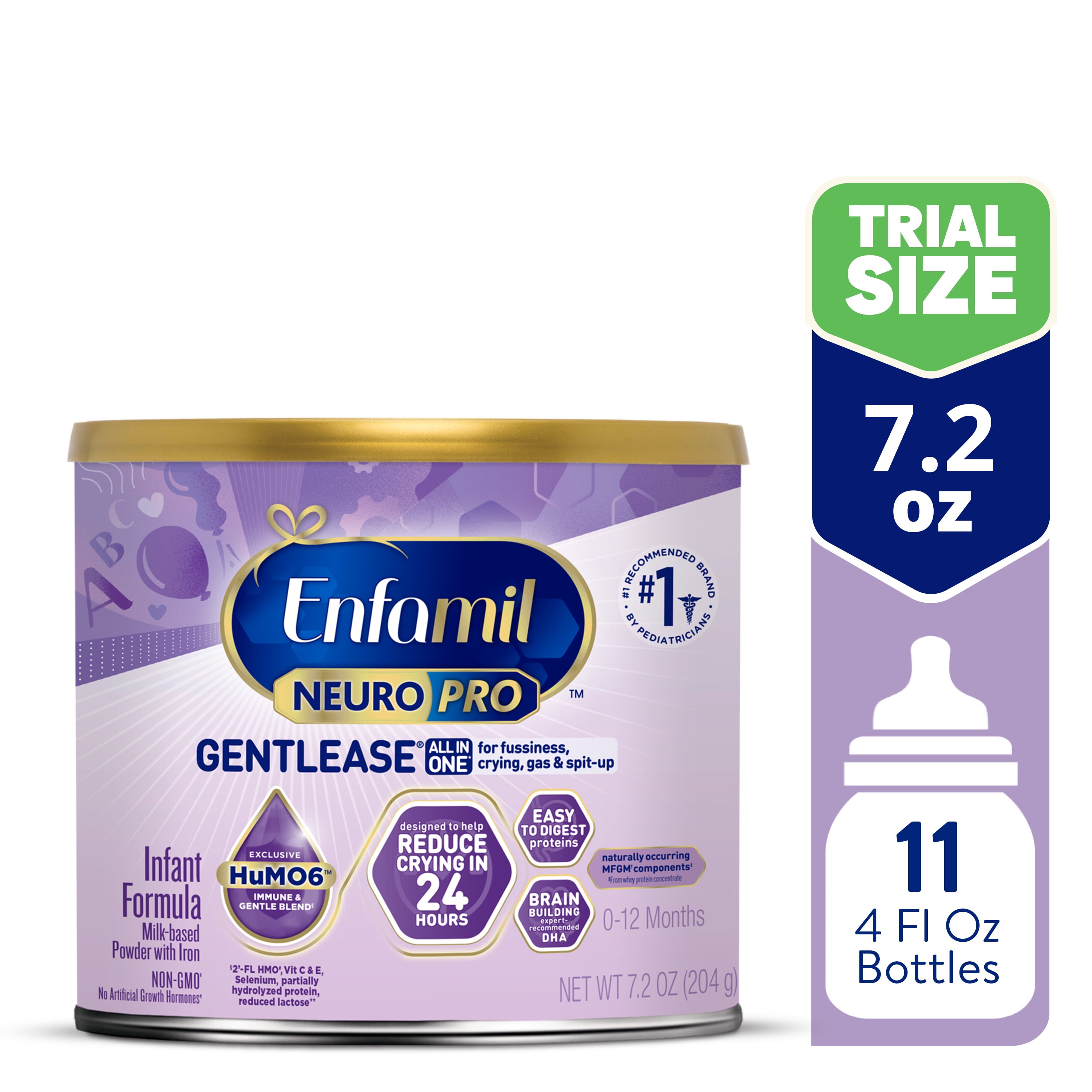
Enfamil NeuroPro & Gentlease Powder Formula 3x 7.2 oz cans Exp 6/26 & 9/26
At a glance
Summary
This infant formula contains beneficial ingredients such as nonfat milk, whey protein, and essential fatty acids from Mortierella alpina and Schizochytrium sp. oils, which support growth and development. However, it includes soy lecithin, a processed emulsifier, and a moderate number of additives, which slightly detract from its overall formulation quality. Despite these concerns, the product provides essential nutrients necessary for infant health.
Key ingredients 39
Whey Protein ConcentrateGood
Whey protein concentrate is a high-quality protein source rich in essential amino acids. It is derived from milk and supports muscle growth and repair. It is easily digestible and absorbed by the body.
Benefits
Supports muscle growth and repair due to its complete amino acid profile.
Whey Protein-Lipid ConcentrateGood
This ingredient combines whey protein with lipids, enhancing nutritional value. It provides essential amino acids and fats necessary for infant growth. It is a specialized ingredient designed to mimic the nutritional profile of breast milk.
Benefits
Mimics the nutritional profile of breast milk, supporting infant growth and development.
GalactooligosaccharidesGood
Galactooligosaccharides are prebiotics that promote gut health by stimulating the growth of beneficial bacteria. They are derived from lactose and are beneficial for digestive health. They help in maintaining a healthy gut microbiome.
Benefits
Supports digestive health by promoting the growth of beneficial gut bacteria.
Mortierella Alpina OilGood
Mortierella alpina oil is a source of arachidonic acid, an omega-6 fatty acid important for brain development. It is derived from a fungus and used in infant formulas to support growth. It is essential for the development of the central nervous system.
Benefits
Supports brain development and the central nervous system in infants.
Schizochytrium Sp. OilGood
Schizochytrium sp. oil is a source of DHA, an omega-3 fatty acid crucial for brain and eye development. It is derived from microalgae and used in infant formulas to enhance nutritional content. DHA is vital for cognitive function and visual acuity.
Benefits
Supports cognitive function and visual development in infants.
Ferrous SulfateGood
Ferrous sulfate is a form of iron used to prevent and treat iron deficiency anemia. It is an essential mineral for oxygen transport and energy production. It is commonly used in supplements to ensure adequate iron intake.
Risks
Excessive intake can lead to iron overload and gastrointestinal issues.
Benefits
Prevents iron deficiency anemia and supports oxygen transport in the body.
Calcium PhosphateGood
Calcium phosphate is used to provide calcium and phosphorus, essential for bone health. It is a common fortifying agent in foods and supplements. It supports the structural integrity of bones and teeth.
Benefits
Supports bone health by providing essential minerals for bone formation.
Zinc SulfateGood
Zinc sulfate is a form of zinc used to support immune function and wound healing. It is an essential trace element involved in numerous enzymatic reactions. It is commonly used in supplements to ensure adequate zinc intake.
Risks
Excessive intake can lead to zinc toxicity, but this is rare.
Benefits
Supports immune function and plays a role in wound healing and DNA synthesis.
Potassium IodideGood
Potassium iodide is a source of iodine, essential for thyroid function and hormone production. It is used to prevent iodine deficiency and support metabolic processes. It is crucial for normal growth and development.
Risks
Excessive intake can lead to thyroid dysfunction, but this is rare.
Benefits
Supports thyroid function and hormone production, essential for growth and metabolism.
InositolGood
Beneficial ingredient — whole-food or functional value in this product class.
Benefits
Supports mental health and may improve insulin sensitivity.
Choline ChlorideGood
Choline chloride is a source of choline, essential for brain development and liver function. It is used in supplements to ensure adequate choline intake. It supports cognitive function and is a precursor to the neurotransmitter acetylcholine.
Benefits
Supports brain development and cognitive function.
Ascorbic AcidGood
Ascorbic acid, or vitamin C, is an essential nutrient with antioxidant properties. It supports immune function and collagen synthesis. It is commonly used in supplements to prevent vitamin C deficiency.
Risks
High doses may cause gastrointestinal discomfort.
Benefits
Supports immune function and acts as an antioxidant.
NiacinamideGood
Niacinamide, or vitamin B3, is essential for energy metabolism and skin health. It is used in supplements to prevent niacin deficiency. It supports cellular energy production and has anti-inflammatory properties.
Benefits
Supports energy metabolism and skin health.
Calcium PantothenateGood
Calcium pantothenate is a form of vitamin B5, essential for energy metabolism and hormone synthesis. It is used in supplements to ensure adequate intake of pantothenic acid. It supports the production of coenzyme A, crucial for metabolic processes.
Benefits
Supports energy metabolism and hormone synthesis.
RiboflavinGood
Riboflavin, or vitamin B2, is essential for energy production and cellular function. It is used in supplements to prevent riboflavin deficiency. It supports the metabolism of carbohydrates, fats, and proteins.
Benefits
Supports energy production and cellular function.
Thiamin HydrochlorideGood
Thiamin hydrochloride is a form of vitamin B1, essential for energy metabolism and nerve function. It is used in supplements to prevent thiamin deficiency. It supports the conversion of carbohydrates into energy.
Benefits
Supports energy metabolism and nerve function.
Vitamin D3Good
Vitamin D3 is essential for calcium absorption and bone health. It is used in supplements to prevent vitamin D deficiency. It supports immune function and bone mineralization.
Risks
Excessive intake can lead to hypercalcemia, but this is rare.
Benefits
Supports calcium absorption and bone health.
Vitamin B6 HydrochlorideGood
Vitamin B6 hydrochloride is essential for amino acid metabolism and neurotransmitter synthesis. It is used in supplements to prevent vitamin B6 deficiency. It supports brain health and the production of hemoglobin.
Benefits
Supports amino acid metabolism and brain health.
Vitamin K1Good
Vitamin K1 is essential for blood clotting and bone health. It is used in supplements to prevent vitamin K deficiency. It supports the synthesis of proteins involved in blood coagulation.
Benefits
Supports blood clotting and bone health.
BiotinGood
Biotin, or vitamin B7, is essential for carbohydrate, fat, and protein metabolism. It is used in supplements to support hair, skin, and nail health. It plays a role in energy production and the synthesis of fatty acids.
Benefits
Supports metabolism and promotes healthy hair, skin, and nails.
Vitamin B12Good
Vitamin B12 is essential for nerve function and the production of red blood cells. It is used in supplements to prevent vitamin B12 deficiency. It supports DNA synthesis and neurological health.
Benefits
Supports nerve function and red blood cell production.
Vitamin E AcetateGood
Vitamin E acetate is a form of vitamin E with antioxidant properties. It is used in supplements to protect cells from oxidative damage. It supports immune function and skin health.
Risks
High doses may interfere with blood clotting.
Benefits
Acts as an antioxidant and supports immune function.
TaurineGood
Beneficial ingredient — whole-food or functional value in this product class.
Benefits
Supports cardiovascular health and electrolyte balance.
Nonfat MilkNeutral
Standard formulation ingredient — neither beneficial nor harmful at typical use.
Benefits
Rich in calcium and protein, supporting bone health and muscle maintenance.
LactoseNeutral
Lactose is a natural sugar found in milk, providing energy. It is a disaccharide composed of glucose and galactose. It is generally well-tolerated except in individuals with lactose intolerance.
Risks
May cause digestive issues in individuals with lactose intolerance.
Benefits
Provides a source of energy and aids in calcium absorption.
Vegetable OilNeutral
The vegetable oil blend includes palm olein, coconut, soy, and high oleic sunflower oils. High oleic sunflower oil is bred to be low in linoleic acid, making it more stable and less inflammatory. The blend provides essential fatty acids necessary for growth.
Risks
Soy oil is a seed oil and may contribute to inflammation if consumed in excess.
Benefits
High oleic sunflower oil provides monounsaturated fats that support heart health.
PolydextroseNeutral
Polydextrose is a synthetic polymer of glucose used as a fiber supplement. It is used to improve the texture and fiber content of foods. It is generally recognized as safe but may cause digestive discomfort in large amounts.
Risks
May cause bloating or gas if consumed in large quantities.
Benefits
Adds fiber to the diet, which can aid in digestion and promote satiety.
Calcium CarbonateNeutral
Standard formulation ingredient — neither beneficial nor harmful at typical use.
Risks
Excessive intake may lead to hypercalcemia, but this is rare.
Benefits
Supports bone health and development by providing a readily available source of calcium.
Potassium CitrateNeutral
Potassium citrate is used to regulate acidity and provide potassium, an essential mineral. It helps maintain electrolyte balance and supports nerve and muscle function. It is generally safe when consumed in appropriate amounts.
Risks
Excessive intake may lead to hyperkalemia, but this is uncommon in dietary sources.
Benefits
Supports electrolyte balance and proper muscle and nerve function.
Potassium ChlorideNeutral
Potassium chloride is a source of potassium, an essential mineral for maintaining fluid balance and nerve function. It is used to fortify foods and supplements. It helps in maintaining normal blood pressure and muscle function.
Risks
High doses may cause hyperkalemia, but this is rare in dietary sources.
Benefits
Supports fluid balance, nerve function, and muscle contraction.
Sodium ChlorideNeutral
Sodium chloride, or table salt, is used to enhance flavor and preserve food. It is essential for maintaining fluid balance and nerve function. It is generally safe in moderate amounts but excessive intake can lead to hypertension.
Risks
Excessive intake may contribute to high blood pressure.
Benefits
Essential for fluid balance and nerve function.
Magnesium OxideNeutral
Magnesium oxide is a source of magnesium, an essential mineral for muscle and nerve function. It is used in supplements to prevent magnesium deficiency. It supports energy production and bone health.
Risks
High doses may cause gastrointestinal discomfort.
Benefits
Supports muscle and nerve function and helps maintain bone health.
Cupric SulfateNeutral
Cupric sulfate is a source of copper, an essential trace mineral involved in iron metabolism and antioxidant defense. It is used in supplements to prevent copper deficiency. It supports the formation of red blood cells and connective tissue.
Risks
Excessive intake can lead to copper toxicity, but this is rare.
Benefits
Supports iron metabolism and antioxidant defense mechanisms.
Manganese SulfateNeutral
Manganese sulfate is a source of manganese, a trace mineral important for bone formation and metabolism. It is used in supplements to ensure adequate manganese intake. It plays a role in enzyme activation and bone development.
Risks
Excessive intake can lead to manganese toxicity, but this is rare.
Benefits
Supports bone formation and metabolic processes.
Sodium SeleniteNeutral
Sodium selenite is a source of selenium, an essential trace element with antioxidant properties. It is used in supplements to prevent selenium deficiency. It supports immune function and protects cells from oxidative damage.
Risks
Excessive intake can lead to selenium toxicity, but this is rare.
Benefits
Supports immune function and protects against oxidative stress.
Vitamin A PalmitateNeutral
Standard formulation ingredient — neither beneficial nor harmful at typical use.
Risks
Excessive intake can lead to vitamin A toxicity, but this is rare.
Benefits
Supports vision and immune function.
Folic AcidNeutral
Standard formulation ingredient — neither beneficial nor harmful at typical use.
Benefits
Supports DNA synthesis and prevents neural tube defects.
L-CarnitineNeutral
L-carnitine is an amino acid derivative involved in energy production. It is used in supplements to support fat metabolism and athletic performance. It helps transport fatty acids into mitochondria for energy production.
Benefits
Supports energy production and fat metabolism.
Soy LecithinBad
Soy lecithin is an emulsifier derived from soybeans, used to improve texture and stability. It is a processed ingredient that may contain traces of soy allergens. While generally safe, it is not a necessary component of a healthy diet.
Risks
May contain soy allergens and is a processed ingredient.
Benefits
Improves texture and stability of food products.
Processing
Ultra-Processed Foods
Get the full breakdown in the Scout appTake Scout shopping
Scan any product to see lab results, healthy alternatives, and your personalized analysis.