
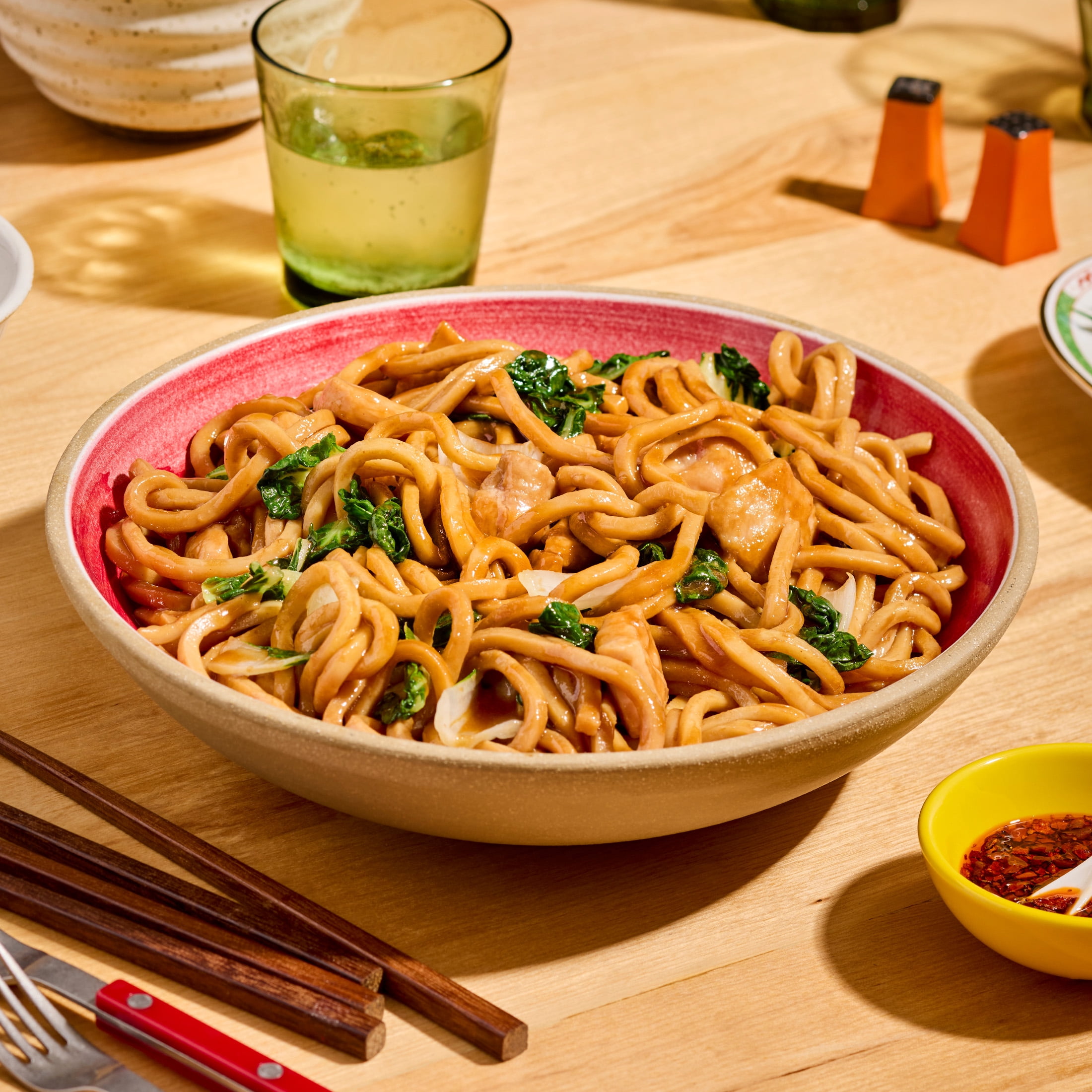


Stir Fry Noodles Wuth Chicken And Bok Choy
Analysis updated September 2026 · How Scout scores
At a glance
Summary
This stir fry noodle dish contains several beneficial ingredients such as chicken, snap peas, and shiitake mushrooms, which provide essential nutrients and antioxidants. However, the presence of canola oil, a highly processed seed oil, and brown sugar, a refined sugar, detracts from its overall healthiness. The dish is moderately processed, which limits its score despite the inclusion of some nutritious components.
Key ingredients 17
ChickenGood
Chicken is a high-quality source of protein, providing essential amino acids. It is generally low in fat, especially when skinless, and supports muscle growth and repair. Compared to plant-based proteins, it offers a more complete amino acid profile.
Risks
Potential risks include contamination with bacteria like Salmonella if not cooked properly.
Benefits
Rich in protein which is essential for muscle repair and growth. Provides important vitamins and minerals such as B vitamins and selenium.
Snap peasGood
Snap peas are a nutritious vegetable, high in fiber and vitamins such as vitamin C and K. They are low in calories and provide antioxidants that support overall health. Their fiber content aids in digestion and helps maintain a healthy weight.
Benefits
High in dietary fiber which aids digestion. Rich in vitamins and antioxidants that support immune function and overall health.
ShallotsGood
Shallots are a flavorful vegetable that contains antioxidants and vitamins. They are known for their anti-inflammatory properties and can enhance the flavor of dishes without adding excessive calories. Compared to onions, they have a milder taste and similar health benefits.
Benefits
Contains antioxidants and vitamins that support immune health. Provides anti-inflammatory benefits and enhances flavor.
GarlicGood
Garlic is known for its health-promoting properties, including anti-inflammatory and antioxidant effects. It contains allicin, which may support heart health and boost the immune system. Fresh garlic provides more health benefits compared to processed forms.
Benefits
Contains allicin, which supports heart health and boosts the immune system. Provides anti-inflammatory and antioxidant benefits.
Green onionGood
Green onions are low in calories and rich in vitamins A and C, providing antioxidant benefits. They add flavor and nutritional value to dishes without adding significant calories. Compared to mature onions, they have a milder taste and similar health benefits.
Benefits
Rich in vitamins A and C, providing antioxidant benefits. Adds flavor and nutritional value to dishes.
Shiitake mushroomsGood
Shiitake mushrooms are a good source of fiber, vitamins, and minerals, including vitamin D and selenium. They have immune-boosting properties and may support heart health. Compared to other mushrooms, they offer unique compounds like lentinan that provide additional health benefits.
Benefits
Provides fiber, vitamins, and minerals that support immune and heart health. Contains unique compounds like lentinan with additional health benefits.
GingerGood
Ginger is known for its anti-inflammatory and digestive benefits, often used to alleviate nausea and improve digestion. It contains bioactive compounds like gingerol that provide health benefits. Fresh ginger offers more potent effects compared to dried forms.
Benefits
Provides anti-inflammatory and digestive benefits. Contains gingerol, which offers health-promoting properties.
Sesame oilGood
Sesame oil is a flavorful oil rich in monounsaturated and polyunsaturated fats, supporting heart health. It contains antioxidants like sesamol that provide additional health benefits. Compared to seed oils like canola, it offers a more favorable fatty acid profile.
Benefits
Rich in healthy fats and antioxidants that support heart health and provide anti-inflammatory properties.
SpicesGood
Spices like anise, fennel seed, clove, cinnamon, and white pepper provide flavor and have various health benefits. They contain antioxidants and anti-inflammatory compounds that support overall health. Compared to artificial flavorings, they offer natural health benefits.
Benefits
Rich in antioxidants and anti-inflammatory compounds that support overall health.
Soy sauceNeutral
Soy sauce is a fermented condiment made from soybeans, wheat, and salt. It adds umami flavor to dishes but is high in sodium, which can be a concern for those monitoring salt intake. Fermentation may provide some probiotic benefits, but these are minimal in soy sauce.
Risks
High sodium content can contribute to hypertension if consumed in excess.
Benefits
Adds umami flavor to dishes and may contain minimal probiotic benefits due to fermentation.
Oyster sauceNeutral
Oyster sauce is a condiment made from oyster extract, sugar, and salt, providing a savory flavor. It is often used in Asian cuisine to enhance taste but contains added sugars and sodium. The oyster extract provides a unique umami flavor that is difficult to replicate.
Risks
High in sodium and sugar, which can be a concern for those monitoring intake.
Benefits
Enhances flavor with a unique umami taste derived from oyster extract.
Corn starchNeutral
Corn starch is a refined carbohydrate used as a thickening agent in cooking. It provides no significant nutritional value but is effective in improving texture and consistency of dishes. Compared to whole grains, it lacks fiber and essential nutrients.
See more about Corn starch →Dark soy sauceNeutral
Dark soy sauce is a fermented condiment similar to regular soy sauce but with added caramel color and sugar. It provides a richer flavor and color to dishes but is high in sodium. The fermentation process may offer minimal probiotic benefits.
Risks
High sodium content can contribute to hypertension if consumed in excess.
Benefits
Adds rich flavor and color to dishes, with minimal probiotic benefits from fermentation.
SaltNeutral
Salt is a common seasoning that enhances flavor but is high in sodium, which can be a concern for those monitoring salt intake. It is essential for maintaining fluid balance and nerve function. Compared to unrefined salts, it lacks trace minerals.
Risks
High sodium intake can contribute to hypertension and cardiovascular issues.
Benefits
Essential for maintaining fluid balance and nerve function.
Brown sugarBad
Brown sugar is a refined sugar that can contribute to increased blood sugar levels and weight gain when consumed in excess. It is minimally different from white sugar in terms of nutritional value. Compared to natural sweeteners like honey, it offers no additional health benefits.
Risks
Can contribute to increased blood sugar levels and weight gain when consumed in excess.
Yeast extractBad
Concentrated glutamate source — MSG-adjacent flavor enhancer.
Risks
High sodium content can be a concern for those monitoring salt intake.
Benefits
Provides umami flavor and is a source of B vitamins.
Canola oilVery Bad
Canola oil is a seed oil high in omega-6 fatty acids, which can promote inflammation when consumed in excess. It is often highly processed and refined, which can reduce its nutritional quality. Compared to oils like olive or avocado, it lacks beneficial monounsaturated fats.
Risks
High omega-6 content may promote inflammation when consumed in excess.
Processing
Processed Foods
Get the full breakdown in the Scout appTake Scout shopping
Scan any product to see lab results, healthy alternatives, and your personalized analysis.
Download on theApp Store GET IT ONGoogle Play