
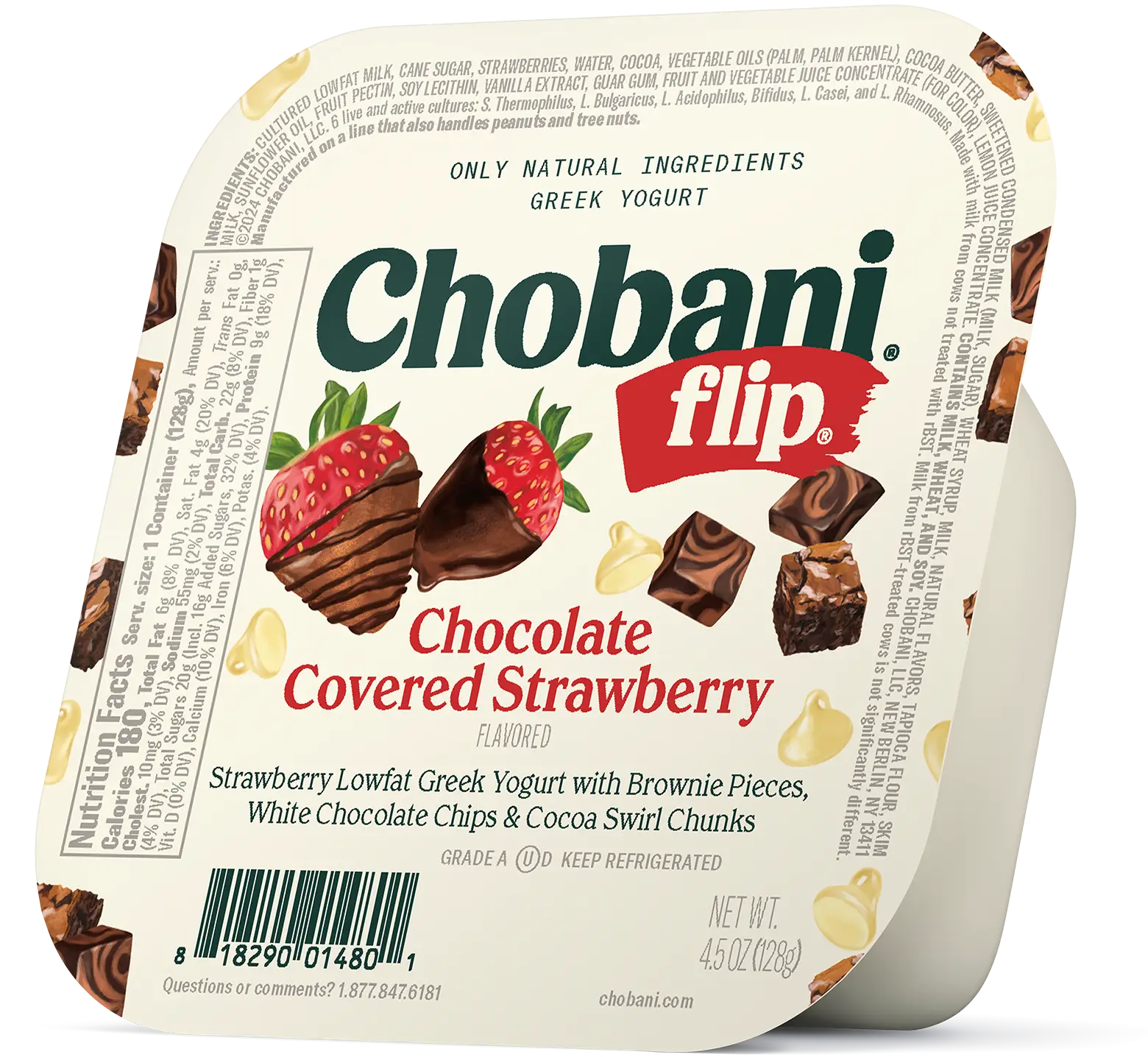




Chobani Flip
ChobaniAnalysis updated July 2026 · How Scout scores
At a glance
Summary
This product contains several beneficial ingredients such as cultured lowfat milk, almonds, and coconut, which provide protein, healthy fats, and essential nutrients. However, it also includes cane sugar and natural flavors, which are processed and can contribute to health concerns like blood sugar spikes and lack of transparency in ingredient composition. The product's processing level further limits its potential score, despite the presence of some nutritious components.
Key ingredients 12
Cultured Lowfat MilkGood
Cultured lowfat milk is a source of protein and probiotics, beneficial for gut health. It is minimally processed, retaining essential nutrients. The fermentation process enhances digestibility and nutrient absorption.
Benefits
Provides protein and probiotics that support digestive health and nutrient absorption.
AlmondsGood
Almonds are a nutrient-dense nut rich in healthy fats, protein, and fiber. They are minimally processed and provide essential vitamins and minerals. Their consumption is associated with improved heart health and weight management.
Risks
Potential allergen for individuals with nut allergies.
Benefits
Rich in healthy fats, protein, and fiber, supporting heart health and weight management.
ChocolateGood
Chocolate, when minimally processed, contains antioxidants and can provide a small amount of minerals. It is often enjoyed for its flavor and potential mood-enhancing properties. Dark chocolate varieties are particularly noted for their health benefits.
Risks
May contain added sugars and fats, which can be unhealthy in large amounts.
Benefits
Contains antioxidants and can provide minerals, with potential mood-enhancing properties.
CoconutGood
Coconut is a source of healthy fats, particularly medium-chain triglycerides (MCTs), which are easily metabolized for energy. It is minimally processed and provides a unique flavor and texture. Coconut consumption is linked to improved energy levels and metabolic health.
Risks
Potential allergen for some individuals.
Benefits
Rich in MCTs, supporting energy metabolism and providing a unique flavor.
HoneyGood
Honey is a natural sweetener with antioxidant properties and trace nutrients. It is less processed than refined sugars and can provide a unique flavor profile. Its moderate use is associated with some health benefits over refined sugars.
Risks
High consumption can lead to increased calorie intake and blood sugar levels.
Benefits
Contains antioxidants and trace nutrients, offering a natural alternative to refined sugars.
Sea SaltGood
Sea salt is a minimally processed salt that retains trace minerals, providing a natural source of sodium. It is used to enhance flavor and preserve food. Its mineral content can offer slight nutritional benefits over refined table salt.
Risks
Excessive sodium intake can lead to hypertension and cardiovascular issues.
Benefits
Provides trace minerals and enhances flavor, with slight nutritional benefits over refined salt.
WaterNeutral
Water is used as a solvent and to adjust the consistency of the product. It is a neutral ingredient with no direct nutritional impact. Its presence ensures the desired texture and moisture content.
See more about Water →Tapioca FlourNeutral
Tapioca flour is a starch extracted from cassava root, used as a thickening agent. It is gluten-free and provides a smooth texture to foods. While it offers no significant nutritional benefits, it is a useful ingredient for texture modification.
See more about Tapioca Flour →Fruit PectinNeutral
Fruit pectin is a natural gelling agent derived from fruits, used to stabilize and thicken products. It is minimally processed and does not significantly impact nutrition. Its primary role is to improve texture and consistency.
See more about Fruit Pectin →Guar GumNeutral
Guar gum is a thickening agent derived from guar beans, used to improve texture and stability. It is a soluble fiber, but its nutritional impact is minimal in small quantities. It is generally considered safe for consumption.
Risks
Excessive consumption may cause digestive discomfort.
Benefits
Provides soluble fiber, though minimal in typical serving sizes.
Cane SugarBad
Cane sugar is a refined sugar that can contribute to increased calorie intake and blood sugar spikes. It is processed to remove impurities, resulting in a high glycemic index. Excessive consumption may lead to health issues such as obesity and diabetes.
Risks
High consumption can lead to obesity, diabetes, and other metabolic disorders.
Natural FlavorsBad
Natural flavors are additives used to enhance taste, often derived from plant or animal sources. They are highly processed and can contain a variety of compounds. The lack of transparency in their composition raises concerns about potential allergens and additives.
Risks
Potential allergens and additives may be present, with unknown health impacts.
Processing
Processed Foods
Get the full breakdown in the Scout appTake Scout shopping
Scan any product to see lab results, healthy alternatives, and your personalized analysis.
Download on theApp Store GET IT ONGoogle PlayAmazon pricing & content
Amazon price as of . Product prices and availability are accurate as of the date/time indicated and are subject to change. Any price and availability information displayed on Amazon.com at the time of purchase will apply to the purchase of this product.
CERTAIN CONTENT THAT APPEARS ON THIS SITE COMES FROM AMAZON. THIS CONTENT IS PROVIDED “AS IS” AND IS SUBJECT TO CHANGE OR REMOVAL AT ANY TIME.