
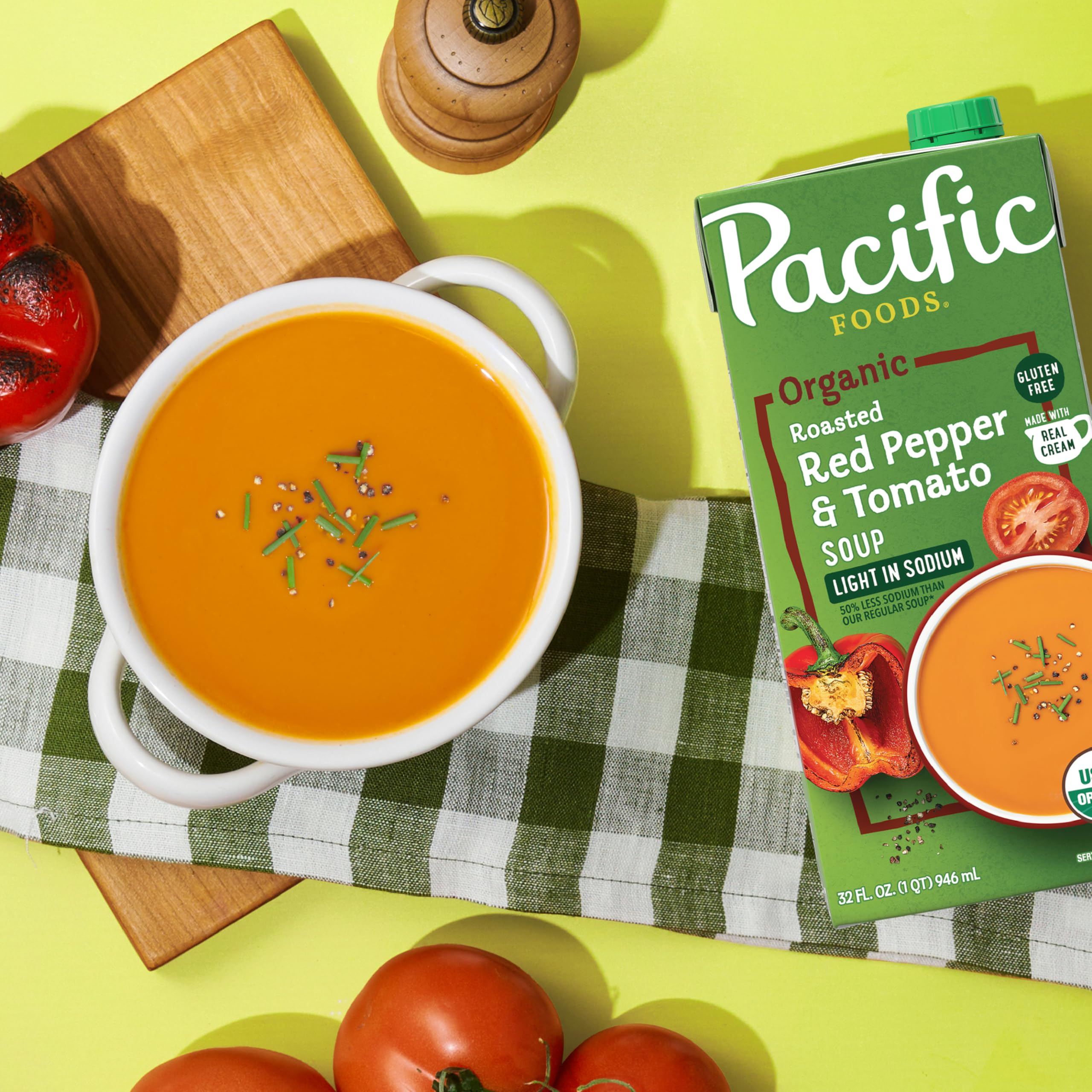


Organic Roasted Red Pepper & Tomato Soup
Analysis updated September 2026 · How Scout scores
At a glance
Summary
This soup contains several beneficial ingredients such as organic tomato puree, red bell peppers, and garlic, which provide vitamins and antioxidants. However, the presence of cane sugar, a refined ingredient, and the overall processing level limit its healthiness. The product is processed, which restricts its score despite the organic certification and absence of harmful additives.
Key ingredients 14
Tomato pureeGood
Tomato puree is a concentrated source of tomatoes, providing vitamins and antioxidants like lycopene. It is minimally processed and retains many of the nutrients found in fresh tomatoes. The organic nature enhances its quality and health benefits.
Benefits
Rich in vitamins A and C, and antioxidants that support immune function and reduce inflammation.
Heavy creamGood
Beneficial ingredient — whole-food or functional value in this product class.
Risks
High in saturated fat, which may contribute to heart disease if consumed in large amounts.
Benefits
Adds richness and flavor to foods, enhancing palatability.
Red bell peppersGood
Red bell peppers are a rich source of vitamins A and C and antioxidants. They are minimally processed and retain most of their nutritional benefits. The organic nature ensures fewer pesticides and higher nutrient retention.
Benefits
High in vitamins and antioxidants that support immune health and reduce inflammation.
Roasted garlic pureeGood
Roasted garlic puree adds flavor and potential health benefits due to its antioxidant properties. It is minimally processed and retains the beneficial compounds found in fresh garlic. Organic certification enhances its quality.
Benefits
Contains antioxidants that may support heart health and immune function.
Sea saltGood
Sea salt is a natural source of sodium and trace minerals. It is less processed than table salt and retains beneficial minerals. Organic certification may indicate higher quality and fewer contaminants.
Risks
Excessive sodium intake can lead to high blood pressure and heart disease.
Benefits
Provides essential minerals and enhances flavor.
GarlicGood
Garlic is known for its health benefits, including antioxidant and anti-inflammatory properties. It is minimally processed and retains its beneficial compounds. Organic garlic may have higher nutrient content and fewer pesticides.
Benefits
Supports heart health and immune function due to its antioxidant properties.
SpicesGood
Whole-food seasonings, antioxidant-bearing.
Benefits
Enhances flavor and may provide antioxidants.
WaterNeutral
Water is a neutral ingredient used as a base in many food products. It provides no nutritional value but is essential for consistency and hydration. It is a necessary component in soups and does not impact health negatively.
See more about Water →Skim milkNeutral
Standard formulation ingredient — neither beneficial nor harmful at typical use.
Risks
Potential allergen for individuals with lactose intolerance or milk allergies.
Benefits
Provides essential nutrients like calcium and vitamin D, supporting bone health.
Rice starchNeutral
Rice starch is used as a thickening agent and is generally considered neutral. It is a processed ingredient but does not significantly impact health. It is gluten-free, making it suitable for those with gluten sensitivities.
Benefits
Provides texture and thickness without gluten.
ButterNeutral
Butter is a natural dairy product that adds flavor and richness. It contains saturated fats, which should be consumed in moderation. Organic butter may have a better fatty acid profile and fewer contaminants.
Risks
High in saturated fat, which may contribute to heart disease if consumed in large amounts.
Benefits
Adds flavor and richness to foods, enhancing palatability.
Sodium citrateNeutral
Sodium citrate is used as an emulsifier and acidity regulator in foods. It is a processed ingredient but generally recognized as safe. It helps maintain the texture and stability of the product.
Benefits
Helps maintain product stability and texture.
Dehydrated onionsNeutral
Dehydrated onions provide flavor and some nutrients but are less beneficial than fresh onions. They are processed to remove moisture, which can reduce some nutrient content. Organic certification may indicate fewer pesticides and better quality.
Benefits
Adds flavor and some nutrients to foods.
Cane sugarBad
Cane sugar is a refined sugar that can contribute to increased calorie intake and potential weight gain. It is processed and lacks nutritional benefits. Excessive consumption can lead to health issues like obesity and diabetes.
Risks
High sugar intake is linked to obesity, diabetes, and heart disease.
Benefits
Provides quick energy but lacks essential nutrients.
Processing
Processed Foods
Get the full breakdown in the Scout appTake Scout shopping
Scan any product to see lab results, healthy alternatives, and your personalized analysis.
Download on theApp Store GET IT ONGoogle Play