
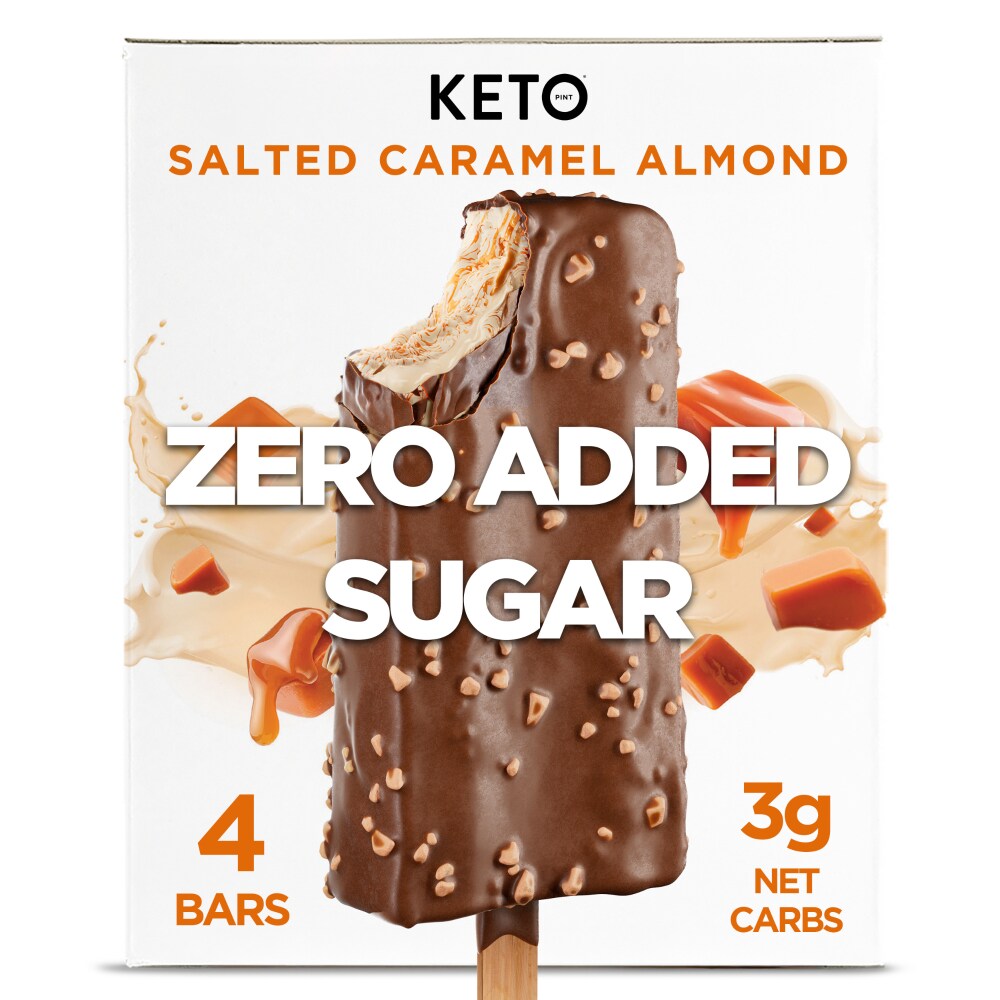


Keto Pint Salted caramel almond ice cream bar
Analysis updated August 2026 · How Scout scores
At a glance
Summary
This ice cream bar contains several beneficial ingredients such as almonds, olive oil, and coconut oil, which contribute healthy fats and nutrients. However, the presence of safflower oil, a seed oil high in omega-6 fatty acids, and the use of natural flavors and soy lecithin, which are highly processed, negatively impact the product's healthiness. Additionally, the product is ultra-processed, which limits its overall score despite some high-quality ingredients.
Key ingredients 27
AlmondsVery Good
Almonds are a nutrient-dense nut rich in healthy fats, protein, and fiber. They provide essential vitamins and minerals such as vitamin E and magnesium. They are minimally processed and offer numerous health benefits.
Risks
May cause allergic reactions in individuals with nut allergies.
Benefits
Rich in monounsaturated fats, protein, and fiber, supporting heart health and satiety.
Olive OilVery Good
Olive oil is a high-quality monounsaturated fat with anti-inflammatory properties. It contains antioxidants that support heart health. Cold-pressed extraction preserves beneficial compounds.
Benefits
Rich in monounsaturated fats that support heart health and provide anti-inflammatory properties.
CreamGood
Cream is a source of high-quality fats and fat-soluble vitamins. It provides a rich texture and flavor to dairy products. When sourced from grass-fed cows, it contains beneficial omega-3 fatty acids.
Risks
High in saturated fats, which may contribute to heart disease if consumed in excess.
Benefits
Rich in fat-soluble vitamins like A, D, E, and K, and provides a creamy texture and flavor.
Chicory Root FiberGood
Chicory root fiber is a prebiotic fiber that supports digestive health. It helps in promoting the growth of beneficial gut bacteria. It also adds bulk to foods without adding calories.
Risks
May cause digestive discomfort or bloating in sensitive individuals when consumed in large amounts.
Benefits
Supports digestive health by promoting beneficial gut bacteria and provides dietary fiber.
Coconut OilGood
Coconut oil is a source of medium-chain triglycerides (MCTs) which are easily metabolized for energy. It has antimicrobial properties and supports metabolic health. It is less processed compared to many seed oils.
Risks
High in saturated fats, which may contribute to heart disease if consumed in excess.
Benefits
Provides MCTs that are quickly metabolized for energy and may support weight management.
Milk Protein ConcentrateGood
Milk protein concentrate is a high-quality protein source rich in essential amino acids. It supports muscle growth and repair. It is less processed compared to plant-based protein isolates.
Risks
Contains lactose, which may cause digestive issues in lactose-intolerant individuals.
Benefits
Provides high-quality protein that supports muscle growth and repair.
Egg YolksGood
Egg yolks are a rich source of essential nutrients, including vitamins A, D, E, and K, as well as healthy fats. They contribute to the creamy texture and flavor of foods. They are minimally processed and provide high-quality protein.
Risks
High in cholesterol, which may be a concern for individuals with specific health conditions.
Benefits
Rich in essential nutrients and healthy fats, supporting overall health and providing a creamy texture.
MilkfatGood
Beneficial ingredient — whole-food or functional value in this product class.
Risks
High in saturated fats, which may contribute to heart disease if consumed in excess.
Benefits
Provides fat-soluble vitamins and contributes to the creamy texture of dairy products.
Unsweetened ChocolateGood
Unsweetened chocolate is rich in antioxidants and flavonoids that support heart health. It provides a deep chocolate flavor without added sugars. It is minimally processed compared to sweetened chocolate products.
Risks
Contains caffeine and theobromine, which may affect sensitive individuals.
Benefits
Rich in antioxidants and flavonoids, supporting heart health and providing a rich chocolate flavor.
Sea SaltGood
Sea salt is a minimally processed, natural source of sodium and trace minerals. It enhances flavor and provides essential electrolytes. It is considered a healthier alternative to refined table salt.
Risks
Excessive sodium intake may contribute to high blood pressure and cardiovascular issues.
Benefits
Provides essential electrolytes and trace minerals, enhancing flavor and supporting hydration.
Monk Fruit ExtractGood
Beneficial ingredient — whole-food or functional value in this product class.
Benefits
Provides sweetness without impacting blood sugar levels, suitable for diabetic-friendly products.
WaterNeutral
Water is a neutral ingredient used as a base in many food products. It does not contribute any calories or nutrients. It serves as a solvent and helps in mixing other ingredients.
See more about Water →AlluloseNeutral
Standard formulation ingredient — neither beneficial nor harmful at typical use.
Risks
Excessive consumption may cause digestive discomfort in some individuals.
Benefits
Provides sweetness with minimal impact on blood sugar levels, making it suitable for diabetic-friendly products.
Whole Milk PowderNeutral
Whole milk powder is a dehydrated form of milk that retains most of its nutrients. It provides protein, calcium, and other essential nutrients. It is used to enhance the creaminess and nutritional profile of products.
Risks
Contains lactose, which may cause digestive issues in lactose-intolerant individuals.
Benefits
Provides protein and calcium, supporting bone health and muscle function.
ErythritolNeutral
Erythritol is a sugar alcohol used as a low-calorie sweetener. It does not raise blood sugar levels and is well-tolerated by most people. It is often used in sugar-free and low-calorie products.
Risks
Excessive consumption may cause digestive discomfort in some individuals.
Benefits
Provides sweetness without impacting blood sugar levels, suitable for diabetic-friendly products.
Buttermilk PowderNeutral
Buttermilk powder is a dehydrated form of buttermilk that adds tangy flavor and creaminess to foods. It retains most of the nutrients found in liquid buttermilk. It is used to enhance the texture and flavor of dairy products.
Risks
Contains lactose, which may cause digestive issues in lactose-intolerant individuals.
Benefits
Provides a tangy flavor and creaminess, enhancing the texture and taste of foods.
Cocoa Processed With AlkaliNeutral
Cocoa processed with alkali, also known as Dutch-processed cocoa, has a milder flavor and darker color. The alkalization process reduces acidity and enhances solubility. It is commonly used in baking and chocolate products.
Risks
The alkalization process may reduce some antioxidant content compared to natural cocoa.
Benefits
Provides a rich chocolate flavor and improved solubility in recipes.
Skim Milk PowderNeutral
Skim milk powder is a dehydrated form of skim milk that provides protein and calcium without the fat content. It is used to enhance the nutritional profile of foods. It is a common ingredient in low-fat dairy products.
Risks
Contains lactose, which may cause digestive issues in lactose-intolerant individuals.
Benefits
Provides protein and calcium, supporting bone health and muscle function.
Tapioca StarchNeutral
Tapioca starch is a gluten-free thickening agent derived from cassava root. It is used to improve texture and stability in food products. It is minimally processed and suitable for gluten-free diets.
Benefits
Provides a gluten-free thickening option, improving texture and stability in foods.
Locust Bean GumNeutral
Locust bean gum is a natural thickening agent derived from carob seeds. It is used to improve texture and stability in food products. It is generally recognized as safe and minimally processed.
Risks
May cause digestive discomfort in sensitive individuals when consumed in large amounts.
Benefits
Provides a natural thickening option, improving texture and stability in foods.
PectinNeutral
Pectin is a natural gelling agent derived from fruits. It is used to thicken and stabilize food products. It is minimally processed and generally recognized as safe.
Benefits
Provides a natural gelling option, improving texture and stability in foods.
Guar GumNeutral
Guar gum is a natural thickening agent derived from guar beans. It is used to improve texture and stability in food products. It is generally recognized as safe and minimally processed.
Risks
May cause digestive discomfort in sensitive individuals when consumed in large amounts.
Benefits
Provides a natural thickening option, improving texture and stability in foods.
Steviol GlycosidesNeutral
Steviol glycosides are natural sweeteners derived from the stevia plant. They provide sweetness without calories and do not affect blood sugar levels. They are generally recognized as safe and widely used in low-calorie products.
Benefits
Provides sweetness without impacting blood sugar levels, suitable for diabetic-friendly products.
Annatto ExtractNeutral
Annatto extract is a natural coloring agent derived from the seeds of the achiote tree. It is used to impart a yellow or orange color to foods. It is minimally processed and generally recognized as safe.
Risks
May cause allergic reactions in sensitive individuals.
Benefits
Provides natural coloring without synthetic additives.
Natural FlavorsBad
Natural flavors are a catch-all term for flavoring agents derived from natural sources. They are often highly processed and lack transparency in their composition. They can mask the true quality of the product.
Risks
May contain allergens or additives not disclosed on the label.
Soy LecithinBad
Soy lecithin is a refined emulsifier derived from soybeans. It is used to improve texture and blend ingredients in food products. It is highly processed and may contain traces of allergens.
Risks
May contain traces of soy allergens and is highly processed.
Safflower OilVery Bad
Safflower oil is a seed oil high in omega-6 fatty acids, which can promote inflammation. It is often highly processed and refined. It is not recommended due to its potential negative health impacts.
Risks
High omega-6 content may promote inflammation when consumed in excess.
Processing
Ultra-Processed Foods
Get the full breakdown in the Scout appTake Scout shopping
Scan any product to see lab results, healthy alternatives, and your personalized analysis.
Download on theApp Store GET IT ONGoogle PlayAmazon pricing & content
Amazon price as of . Product prices and availability are accurate as of the date/time indicated and are subject to change. Any price and availability information displayed on Amazon.com at the time of purchase will apply to the purchase of this product.
CERTAIN CONTENT THAT APPEARS ON THIS SITE COMES FROM AMAZON. THIS CONTENT IS PROVIDED “AS IS” AND IS SUBJECT TO CHANGE OR REMOVAL AT ANY TIME.