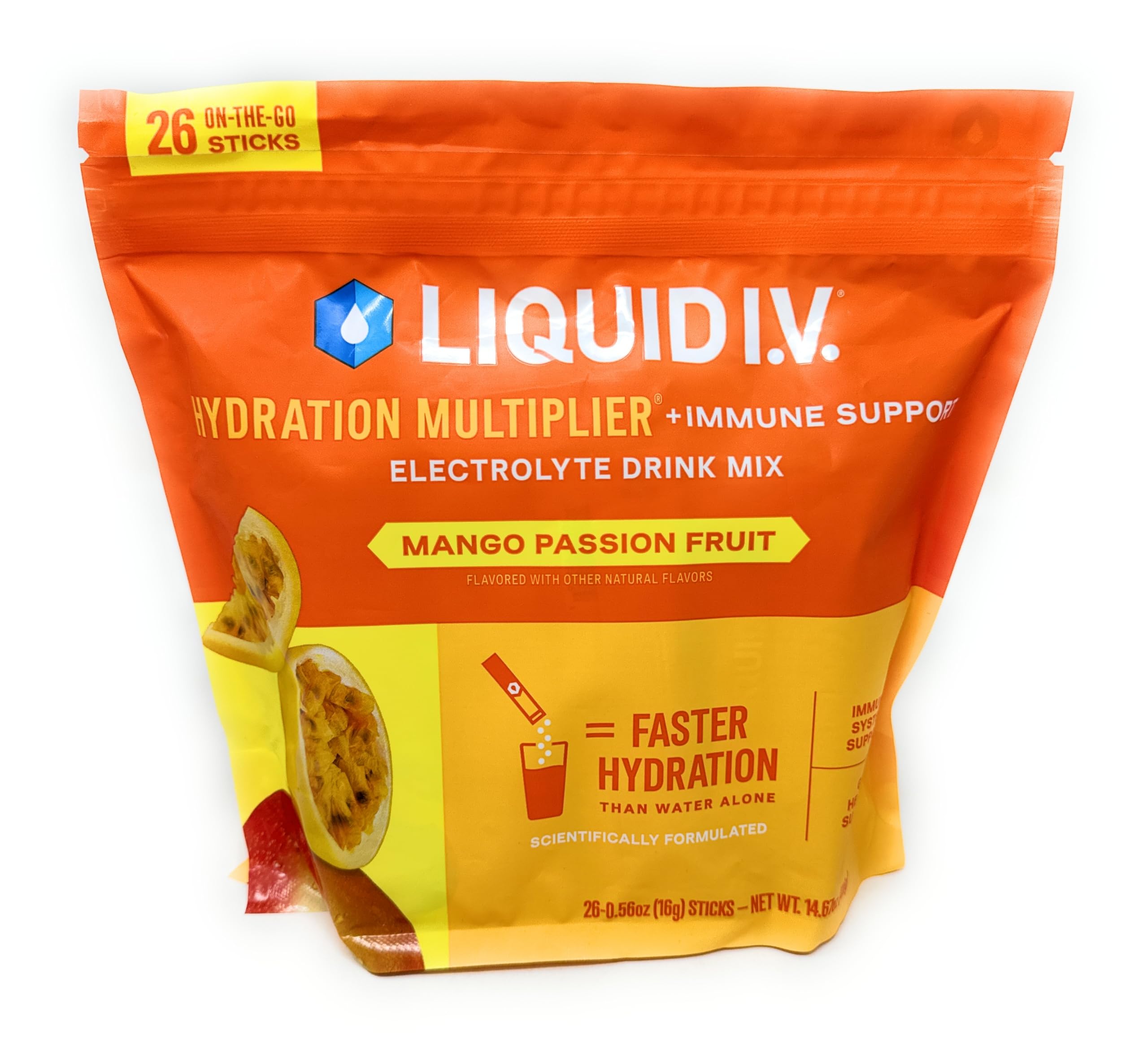
Liquid Iv Passion Fruit
At a glance
Summary
This electrolyte supplement contains beneficial ingredients like potassium citrate and essential vitamins, which support hydration and overall health. However, it includes cane sugar and dextrose, which can contribute to high sugar intake and rapid blood sugar spikes. The presence of natural flavors, which lack transparency, also affects the overall formulation quality.
Key ingredients 15
Vitamin CVery Good
Vitamin C is an essential nutrient that acts as an antioxidant and supports immune function. It is crucial for collagen synthesis and skin health. It is a high-quality active ingredient in supplements.
Risks
Excessive intake may cause gastrointestinal discomfort.
Benefits
Vitamin C boosts the immune system and enhances iron absorption.
Potassium CitrateGood
Potassium citrate is a potassium salt of citric acid that helps maintain proper electrolyte balance. It is used to prevent kidney stones and treat low blood potassium levels. It is a beneficial ingredient in electrolyte supplements.
Risks
Excessive intake may lead to hyperkalemia, especially in individuals with kidney dysfunction.
Benefits
Potassium citrate supports heart health and muscle function by maintaining electrolyte balance.
Vitamin B3Good
Vitamin B3, also known as niacinamide, is essential for energy metabolism and DNA repair. It supports skin health and reduces cholesterol levels. It is a beneficial ingredient in supplements.
Risks
High doses may cause flushing or liver damage.
Benefits
Vitamin B3 supports cardiovascular health and energy production.
Vitamin B5Good
Vitamin B5, or calcium D-pantothenate, is vital for synthesizing coenzyme A, which is crucial for fatty acid metabolism. It supports adrenal function and reduces stress. It is a beneficial ingredient in supplements.
Benefits
Vitamin B5 aids in energy production and hormone synthesis.
Vitamin B6Good
Vitamin B6, or pyridoxine hydrochloride, is essential for amino acid metabolism and neurotransmitter synthesis. It supports brain health and reduces inflammation. It is a beneficial ingredient in supplements.
Risks
Excessive intake may lead to nerve damage.
Benefits
Vitamin B6 supports cognitive function and mood regulation.
Vitamin B12Good
Vitamin B12, or cyanocobalamin, is crucial for red blood cell formation and neurological function. It prevents anemia and supports energy production. It is a high-quality active ingredient in supplements.
Benefits
Vitamin B12 supports nerve health and energy metabolism.
Citric AcidNeutral
Citric acid is a natural preservative and flavor enhancer commonly found in citrus fruits. It is used to add acidity and enhance flavor in foods and beverages. It is generally recognized as safe when consumed in moderate amounts.
Risks
In large amounts, citric acid may cause tooth enamel erosion.
Benefits
Citric acid can enhance the absorption of minerals such as calcium.
SaltNeutral
Salt is used as an electrolyte and flavor enhancer in many food products. It is essential for maintaining fluid balance and nerve function. However, excessive intake can lead to hypertension.
Risks
High salt consumption is associated with increased blood pressure and cardiovascular disease risk.
Benefits
Salt is necessary for maintaining electrolyte balance and proper cellular function.
Sodium CitrateNeutral
Sodium citrate is used as a buffering agent and emulsifier in food products. It helps maintain pH balance and enhances flavor. It is generally recognized as safe when consumed in moderate amounts.
Risks
Excessive consumption may contribute to sodium overload, affecting blood pressure.
Benefits
Sodium citrate can help maintain acid-base balance in the body.
Dipotassium PhosphateNeutral
Dipotassium phosphate is used as a stabilizer and emulsifier in food products. It provides potassium and phosphorus, which are essential nutrients. It is generally recognized as safe when consumed in moderate amounts.
Risks
High intake may lead to imbalances in phosphorus and potassium levels.
Benefits
Provides essential minerals that support bone health and energy production.
Stevia Leaf ExtractNeutral
Stevia leaf extract is a natural, zero-calorie sweetener derived from the stevia plant. It is used as a sugar substitute without significant health concerns. It is considered safe for consumption.
Benefits
Stevia provides sweetness without calories, making it suitable for weight management.
Silicon DioxideNeutral
Silicon dioxide is used as an anti-caking agent to prevent clumping in powdered products. It is naturally occurring and generally recognized as safe. It does not contribute any nutritional value.
See more about Silicon Dioxide →Cane SugarBad
Cane sugar is a refined sugar that can contribute to excessive calorie intake and potential weight gain. It is processed to remove impurities, resulting in a high glycemic index. Excessive consumption may lead to metabolic issues.
Risks
High intake of cane sugar can increase the risk of obesity, type 2 diabetes, and heart disease.
DextroseBad
Dextrose is a simple sugar derived from corn, often used as a sweetener. It has a high glycemic index, which can cause rapid spikes in blood sugar levels. Overconsumption can lead to insulin resistance.
Risks
Excessive dextrose intake can contribute to obesity and increase the risk of developing type 2 diabetes.
Natural FlavorsBad
Natural flavors are a catch-all term for flavoring agents derived from natural sources. They lack transparency and can include a wide range of substances. Their processing and composition are not always disclosed.
Risks
Potential allergens or additives may be present without clear labeling.
Processing
Processed Foods
Get the full breakdown in the Scout appTake Scout shopping
Scan any product to see lab results, healthy alternatives, and your personalized analysis.
Are you Liquid I.V.? Fix an error Get the badge Get tested