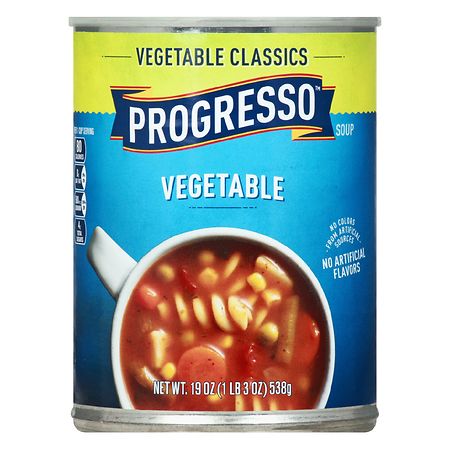
Progresso Vegetable Classics Vegetable Soup
At a glance
Summary
This vegetable soup contains a variety of beneficial ingredients such as tomatoes, carrots, and green beans, which contribute to its nutritional value. However, the presence of hydrolyzed corn protein, sugar, and natural flavors indicates a higher level of processing. Despite the inclusion of wholesome vegetables, the soup's ultra-processed nature and use of flavor enhancers and additives limit its healthiness.
Key ingredients 25
Tomato pureeGood
Tomato puree is a concentrated form of tomatoes, providing a rich source of vitamins and antioxidants. It is minimally processed, retaining much of the nutritional benefits of whole tomatoes. The puree enhances flavor and nutritional content in soups.
Benefits
Rich in vitamins A and C, and antioxidants like lycopene, which may support heart health and reduce inflammation.
CarrotsGood
Carrots are a nutrient-dense vegetable high in beta-carotene, fiber, and vitamins. They are minimally processed and retain their nutritional profile when included in soups. Carrots contribute to the overall vitamin content of the product.
Benefits
High in beta-carotene, which the body converts to vitamin A, supporting vision and immune function.
CeleryGood
Celery is a low-calorie vegetable that provides fiber and essential nutrients. It is minimally processed and adds flavor and texture to soups. Celery is known for its potential anti-inflammatory properties.
Benefits
Contains antioxidants and fiber, which may support digestive health and reduce inflammation.
Green beansGood
Green beans are a nutritious vegetable high in vitamins and fiber. They are minimally processed and retain their nutritional benefits in soups. Green beans contribute to the overall fiber and vitamin content of the product.
Benefits
Rich in vitamins A, C, and K, and fiber, supporting overall health and digestion.
TomatoesGood
Tomatoes are a rich source of vitamins, minerals, and antioxidants like lycopene. They are minimally processed and enhance the nutritional profile of soups. Tomatoes contribute to flavor and nutritional content.
Benefits
High in vitamins C and K, and antioxidants, which may support heart health and reduce inflammation.
Dried peasGood
Dried peas are a good source of plant-based protein and fiber. They are minimally processed and retain their nutritional benefits in soups. Dried peas contribute to the protein and fiber content of the product.
Benefits
High in protein and fiber, supporting muscle health and digestion.
Carrot pureeGood
Carrot puree is a concentrated form of carrots, providing a rich source of beta-carotene and vitamins. It is minimally processed, retaining much of the nutritional benefits of whole carrots. The puree enhances flavor and nutritional content in soups.
Benefits
High in beta-carotene, which the body converts to vitamin A, supporting vision and immune function.
Red bell peppersGood
Red bell peppers are a nutrient-rich vegetable high in vitamins and antioxidants. They are minimally processed and retain their nutritional benefits in soups. Red bell peppers contribute to the overall vitamin content of the product.
Benefits
Rich in vitamins A and C, and antioxidants, supporting immune function and reducing inflammation.
OnionGood
Onion is a flavorful vegetable that provides vitamins and antioxidants. It is minimally processed and enhances the flavor profile of soups. Onions contribute to the overall nutritional content of the product.
Benefits
Contains antioxidants and vitamins that may support immune function and reduce inflammation.
Tomato extractGood
Tomato extract is a concentrated source of the nutrients found in tomatoes, including lycopene. It is used to enhance flavor and nutritional content in soups. The extract retains the antioxidant properties of tomatoes.
Benefits
Rich in lycopene, an antioxidant that may support heart health and reduce inflammation.
Dried parsleyGood
Dried parsley is a herb that provides vitamins and antioxidants. It is minimally processed and retains its nutritional benefits when used in soups. Parsley adds flavor and nutritional value to the product.
Benefits
Rich in vitamins A, C, and K, and antioxidants, supporting overall health.
WaterNeutral
Water is a neutral ingredient used as a base for soups and other liquid foods. It provides no nutritional value but is essential for hydration. In this product, it serves as the primary medium for other ingredients.
See more about Water →CornNeutral
Corn is a starchy vegetable that provides carbohydrates and some vitamins. It is a common ingredient in soups, offering texture and sweetness. While it provides energy, it is less nutrient-dense compared to other vegetables.
Benefits
Provides carbohydrates for energy and contains some vitamins and minerals.
PotatoesNeutral
Potatoes are a starchy vegetable providing carbohydrates and some vitamins. They are a common ingredient in soups, offering texture and energy. While they provide energy, they are less nutrient-dense compared to other vegetables.
Benefits
Provides carbohydrates for energy and contains some vitamins and minerals.
PastaNeutral
Pasta is a carbohydrate-rich ingredient made from wheat flour and semolina. It provides energy and texture to soups but is not a significant source of other nutrients. The inclusion of dried egg white adds a small amount of protein.
Risks
May contain gluten, which can be a concern for individuals with celiac disease or gluten sensitivity.
Benefits
Provides carbohydrates for energy and a small amount of protein from the egg white.
SaltNeutral
Salt is used to enhance flavor and preserve food. It is a common ingredient in processed foods, providing sodium necessary for bodily functions. Excessive consumption can lead to health issues like hypertension.
Risks
High sodium intake can contribute to hypertension and cardiovascular issues.
Benefits
Provides essential sodium for bodily functions.
Modified food starchNeutral
Modified food starch is used as a thickening agent in soups. It is a processed ingredient that provides no significant nutritional value. It helps improve texture and consistency in the product.
Benefits
Improves texture and consistency in food products.
Potassium chlorideNeutral
Potassium chloride is used as a salt substitute to reduce sodium content. It provides potassium, an essential mineral for heart and muscle function. It is generally safe but can cause issues in individuals with kidney problems.
Risks
May cause health issues in individuals with kidney problems if consumed in excess.
Benefits
Provides potassium, which is essential for heart and muscle function.
SpiceNeutral
Spice is used to enhance the flavor of foods. It is a generic term that can include a variety of spices, each with different health impacts. The specific spices used are not detailed, making it difficult to assess their individual benefits or risks.
Benefits
Enhances flavor and may provide some antioxidant benefits depending on the spices used.
Citric acidNeutral
Citric acid is used as a preservative and flavor enhancer in foods. It is a naturally occurring acid found in citrus fruits. While it provides no nutritional value, it helps maintain the product's shelf life.
Benefits
Helps preserve food and enhance flavor.
Calcium chlorideNeutral
Calcium chloride is used as a firming agent in canned foods. It provides no significant nutritional value but helps maintain texture. It is generally recognized as safe for consumption.
Benefits
Helps maintain texture in canned foods.
Yeast extractNeutral
Yeast extract is used to enhance flavor in foods. It contains naturally occurring glutamates, which can enhance umami flavor. While it provides some B vitamins, it is primarily used for its flavoring properties.
Risks
May cause sensitivity reactions in some individuals due to naturally occurring glutamates.
Benefits
Provides some B vitamins and enhances umami flavor.
Hydrolyzed corn proteinBad
Hydrolyzed corn protein is a processed ingredient used to enhance flavor. It may contain free glutamates, similar to MSG, which can cause sensitivity in some individuals. The processing method reduces its nutritional value compared to whole corn.
Risks
May cause sensitivity reactions in some individuals due to free glutamates.
SugarBad
Sugar is a refined carbohydrate that provides sweetness but no essential nutrients. Excessive consumption can lead to health issues like obesity and diabetes. It is often added to enhance flavor in processed foods.
Risks
Excessive consumption can lead to obesity, diabetes, and other metabolic disorders.
Natural flavorBad
Natural flavor is a catch-all term for flavoring agents derived from natural sources. It is highly processed and provides no nutritional value. The lack of transparency in its composition can be concerning for individuals with allergies or sensitivities.
Risks
May cause allergic reactions or sensitivities due to unknown components.
Processing
Ultra-Processed Foods
Get the full breakdown in the Scout appTake Scout shopping
Scan any product to see lab results, healthy alternatives, and your personalized analysis.
Are you Progresso? Fix an error Get the badge Get tested