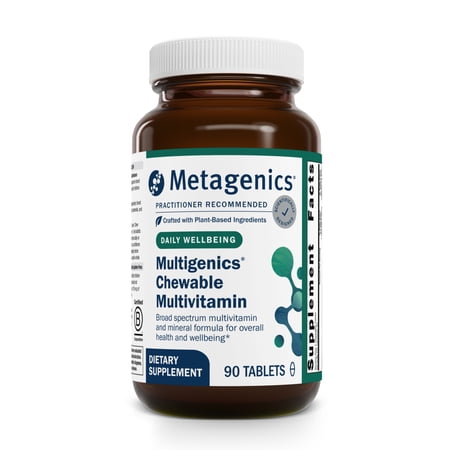
Metagenics Multigenics Chewable Multivitamin - Optimum Multiple Vitamin/Mineral Formula Orange-Flavored Chewable - 90 Servings
At a glance
Summary
This multivitamin contains a comprehensive range of essential vitamins and minerals in bioavailable forms, which is beneficial for overall health. However, the inclusion of artificial sweeteners such as sucralose and acesulfame potassium, along with natural flavors, raises concerns about potential impacts on metabolic health and transparency. These additives, combined with the product's level of processing, contribute to a moderate score.
Key ingredients 37
Vitamin AGood
Vitamin A is essential for maintaining healthy vision, immune function, and skin health. It is provided in the forms of retinyl palmitate and beta-carotene, which are well-absorbed and effective. Beta-carotene also acts as an antioxidant, protecting cells from damage.
Risks
Excessive intake of Vitamin A can lead to toxicity, causing liver damage and other health issues.
Benefits
Supports vision, immune function, and skin health; beta-carotene provides antioxidant protection.
Vitamin CGood
Vitamin C is a powerful antioxidant that supports immune function and skin health. Ascorbic acid is a well-known form that is easily absorbed by the body. It also aids in the absorption of iron from plant-based foods.
Risks
High doses of Vitamin C can cause gastrointestinal discomfort and diarrhea.
Benefits
Enhances immune function, acts as an antioxidant, and improves iron absorption.
Vitamin DGood
Vitamin D is crucial for bone health and immune function, as it aids in calcium absorption. Cholecalciferol (Vitamin D3) is the preferred form due to its superior bioavailability. It also plays a role in mood regulation.
Risks
Excessive Vitamin D can lead to hypercalcemia, causing nausea and kidney issues.
Benefits
Supports bone health, immune function, and mood regulation.
Vitamin EGood
Vitamin E acts as a potent antioxidant, protecting cells from oxidative stress. D-alpha tocopheryl acetate is a natural form that is well-absorbed. It also supports skin health and immune function.
Risks
High doses may interfere with blood clotting and increase the risk of bleeding.
Benefits
Provides antioxidant protection and supports skin and immune health.
Vitamin KGood
Vitamin K is essential for blood clotting and bone health. Phytonadione (Vitamin K1) is effective in supporting these functions. It also works synergistically with Vitamin D to enhance bone strength.
Risks
May interact with anticoagulant medications, affecting blood clotting.
Benefits
Supports blood clotting and bone health.
ThiaminGood
Thiamin (Vitamin B1) is vital for energy metabolism and nerve function. Thiamin mononitrate is a stable form used in supplements. It helps convert carbohydrates into energy.
Benefits
Supports energy metabolism and nerve function.
RiboflavinGood
Riboflavin (Vitamin B2) is important for energy production and cellular function. It also acts as an antioxidant, protecting cells from damage. Riboflavin is water-soluble and easily absorbed.
Benefits
Supports energy production and acts as an antioxidant.
NiacinGood
Niacin (Vitamin B3) supports energy metabolism and cardiovascular health. Niacinamide is a form that does not cause flushing, making it suitable for supplementation. It also plays a role in DNA repair.
Risks
High doses can cause liver damage and gastrointestinal issues.
Benefits
Supports energy metabolism and cardiovascular health.
Vitamin B6Good
Vitamin B6 is crucial for protein metabolism and cognitive development. Pyridoxine hydrochloride is a common form used in supplements. It also supports immune function and hemoglobin production.
Risks
Excessive intake can lead to nerve damage.
Benefits
Supports protein metabolism, cognitive development, and immune function.
FolateGood
Folate (Vitamin B9) is essential for DNA synthesis and cell division. Folic acid is a synthetic form that is well-absorbed and effective in preventing neural tube defects during pregnancy.
Risks
High doses can mask Vitamin B12 deficiency symptoms.
Benefits
Supports DNA synthesis and prevents neural tube defects.
Vitamin B12Good
Vitamin B12 is vital for nerve function and red blood cell formation. Cyanocobalamin is a stable form used in supplements. It also supports energy metabolism.
Benefits
Supports nerve function, red blood cell formation, and energy metabolism.
BiotinGood
Biotin (Vitamin B7) supports healthy hair, skin, and nails. It also plays a role in energy metabolism and fatty acid synthesis. Biotin is water-soluble and easily absorbed.
Benefits
Supports healthy hair, skin, nails, and energy metabolism.
Pantothenic AcidGood
Pantothenic acid (Vitamin B5) is essential for synthesizing coenzyme A, crucial for energy metabolism. D-calcium pantothenate is a stable form used in supplements. It also supports adrenal function.
Benefits
Supports energy metabolism and adrenal function.
CalciumGood
Calcium is crucial for bone health and muscle function. It is provided as calcium carbonate and calcium citrate, both of which are effective forms. Calcium also plays a role in nerve transmission.
Risks
Excessive intake can lead to kidney stones and impaired absorption of other minerals.
Benefits
Supports bone health, muscle function, and nerve transmission.
IronGood
Iron is essential for oxygen transport and energy production. Ferrous fumarate is a form that is well-absorbed and effective in treating iron deficiency anemia. It also supports immune function.
Risks
Excessive iron intake can cause gastrointestinal issues and toxicity.
Benefits
Supports oxygen transport, energy production, and immune function.
IodineGood
Iodine is crucial for thyroid function and hormone production. Potassium iodide is a stable form used in supplements. It also supports metabolic rate regulation.
Risks
Excessive iodine intake can lead to thyroid dysfunction.
Benefits
Supports thyroid function and metabolic rate regulation.
MagnesiumGood
Magnesium is important for muscle and nerve function, as well as bone health. Magnesium oxide is a common form used in supplements, though it has lower bioavailability compared to other forms. It also supports energy production.
Risks
High doses can cause diarrhea and gastrointestinal discomfort.
Benefits
Supports muscle, nerve function, and bone health.
ZincGood
Zinc is essential for immune function and wound healing. Zinc oxide is a form used in supplements, though it has lower bioavailability compared to other forms. It also supports DNA synthesis and cell division.
Risks
Excessive zinc intake can interfere with copper absorption and cause gastrointestinal issues.
Benefits
Supports immune function, wound healing, and DNA synthesis.
SeleniumGood
Selenium is a powerful antioxidant that supports immune function and thyroid health. Sodium selenate is a form used in supplements. It also plays a role in DNA synthesis and reproduction.
Risks
High doses can lead to selenium toxicity, causing hair loss and gastrointestinal issues.
Benefits
Provides antioxidant protection and supports immune and thyroid health.
CopperGood
Copper is important for iron metabolism and the formation of red blood cells. Copper gluconate is a form used in supplements. It also supports immune function and collagen formation.
Risks
Excessive copper intake can lead to toxicity, causing liver damage and gastrointestinal issues.
Benefits
Supports iron metabolism, immune function, and collagen formation.
ManganeseGood
Manganese is essential for bone health and metabolism. Manganese sulfate is a form used in supplements. It also supports antioxidant enzyme function.
Risks
High doses can lead to neurological issues.
Benefits
Supports bone health, metabolism, and antioxidant enzyme function.
ChromiumGood
Chromium is important for macronutrient metabolism and blood sugar regulation. Chromium chloride is a form used in supplements. It also supports insulin action.
Benefits
Supports macronutrient metabolism and blood sugar regulation.
MolybdenumGood
Molybdenum is essential for enzyme function and detoxification processes. Sodium molybdate is a form used in supplements. It also supports sulfur metabolism.
Benefits
Supports enzyme function and detoxification processes.
PotassiumGood
Potassium is crucial for maintaining fluid balance and nerve function. Potassium chloride is a form used in supplements. It also supports muscle contraction and heart function.
Risks
Excessive potassium intake can lead to hyperkalemia, affecting heart function.
Benefits
Supports fluid balance, nerve function, and heart health.
LuteinGood
Lutein is a carotenoid that supports eye health and acts as an antioxidant. It is derived from marigold flower extract, a natural source. Lutein also helps filter harmful blue light.
Benefits
Supports eye health and provides antioxidant protection.
LycopeneGood
Lycopene is a powerful antioxidant that supports heart health and reduces oxidative stress. It is derived from tomato extract, a natural source. Lycopene also supports prostate health.
Benefits
Supports heart and prostate health, and provides antioxidant protection.
Beta CaroteneGood
Beta carotene is a precursor to Vitamin A and acts as an antioxidant. It is used as a natural colorant and provides health benefits by supporting vision and immune function. It is derived from natural sources and is well-absorbed.
Benefits
Supports vision and immune function, and provides antioxidant protection.
SorbitolNeutral
Sorbitol is a sugar alcohol used as a sweetener and humectant. It is less caloric than sugar and does not cause a rapid increase in blood glucose levels. However, it can cause gastrointestinal discomfort in large amounts.
Risks
May cause gastrointestinal discomfort and diarrhea if consumed in large quantities.
Benefits
Provides sweetness with fewer calories than sugar.
XylitolNeutral
Xylitol is a sugar alcohol used as a sweetener with a lower glycemic index than sugar. It is beneficial for dental health as it reduces the risk of cavities. However, excessive consumption can lead to digestive issues.
Risks
May cause digestive issues like bloating and diarrhea in large amounts.
Benefits
Supports dental health and provides sweetness with fewer calories.
Citric AcidNeutral
Citric acid is used as a preservative and flavor enhancer. It is naturally found in citrus fruits and is generally recognized as safe. However, it can cause tooth enamel erosion if consumed excessively.
Risks
Excessive consumption can lead to tooth enamel erosion.
Benefits
Acts as a preservative and enhances flavor.
Stearic AcidNeutral
Stearic acid is a fatty acid used as a lubricant and binder in supplements. It is generally considered safe and does not have significant health impacts. It is naturally found in animal and plant fats.
Benefits
Used as a lubricant and binder in supplement formulations.
Magnesium StearateNeutral
Magnesium stearate is a common additive used as a flow agent in supplement manufacturing. It is generally recognized as safe and does not affect the efficacy of the active ingredients. However, it can cause digestive issues in sensitive individuals.
Risks
May cause digestive issues in sensitive individuals.
Benefits
Improves the manufacturing process by acting as a flow agent.
SilicaNeutral
Silica is used as an anti-caking agent in supplements. It is naturally occurring and considered safe for consumption. It helps maintain the free-flowing nature of powdered ingredients.
Benefits
Prevents clumping and maintains the quality of the product.
Carnauba WaxNeutral
Carnauba wax is used as a glazing agent to provide a shiny finish to supplements. It is derived from the leaves of the carnauba palm and is considered safe for consumption. It does not have significant nutritional benefits.
Benefits
Provides a shiny finish and improves the appearance of the product.
Natural Orange FlavorBad
Natural flavors are often used to enhance taste but can be derived from complex mixtures of chemicals. The term 'natural' does not guarantee the absence of synthetic additives. This lack of transparency can be concerning for consumers seeking clean labels.
Risks
Potential for undisclosed synthetic additives and allergens.
Benefits
Enhances the flavor profile of the product.
SucraloseBad
Sucralose is an artificial sweetener used to provide sweetness without calories. It is much sweeter than sugar and is used in small amounts. However, concerns exist about its potential impact on gut health and glucose metabolism.
Risks
May affect gut health and glucose metabolism.
Benefits
Provides sweetness without adding calories.
Acesulfame PotassiumBad
Acesulfame potassium is an artificial sweetener used to enhance sweetness without calories. It is often used in combination with other sweeteners to improve taste. Concerns exist about its potential impact on metabolic health and long-term safety.
Risks
Potential impact on metabolic health and long-term safety concerns.
Benefits
Enhances sweetness without adding calories.
Processing
Ultra-Processed Foods
Get the full breakdown in the Scout appTake Scout shopping
Scan any product to see lab results, healthy alternatives, and your personalized analysis.