
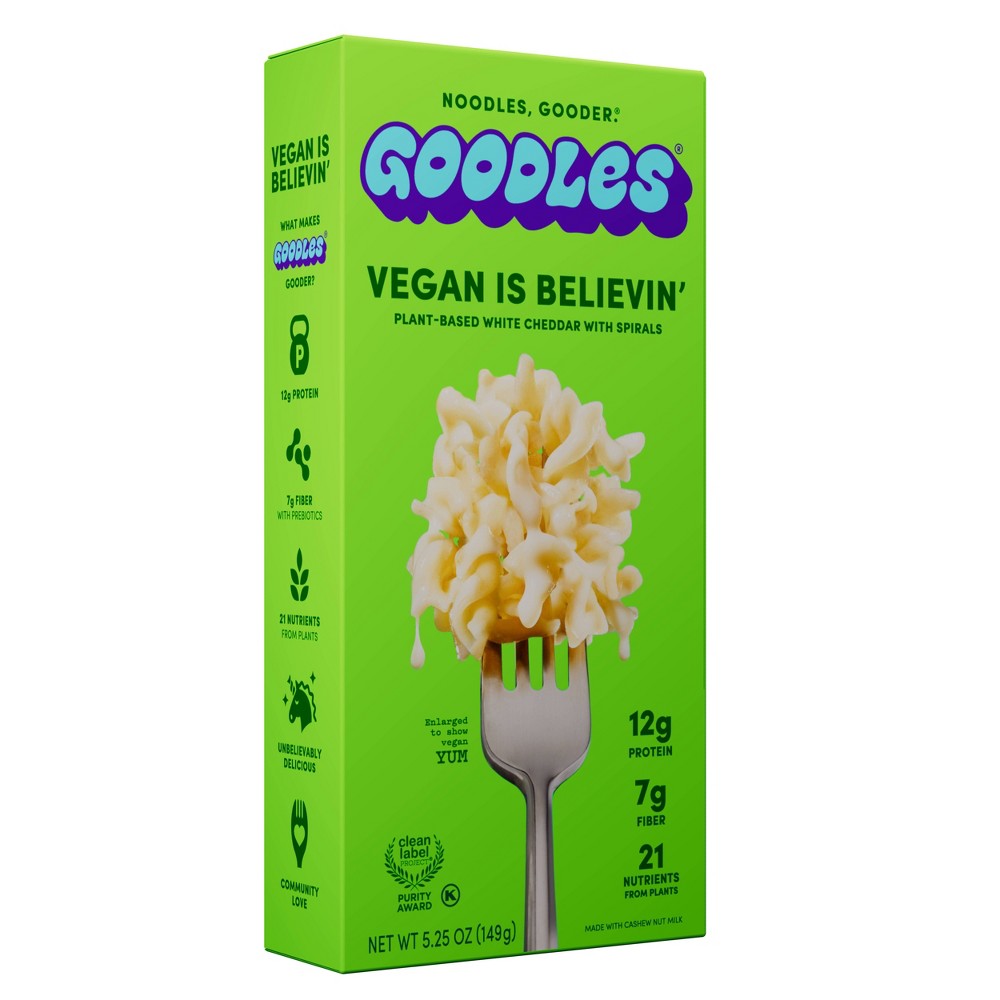





Goodles Vegan Is Believin - 5.25oz: Added Prebiotics, Clean Label Project Certified
GoodlesAnalysis updated September 2026 · How Scout scores
At a glance
Summary
This product contains a variety of nutrient-rich ingredients such as broccoli, spinach, kale, and sweet potato, which contribute to its nutritional value. However, it is classified as ultra-processed due to the presence of additives like natural flavors and maltodextrin, which are indicative of higher processing levels. Despite its clean label certification and beneficial ingredients, the processing level limits its overall health score.
Key ingredients 26
Nutrients extracted from broccoliGood
Broccoli extracts provide vitamins, minerals, and antioxidants. These nutrients support immune function and overall health. The extraction process retains beneficial compounds found in whole broccoli.
Benefits
Rich in vitamins C and K, and antioxidants that support immune health and reduce inflammation.
SpinachGood
Spinach is a nutrient-dense leafy green rich in vitamins and minerals. It provides iron, calcium, and antioxidants. Consuming spinach supports bone health and reduces oxidative stress.
Benefits
High in vitamins A, C, and K, and provides iron and calcium for bone health.
KaleGood
Kale is a highly nutritious leafy green, rich in vitamins, minerals, and antioxidants. It supports cardiovascular health and has anti-inflammatory properties. Kale is often considered a superfood due to its dense nutrient profile.
Benefits
Provides vitamins A, C, and K, and is high in antioxidants that support heart health.
PumpkinGood
Pumpkin is a low-calorie vegetable rich in vitamins and fiber. It contains beta-carotene, which the body converts to vitamin A. Pumpkin supports eye health and provides dietary fiber.
Benefits
Rich in beta-carotene and fiber, supporting eye health and digestion.
Sweet potatoGood
Sweet potato is a nutritious root vegetable high in vitamins and fiber. It provides complex carbohydrates and beta-carotene. Sweet potatoes support energy levels and immune function.
Benefits
High in beta-carotene and fiber, supporting immune health and digestion.
CranberryGood
Cranberries are rich in antioxidants and vitamin C. They support urinary tract health and have anti-inflammatory properties. Cranberries are often used for their potential to prevent urinary tract infections.
Benefits
High in antioxidants and vitamin C, supporting immune and urinary tract health.
ChlorellaGood
Chlorella is a nutrient-rich algae high in protein, vitamins, and minerals. It supports detoxification and immune function. Chlorella is often used as a dietary supplement for its health benefits.
Risks
May cause digestive discomfort in some individuals.
Benefits
Rich in protein and chlorophyll, supporting detoxification and immune health.
Maitake mushroomGood
Maitake mushrooms are known for their immune-boosting properties and rich nutrient profile. They contain beta-glucans, which support immune health. Maitake mushrooms are used in traditional medicine for their health benefits.
Benefits
Contains beta-glucans that support immune function and overall health.
Shiitake mushroomGood
Shiitake mushrooms are rich in vitamins, minerals, and antioxidants. They support immune health and have anti-inflammatory properties. Shiitake mushrooms are valued for their umami flavor and health benefits.
Benefits
Rich in vitamins and antioxidants, supporting immune health and reducing inflammation.
Cashew milkGood
Cashew milk is a plant-based milk alternative, low in calories and rich in healthy fats. It is suitable for those with lactose intolerance or dairy allergies. Cashew milk provides a creamy texture and is often fortified with vitamins.
Risks
May cause allergic reactions in individuals with nut allergies.
Benefits
Low in calories and provides healthy fats, suitable for dairy-free diets.
CashewsGood
Cashews are a nutrient-dense nut, providing healthy fats, protein, and minerals. They support heart health and provide a source of energy. Cashews are versatile and used in various culinary applications.
Risks
May cause allergic reactions in individuals with nut allergies.
Benefits
Rich in healthy fats and minerals, supporting heart health and energy levels.
Chicory root fiberGood
Chicory root fiber is a prebiotic fiber that supports digestive health. It promotes the growth of beneficial gut bacteria. Chicory root fiber is often used to enhance fiber content in foods.
Risks
Excessive consumption may lead to digestive discomfort.
Benefits
Supports digestive health by promoting beneficial gut bacteria.
Nutritional yeastGood
Nutritional yeast is a deactivated yeast rich in B vitamins and protein. It provides a cheesy flavor and is popular in vegan diets. Nutritional yeast supports energy metabolism and provides essential nutrients.
Benefits
Rich in B vitamins and protein, supporting energy metabolism and nutritional intake.
Dried apple cider vinegarGood
Dried apple cider vinegar is used for its tangy flavor and potential health benefits. It contains acetic acid, which may support digestion and blood sugar control. The drying process retains the beneficial properties of liquid vinegar.
Benefits
May support digestion and blood sugar control due to acetic acid content.
GarlicGood
Garlic is a flavorful herb with numerous health benefits, including immune support and cardiovascular health. It contains allicin, which has antimicrobial and anti-inflammatory properties. Garlic is widely used for its health-promoting effects.
Risks
May cause digestive discomfort or allergic reactions in some individuals.
Benefits
Supports immune function and cardiovascular health due to its bioactive compounds.
DextrinNeutral
Dextrin is a carbohydrate derived from starch, used as a thickener or fiber supplement. It is generally considered safe but offers limited nutritional value. It can aid in digestion when used as a fiber source.
Risks
Excessive consumption may lead to digestive discomfort.
Benefits
Can contribute to dietary fiber intake, supporting digestive health.
Wheat proteinNeutral
Wheat protein is a plant-based protein source, providing essential amino acids. It is less bioavailable compared to animal proteins. It is suitable for vegan diets but may not provide a complete amino acid profile.
Risks
May cause allergic reactions in individuals with gluten intolerance or celiac disease.
Benefits
Offers a plant-based protein option for those avoiding animal products.
Sunflower seedNeutral
Sunflower seeds are a source of healthy fats, protein, and vitamins. They provide vitamin E and magnesium. While nutritious, they are calorie-dense and should be consumed in moderation.
Risks
High in calories and fat, which may contribute to weight gain if consumed in excess.
Benefits
Rich in vitamin E and healthy fats, supporting heart health.
Vegan white cheddarNeutral
Vegan white cheddar is a plant-based cheese alternative, often made from nuts or soy. It provides a dairy-free option for those with lactose intolerance. The nutritional profile varies depending on the ingredients used.
Risks
May contain additives or allergens depending on the formulation.
Benefits
Offers a dairy-free cheese alternative for those avoiding animal products.
Tapioca maltodextrinNeutral
Tapioca maltodextrin is a carbohydrate derived from tapioca starch, used as a thickener or stabilizer. It is highly processed and offers limited nutritional value. It is commonly used in food processing for texture enhancement.
Risks
May cause blood sugar spikes if consumed in large quantities.
SaltNeutral
Salt is used to enhance flavor and preserve food. It is essential for bodily functions but should be consumed in moderation. Excessive salt intake can lead to health issues such as hypertension.
Risks
High sodium intake may contribute to hypertension and cardiovascular issues.
Benefits
Essential for maintaining fluid balance and nerve function.
Tapioca flourNeutral
Tapioca flour is a gluten-free starch extracted from cassava root. It is used as a thickener and provides a chewy texture in foods. Tapioca flour is low in nutrients but suitable for gluten-free diets.
Benefits
Provides a gluten-free alternative for thickening and baking.
Pea proteinNeutral
Pea protein is a plant-based protein source, offering essential amino acids. It is suitable for vegan diets but may lack some amino acids found in animal proteins. Pea protein is often used in plant-based products for its protein content.
Risks
May cause digestive discomfort in some individuals.
Benefits
Provides a plant-based protein option for those avoiding animal products.
Lactic acidNeutral
Lactic acid is a naturally occurring acid used as a preservative and flavoring agent. It is generally recognized as safe and used to enhance food acidity. Lactic acid is produced through fermentation processes.
Benefits
Enhances flavor and preserves food by lowering pH levels.
Wheat flourBad
Refined grain flour stripped of bran and germ.
Risks
May cause allergic reactions in individuals with gluten intolerance or celiac disease.
Benefits
Provides energy through carbohydrates and contains some protein.
Natural flavorBad
Natural flavors are additives used to enhance taste, derived from natural sources. They lack nutritional value and can be highly processed. The term 'natural' can be misleading as it does not guarantee minimal processing.
Risks
May contain undisclosed allergens or additives.
Processing
Ultra-Processed Foods
Get the full breakdown in the Scout appTake Scout shopping
Scan any product to see lab results, healthy alternatives, and your personalized analysis.
Download on theApp Store GET IT ONGoogle PlayAmazon pricing & content
CERTAIN CONTENT THAT APPEARS ON THIS SITE COMES FROM AMAZON. THIS CONTENT IS PROVIDED “AS IS” AND IS SUBJECT TO CHANGE OR REMOVAL AT ANY TIME.