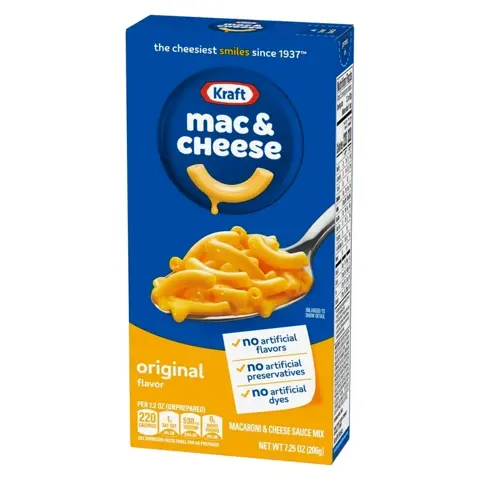
Kraft Dinner Original Mac & Cheese
Swap it for
 Rummo Maxima 21 Rigatoni Pasta No 50 Rummo · 14.1 oz View on Amazon · $7.99 See all Rice & Pasta, ranked
At a glance
Summary
Kraft Dinner Original Mac & Cheese scores 1/100. The Canadian Food Inspection Agency's glyphosate residue testing program (reported by CBC News, 2017) confirmed positive for glyphosate. The macaroni base is enriched (refined) wheat flour, and the powdered cheese sauce stacks sodium phosphate, modified food starch, maltodextrin, acetylated monoglycerides, MCT oil, milk protein concentrate, sodium alginate, and sorbic acid — a heavily engineered powdered cheese product, far from real cheese sauce.
Contaminants 1
Source: Independent third-party laboratory testing
Glyphosate Detected High
Detected at a high level — at or above health-based exposure limits. Regular exposure at this level is a genuine health concern. Glyphosate is classified as a probable human carcinogen by IARC.
Canadian Food Inspection Agency glyphosate residue testing program (reported by CBC News, 2017) confirmed positive for glyphosate.
Key ingredients 31
Wheat flourBad
Refined grain flour stripped of bran and germ.
Risks
May cause issues for individuals with gluten intolerance or celiac disease.
Benefits
Provides a source of carbohydrates for energy.
Corn syrup solidsBad
Corn syrup solids are a form of sugar used as a sweetener and thickener. They contribute to added sugars in the diet, which can lead to health issues like obesity and diabetes. They are highly processed and lack nutritional value.
Risks
High intake of added sugars can lead to obesity, insulin resistance, and dental cavities.
Palm oilBad
Palm oil is a saturated fat used for its stability and texture in processed foods. It is associated with deforestation and environmental concerns. It is less healthy compared to unsaturated fats like olive oil.
Risks
High intake of saturated fats can increase the risk of heart disease.
Benefits
Provides a stable fat source for cooking and food processing.
Modified food starchBad
Chemically modified starch additive.
Benefits
Improves texture and stability in food products.
MaltodextrinBad
Processed additive flagged under Scout's ingredient doctrine.
Risks
May cause spikes in blood sugar levels, especially in individuals with diabetes.
Benefits
Provides a quick source of energy.
Sodium triphosphateBad
Sodium triphosphate is used as a preservative and emulsifier in processed foods. It is a highly processed additive with potential health concerns. Excessive intake can lead to imbalances in phosphate levels.
Risks
High intake can lead to imbalances in phosphate levels and affect bone health.
Sodium phosphateBad
Sodium phosphate is used as an emulsifier and preservative in processed foods. It is a highly processed additive with potential health concerns. Excessive intake can lead to imbalances in phosphate levels.
Risks
High intake can lead to imbalances in phosphate levels and affect bone health.
Natural flavorBad
Natural flavor is a catch-all term for flavoring compounds derived from natural sources. It lacks transparency and can include a wide range of substances. It is often used to enhance flavor without disclosing specific ingredients.
Risks
Lack of transparency can be concerning for individuals with allergies or sensitivities.
Glyceryl monostearateNeutral
Glyceryl monostearate is an emulsifier used to stabilize food products. It is generally recognized as safe by food safety authorities. It helps maintain texture and consistency in processed foods.
Benefits
Helps improve the texture and shelf-life of food products.
Folic acidNeutral
Standard formulation ingredient — neither beneficial nor harmful at typical use.
Risks
Excessive intake can mask vitamin B12 deficiency symptoms.
Benefits
Supports DNA synthesis and is crucial for fetal development.
WheyNeutral
Liquid whey as a minor dairy ingredient — benign.
Risks
May cause issues for individuals with lactose intolerance or milk allergies.
Benefits
Supports muscle growth and repair due to its high-quality protein content.
SaltNeutral
Salt is used to enhance flavor and preserve food. It is a common ingredient in processed foods. Excessive consumption can lead to health issues like hypertension.
Risks
High sodium intake is linked to increased blood pressure and cardiovascular disease.
Benefits
Enhances flavor and acts as a preservative.
Dried buttermilkNeutral
Dried buttermilk is used for flavor and texture in processed foods. It is a dairy product that provides some protein and calcium. It is less nutritious compared to fresh dairy products.
Risks
May cause issues for individuals with lactose intolerance or milk allergies.
Benefits
Adds flavor and provides some protein and calcium.
Citric acidNeutral
Citric acid is a natural preservative and flavor enhancer. It is commonly used in processed foods to add acidity and preserve freshness. It is generally recognized as safe with no significant health concerns.
Benefits
Enhances flavor and preserves freshness in food products.
Lactic acidNeutral
Lactic acid is used as a preservative and flavoring agent in foods. It is naturally occurring and helps maintain acidity. It is generally recognized as safe with no significant health concerns.
Benefits
Helps maintain acidity and preserve food products.
Calcium phosphateNeutral
Calcium phosphate is used as a leavening agent and calcium source in foods. It is generally recognized as safe and provides some calcium. It is less bioavailable compared to other calcium sources.
Benefits
Provides a source of calcium and acts as a leavening agent.
Nonfat dry milkNeutral
Nonfat dry milk is used to add dairy flavor and protein to foods. It is a dehydrated form of milk with reduced fat content. It provides some protein and calcium but lacks the fat-soluble vitamins found in whole milk.
Risks
May cause issues for individuals with lactose intolerance or milk allergies.
Benefits
Provides protein and calcium with reduced fat content.
Guar gumNeutral
Guar gum is a thickening agent derived from guar beans. It is used to improve texture and stability in processed foods. It is generally recognized as safe but can cause digestive issues in large amounts.
Risks
May cause digestive issues like bloating and gas when consumed in large amounts.
Benefits
Improves texture and stability in food products.
AnnattoNeutral
Annatto is a natural coloring agent derived from the seeds of the achiote tree. It is used to impart a yellow or orange color to foods. It is generally recognized as safe with no significant health concerns.
Benefits
Provides natural color to food products.
Silicon dioxideNeutral
Silicon dioxide is used as an anti-caking agent in powdered foods. It prevents clumping and ensures free-flowing properties. It is generally recognized as safe with no significant health concerns.
Benefits
Prevents clumping and ensures free-flowing properties in powdered foods.
EnzymesNeutral
Enzymes are used to aid in the processing and development of food products. They are naturally occurring proteins that catalyze biochemical reactions. They are generally recognized as safe and improve food processing efficiency.
Benefits
Improve food processing efficiency and product quality.
Xanthan gumNeutral
Xanthan gum is a thickening and stabilizing agent used in processed foods. It is produced through fermentation and helps improve texture. It is generally recognized as safe but can cause digestive issues in large amounts.
Risks
May cause digestive issues like bloating and gas when consumed in large amounts.
Benefits
Improves texture and stability in food products.
NiacinGood
Niacin, also known as vitamin B3, is essential for energy metabolism and DNA repair. It is added to enriched flour to prevent deficiencies. It supports overall health by aiding in the conversion of food into energy.
Benefits
Supports energy metabolism and helps maintain healthy skin and nerves.
Ferrous sulfateGood
Ferrous sulfate is a form of iron used to fortify foods and prevent iron deficiency anemia. It is an essential mineral for oxygen transport in the blood. Fortification helps improve iron intake in populations at risk of deficiency.
Risks
Excessive intake can lead to gastrointestinal issues and iron overload.
Benefits
Essential for the production of hemoglobin and prevention of anemia.
Thiamin mononitrateGood
Thiamin mononitrate is a form of vitamin B1, crucial for carbohydrate metabolism and nerve function. It is added to enriched products to prevent deficiencies. It plays a vital role in energy production and nerve health.
Benefits
Supports energy metabolism and proper nerve function.
RiboflavinGood
Riboflavin, or vitamin B2, is important for energy production and cellular function. It is added to enriched flour to enhance nutritional value. It aids in the breakdown of carbohydrates, proteins, and fats.
Benefits
Supports energy production and helps maintain healthy skin and eyes.
Milk protein concentrateGood
Milk protein concentrate is a high-protein ingredient derived from milk. It provides essential amino acids and supports muscle maintenance. It is used to boost protein content in foods.
Risks
May cause issues for individuals with lactose intolerance or milk allergies.
Benefits
Supports muscle maintenance and provides a high-quality protein source.
Medium chain triglyceridesGood
Medium chain triglycerides (MCTs) are fats that are rapidly absorbed and used for energy. They are derived from coconut or palm kernel oil. MCTs are beneficial for quick energy and may support weight management.
Benefits
Provides a quick source of energy and may support weight management.
Cheese cultureGood
Cheese culture is used to ferment milk and develop cheese flavor. It consists of beneficial bacteria that aid in the cheese-making process. It contributes to the development of flavor and texture in cheese products.
Benefits
Contributes to flavor and texture development in cheese products.
PaprikaGood
Paprika is a spice made from ground peppers, used for flavor and color. It contains antioxidants and vitamins like vitamin A. It enhances the flavor and visual appeal of foods.
Benefits
Rich in antioxidants and vitamins, enhancing flavor and color.
TurmericGood
Turmeric is a spice known for its anti-inflammatory properties. It contains curcumin, a compound with potential health benefits. It is used for flavor and color in foods.
Benefits
Contains curcumin, which has anti-inflammatory and antioxidant properties.
Processing
Ultra-Processed Foods
Get the full breakdown in the Scout appTake Scout shopping
Scan any product to see lab results, healthy alternatives, and your personalized analysis.
Are you Kraft? Fix an error Get the badge Get tested
Amazon pricing & content
Amazon price for Rummo Maxima 21 Rigatoni Pasta No 50 as of . Product prices and availability are accurate as of the date/time indicated and are subject to change. Any price and availability information displayed on Amazon.com at the time of purchase will apply to the purchase of this product.
CERTAIN CONTENT THAT APPEARS ON THIS SITE COMES FROM AMAZON. THIS CONTENT IS PROVIDED “AS IS” AND IS SUBJECT TO CHANGE OR REMOVAL AT ANY TIME.